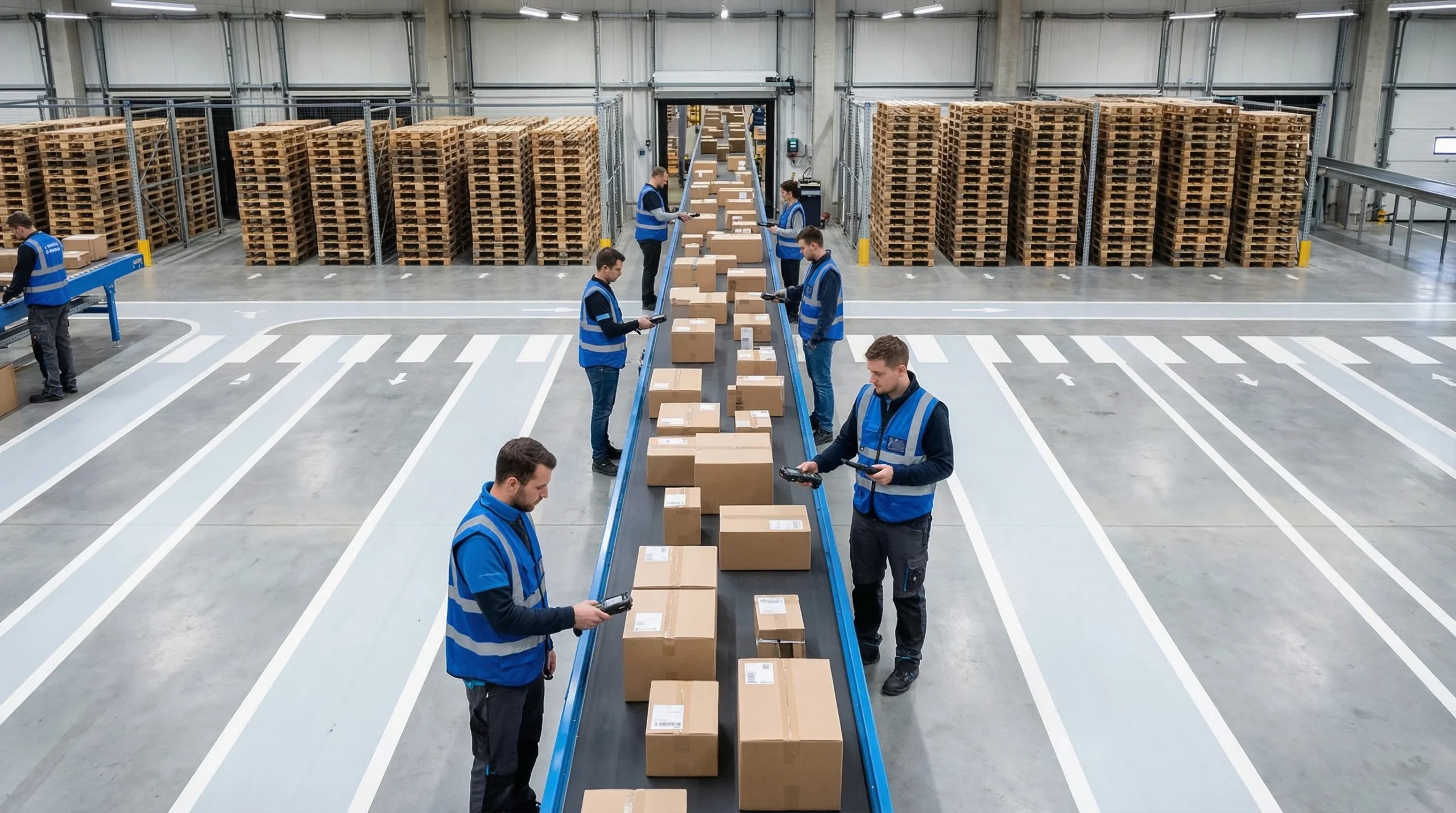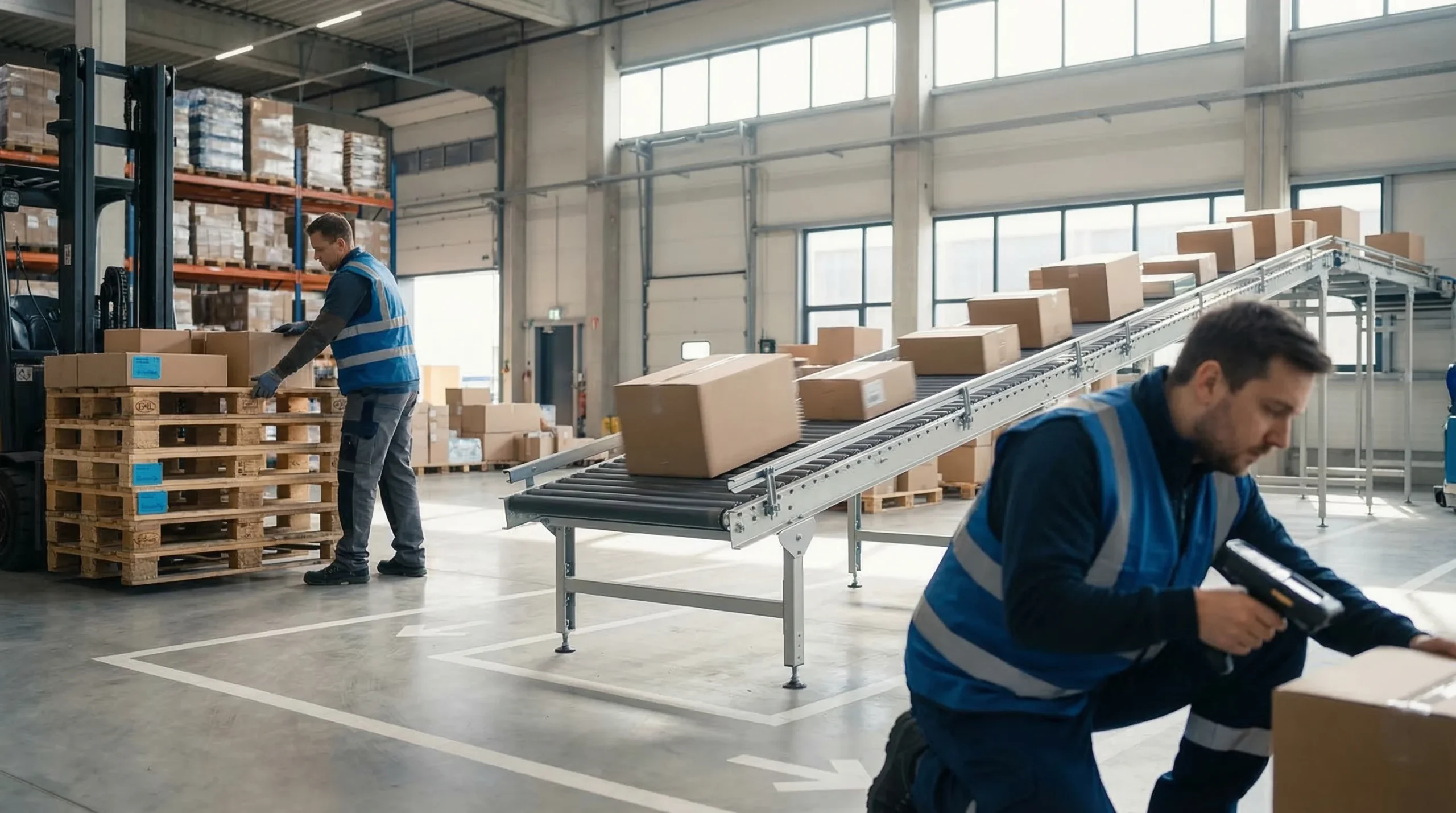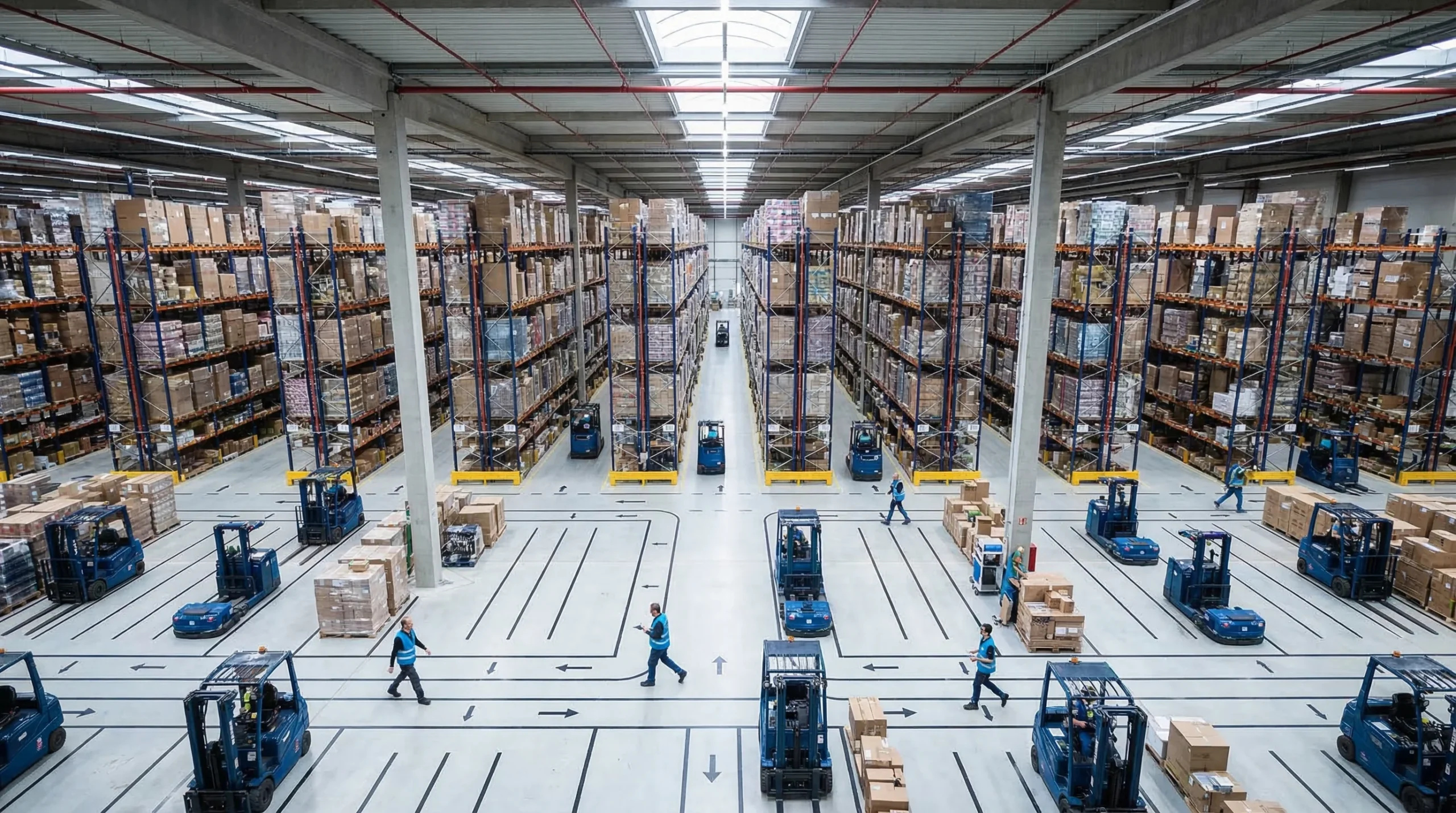

Imagine a distribution center where orders stack up faster than workers can process them. Pickers crisscross the floor, sometimes walking miles during a single shift, while inventory counts drift further from reality with each passing hour. Returns pile up, shipments go out late, and the operations manager stares at spreadsheets that feel more like ancient history than actionable data. This scenario plays out in warehouses across the country every day, but a fundamental shift is underway. The use of AI in warehouse management is transforming how distribution centers operate, turning chaotic environments into precision-driven operations. Artificial intelligence warehouse management software analyzes millions of data points in real time, predicts problems before they occur, and orchestrates complex workflows that would overwhelm traditional systems. For warehouse managers and logistics professionals ready to move beyond reactive firefighting, understanding how an artificial intelligence warehouse operates is no longer optional – it’s essential for survival in an increasingly competitive market.
This guide examines the practical applications of AI in warehouse settings, explores documented benefits and real challenges, and looks ahead to emerging technologies that will shape the industry’s future. Whether you’re evaluating your first AI implementation or looking to expand existing capabilities, you’ll find actionable insights to inform your strategy.
Understanding Artificial Intelligence in Modern Warehouse Operations
Artificial intelligence in warehousing refers to systems that can learn from data, identify patterns, and make decisions with minimal human intervention. Unlike traditional warehouse management systems that follow predetermined rules, AI-powered solutions adapt to changing conditions and improve their performance over time. This distinction matters because warehouse environments are inherently unpredictable. Demand fluctuates seasonally, supply chains face disruptions, and workforce availability varies week to week.
How AI Has Transformed Warehousing
The adoption of AI in warehouses accelerated dramatically after 2020, when supply chain disruptions exposed the limitations of conventional approaches. According to Forbes, AI technologies are fundamentally changing how warehouses handle everything from inventory management to last-mile delivery coordination. Machine learning algorithms now process terabytes of operational data that would take human analysts months to review.
Early warehouse automation focused on physical tasks – conveyor belts moving products, automated storage and retrieval systems pulling pallets. AI represents a different kind of automation, one focused on decision-making rather than physical movement. An artificial intelligence warehouse uses software that determines which orders to prioritize, how to route pickers efficiently, when to reorder inventory, and how to allocate labor across shifts.
Core Technologies Powering AI Warehouses
Several interconnected technologies enable the use of AI in warehouse management:
- Machine learning algorithms analyze historical data to identify patterns and make predictions about future demand, equipment failures, and optimal staffing levels
- Computer vision systems inspect products for damage, verify shipment contents, and guide autonomous vehicles through facility floors
- Natural language processing enables voice-directed picking and allows workers to interact with systems using conversational commands
- Predictive analytics forecast inventory needs, anticipate maintenance requirements, and identify potential bottlenecks before they impact operations
These technologies work together, sharing data and insights to create systems that are greater than the sum of their parts. A computer vision system might identify that certain products are frequently damaged during picking, triggering the machine learning algorithm to adjust storage locations and handling procedures.
Smarter Warehouse Management Starts Here
Logimax WMS delivers real-time visibility, automated workflows, and seamless ERP integration for warehouses of every size.
Request a Demo
Measurable Benefits of AI-Powered Warehouse Management
Warehouse managers evaluating artificial intelligence warehouse management need concrete evidence of return on investment. The benefits extend across multiple operational dimensions, from labor efficiency to inventory accuracy.
Improved Operational Efficiency and Accuracy
Consider a regional e-commerce fulfillment center processing several thousand orders daily. Before implementing AI-driven systems, pickers followed static routes that hadn’t been optimized in years. Travel time consumed a significant portion of each shift. After adopting AI-powered pick path optimization, the same facility reduced walking distances substantially while increasing picks per hour.
Accuracy improvements come from multiple directions. AI systems catch discrepancies that human eyes miss – a product placed in the wrong bin, a count that doesn’t match system records, a shipment missing an item. These systems don’t get tired at the end of long shifts or distracted by workplace conversations. They maintain consistent vigilance across all transactions.
The use of AI in warehouse management also reduces the cognitive load on workers. Instead of making dozens of micro-decisions each hour about which order to pick next or which route to take, employees receive clear, optimized instructions. This reduces decision fatigue and allows workers to focus on tasks that require human judgment and dexterity.
Significant Cost Reduction Opportunities
Cost savings from AI implementation accumulate across multiple categories:
- Labor optimization – AI systems predict staffing needs based on expected order volumes, reducing overtime costs and understaffing situations
- Inventory carrying costs – Better demand forecasting means carrying less safety stock while maintaining service levels
- Error reduction – Fewer picking errors mean fewer returns, chargebacks, and customer service interventions
- Equipment maintenance – Predictive maintenance prevents costly emergency repairs and extends equipment lifespan
- Space utilization – AI-driven slotting optimization can increase storage density without facility expansion
A growing food and beverage distributor might find that AI-powered demand forecasting reduces spoilage by anticipating which products will sell quickly and which risk expiration. The system learns from seasonal patterns, promotional calendars, and even weather forecasts to predict demand more accurately than traditional methods.
Documented Results from AI Warehouse Implementations
Understanding how other organizations have approached artificial intelligence warehouse management provides valuable context for planning your own implementation. While every facility has unique characteristics, common patterns emerge from documented deployments.
Patterns from Successful Deployments
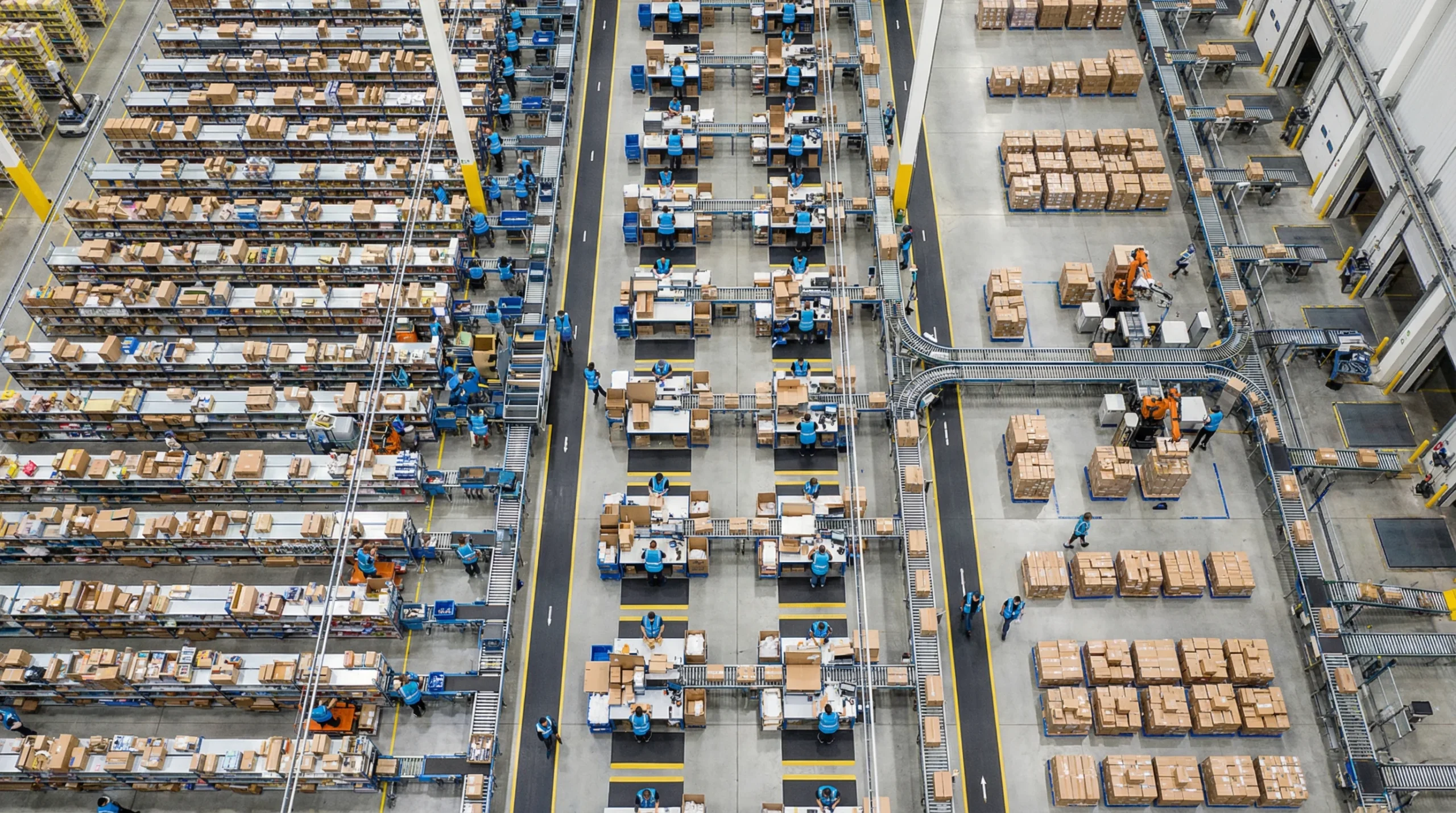
Large e-commerce fulfillment operations have pioneered many AI applications in warehousing. These facilities handle enormous product variety and must process orders within tight time windows. AI systems in these environments manage the orchestration of human workers and autonomous robots, optimizing task assignments in real time based on current conditions.
Third-party logistics providers have found that AI-driven warehouse management solutions help them serve diverse clients with different requirements from shared facilities. The AI learns the specific patterns of each client’s business – their peak periods, common product combinations, and service level requirements – and adjusts operations accordingly.
Pharmaceutical distributors face strict regulatory requirements for traceability and temperature control. AI systems monitor environmental conditions continuously, predicting potential temperature excursions before they occur and automatically adjusting storage assignments. The systems also maintain detailed chain-of-custody records that satisfy regulatory audits.
Key Lessons from Early Adopters
Organizations that have successfully implemented AI in warehouse settings share several common approaches:
Data quality matters enormously. AI systems are only as good as the data they receive. Facilities that invested time in cleaning historical data and establishing reliable data collection processes saw faster time-to-value from their AI implementations.
Change management determines success. The most sophisticated AI system fails if workers don’t trust its recommendations or supervisors override its decisions. Successful implementations included extensive training and transparency about how the AI makes decisions.
Start focused, then expand. Rather than attempting to implement AI across all warehouse functions simultaneously, successful deployments typically began with a single high-impact area – often pick path optimization or demand forecasting – and expanded from there.
Integration challenges are real. Connecting AI systems with existing warehouse management software, ERP systems, and physical automation requires careful planning. As Supply Chain 247 notes, the role of artificial intelligence in warehouse management extends across multiple interconnected systems.
AI-Driven Systems Compared to Traditional Approaches
Understanding the fundamental differences between AI-powered and traditional warehouse management systems helps clarify when and where AI adds the most value.
Performance Differences in Daily Operations
Traditional warehouse management systems operate on rules. If inventory drops below point X, generate a reorder. If an order contains product Y, route it to zone Z. These rules work well for predictable, stable operations but struggle when conditions change.
Artificial intelligence warehouse management takes a different approach. Instead of following static rules, AI systems continuously analyze current conditions and historical patterns to determine optimal actions. When demand patterns shift, the AI adapts its recommendations automatically rather than waiting for someone to update threshold values.
Consider how each approach handles a sudden spike in orders for a particular product. A traditional system continues following its predetermined picking routes until someone manually intervenes. An AI system recognizes the pattern within hours, adjusts pick priorities, and may recommend relocating the product closer to packing stations.
Processing speed presents another contrast. Traditional systems execute transactions sequentially, while AI systems can evaluate thousands of scenarios simultaneously to identify optimal solutions. This parallel processing capability becomes increasingly valuable as warehouse complexity grows.
Scalability and Flexibility Advantages
The use of AI in warehouse management provides scalability advantages that compound over time:
- Learning curves work in your favor – AI systems improve as they process more data, meaning performance gets better as your operation grows
- New patterns are identified automatically – You don’t need to explicitly program the system for every possible scenario
- Seasonal variations are handled gracefully – AI systems learn your seasonal patterns and begin preparing for peaks before they arrive
- New product introductions require less configuration – The system infers handling requirements based on similar products
Traditional systems often require significant configuration when facilities expand, new product lines are added, or processes change. AI systems adapt more fluidly, reducing the implementation burden associated with growth and change.
However, traditional systems offer advantages in certain contexts. They’re more predictable, which some operations prefer. They’re often less expensive to implement initially. And they don’t require the data infrastructure that AI systems need to function effectively.
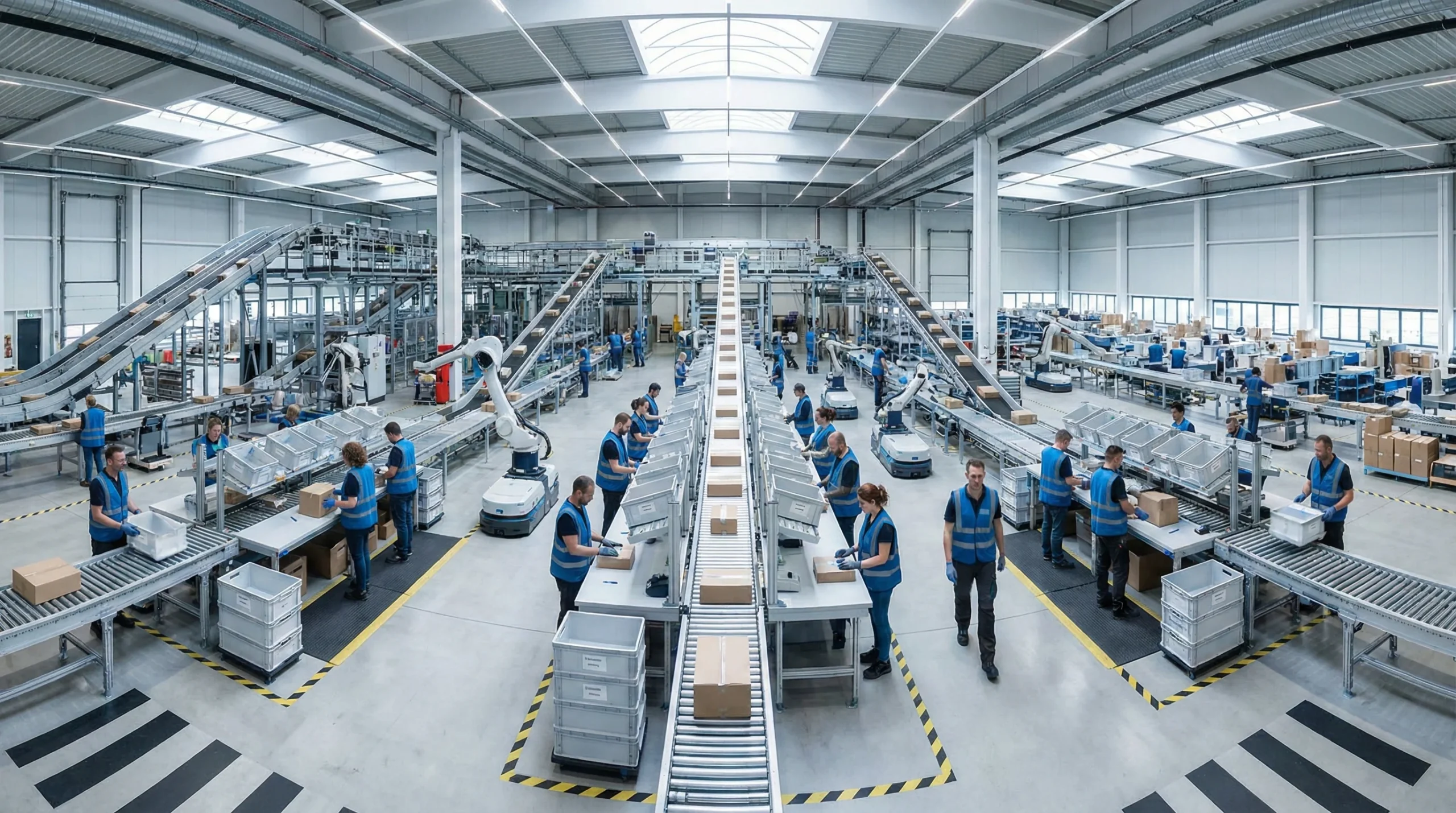
Emerging Technologies Shaping Future AI Warehouses
The artificial intelligence warehouse of tomorrow will look substantially different from today’s implementations. Several emerging technologies promise to extend AI capabilities in significant ways.
Technologies on the Near Horizon
Internet of Things integration will multiply the data available to AI systems. Sensors embedded in storage locations, material handling equipment, and even individual products will provide real-time visibility into warehouse conditions. AI systems will know not just where products are located but their temperature, humidity exposure, handling history, and predicted shelf life.
Digital twin technology creates virtual replicas of physical warehouses, allowing AI systems to simulate proposed changes before implementing them. Want to know how a new storage layout will affect picking efficiency? Run it through the digital twin first. Considering a shift schedule change? Test it virtually before disrupting actual operations.
Advanced robotics will work more collaboratively with human workers. Current autonomous mobile robots follow predetermined patterns, but AI-powered robots will make real-time decisions about paths, task priorities, and interactions with human workers. The line between automation and AI will blur as robots gain more decision-making autonomy.
Blockchain integration addresses traceability and authenticity concerns. AI systems will use blockchain records to verify product provenance, track handling conditions throughout the supply chain, and automatically flag items that may have been compromised.
Where the Industry Is Heading
Industry analysts expect artificial intelligence warehouse management to become standard rather than exceptional within the next decade. Several trends support this projection:
Labor market pressures continue driving automation investment. As finding and retaining warehouse workers becomes more challenging, AI systems that maximize the productivity of available workers become increasingly valuable.
Customer expectations keep rising. Same-day and next-day delivery require operational precision that’s difficult to achieve without AI assistance. The tolerance for errors shrinks as competitors raise service standards.
AI technology costs continue declining while capabilities improve. Systems that required significant capital investment just a few years ago are now accessible to mid-sized operations. Cloud-based AI services reduce the infrastructure requirements for implementation.
The competitive advantage of AI adoption creates pressure on laggards. As more competitors implement AI systems and improve their operations, organizations using traditional methods face increasing disadvantage.
Addressing Common Barriers to AI Adoption
Despite compelling benefits, many organizations struggle to implement AI in their warehouse operations. Understanding common obstacles helps develop strategies to overcome them.
Typical Implementation Challenges
Data infrastructure limitations prevent many organizations from taking full advantage of AI capabilities. AI systems require large volumes of clean, consistent data to function effectively. Warehouses with fragmented systems, inconsistent data entry practices, or limited historical records face a chicken-and-egg problem – they need good data to implement AI, but AI would help them collect better data.
Workforce concerns create resistance at multiple levels. Line workers may fear job displacement. Supervisors may resist systems that reduce their decision-making authority. Executives may question whether AI recommendations can be trusted for critical operations.
Integration complexity with existing systems presents technical challenges. Most warehouses run multiple software systems that must share data with AI platforms. Legacy systems may lack modern APIs. Custom integrations require development resources that many organizations don’t have available.
Unclear ROI calculations make it difficult to justify AI investments. The benefits of AI often accumulate gradually and across multiple areas, making them harder to quantify than the costs of implementation. Traditional capital budgeting approaches may not capture the full value proposition.
Vendor selection confusion stems from a crowded marketplace with varying claims. Distinguishing genuine AI capabilities from marketing hype requires technical expertise that many warehouse operations lack.
Practical Strategies for Successful Adoption
Organizations that successfully manage these challenges typically employ several strategies:
Begin with data assessment and cleanup. Before evaluating AI solutions, understand what data you have, its quality, and what gaps exist. This assessment often reveals quick wins – data quality improvements that benefit operations immediately while preparing for AI implementation.
Involve workers early and often. Frame AI as augmentation rather than replacement. Show workers how AI will make their jobs easier and more rewarding. Identify AI champions on the floor who can help colleagues adapt. Be transparent about how AI makes decisions and when human judgment takes precedence.
Plan integrations carefully. Map all systems that will need to exchange data with AI platforms. Evaluate middleware options that can simplify integration. Consider whether legacy system upgrades might be necessary prerequisites for AI adoption.
Define clear metrics upfront. Establish baseline measurements for key performance indicators before implementation. Agree on what success looks like and how it will be measured. Build in regular review points to assess progress and adjust approaches.
Start with pilot projects. Select a bounded area where AI can demonstrate value quickly without requiring enterprise-wide change. Use pilot results to build organizational confidence and refine implementation approaches before broader rollout.
Partner with experienced providers. Look for solution providers with documented success in environments similar to yours. Ask for references and speak directly with current users about their implementation experiences.
Building Your AI Strategy for Warehouse Excellence
The transformation enabled by artificial intelligence warehouse management represents one of the most significant shifts in logistics operations since the introduction of barcoding. Organizations that approach AI strategically will build capabilities that compound over time, creating sustainable competitive advantage.
Success requires more than technology selection. It demands organizational commitment to data quality, change management, and continuous improvement. The most sophisticated AI system underperforms when implemented in an organization that isn’t prepared to use it effectively.
For warehouse managers and logistics professionals evaluating their next steps, the path forward involves honest assessment of current capabilities, clear definition of desired outcomes, and thoughtful selection of implementation partners. The use of AI in warehouse management is no longer experimental – it’s becoming an operational necessity for organizations that want to compete effectively.
Ready to explore how AI can transform your warehouse operations? Schedule a demo with our team to see modern warehouse management capabilities in action. Visit our solutions page to learn more about approaches that can help your operation achieve new levels of efficiency and accuracy. The future of warehousing is intelligent, adaptive, and data-driven – and the time to begin building toward that future is now.
Frequently Asked Questions
How does artificial intelligence warehouse management improve efficiency?
Artificial intelligence warehouse management improves efficiency by analyzing data and optimizing workflows. AI systems predict potential issues and adapt to changing conditions, reducing downtime and errors. This leads to faster order processing and more accurate inventory management. For example, AI can dynamically allocate resources to high-demand areas, ensuring timely deliveries.
What are the benefits of using AI in warehouse management?
Using AI in warehouse management offers benefits like increased accuracy and reduced labor costs. AI systems can process vast amounts of data quickly, leading to better decision-making and forecasting. This results in improved inventory accuracy and faster order fulfillment. Additionally, AI can enhance customer satisfaction by ensuring timely and accurate shipments.
How is artificial intelligence warehouse different from traditional systems?
Artificial intelligence warehouse systems differ from traditional ones by learning from data and adapting over time. Unlike rule-based systems, AI can handle unpredictability and optimize processes dynamically. This adaptability is crucial in environments with fluctuating demand and supply chain disruptions. For instance, AI can adjust staffing levels based on real-time demand forecasts.
Why is the use of AI in warehouse management essential today?
The use of AI in warehouse management is essential today due to increased competition and complexity. AI helps warehouses operate more efficiently by automating decision-making processes and enhancing accuracy. This is crucial in managing the unpredictability of modern supply chains. As a result, companies can maintain a competitive edge by delivering faster and more reliably.
What challenges exist in implementing artificial intelligence warehouse solutions?
Implementing artificial intelligence warehouse solutions presents challenges like high initial costs and integration complexities. Companies may face difficulties aligning AI with existing systems and training staff. However, overcoming these challenges can lead to significant long-term benefits. Successful implementation requires careful planning and investment in both technology and workforce training.