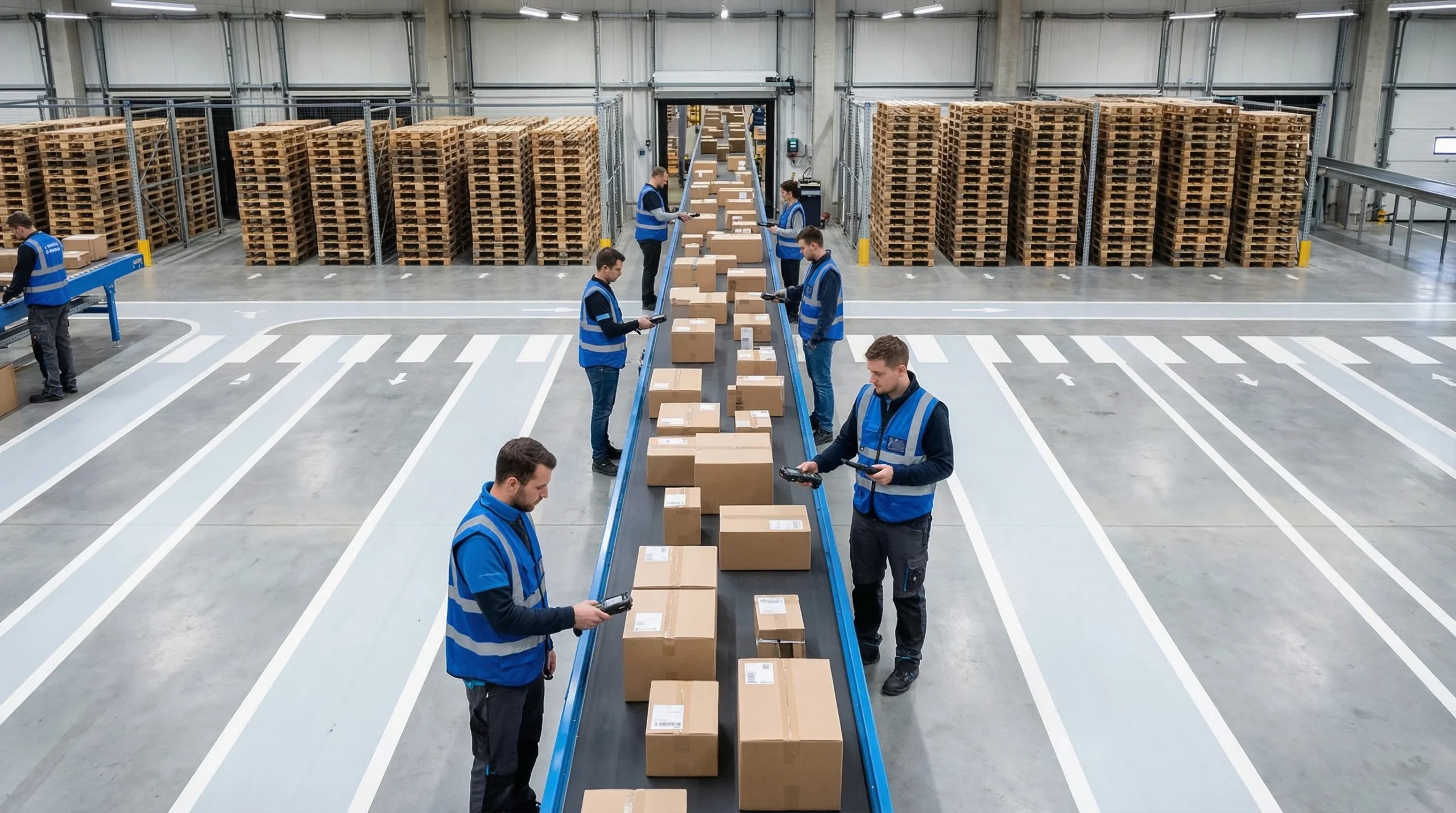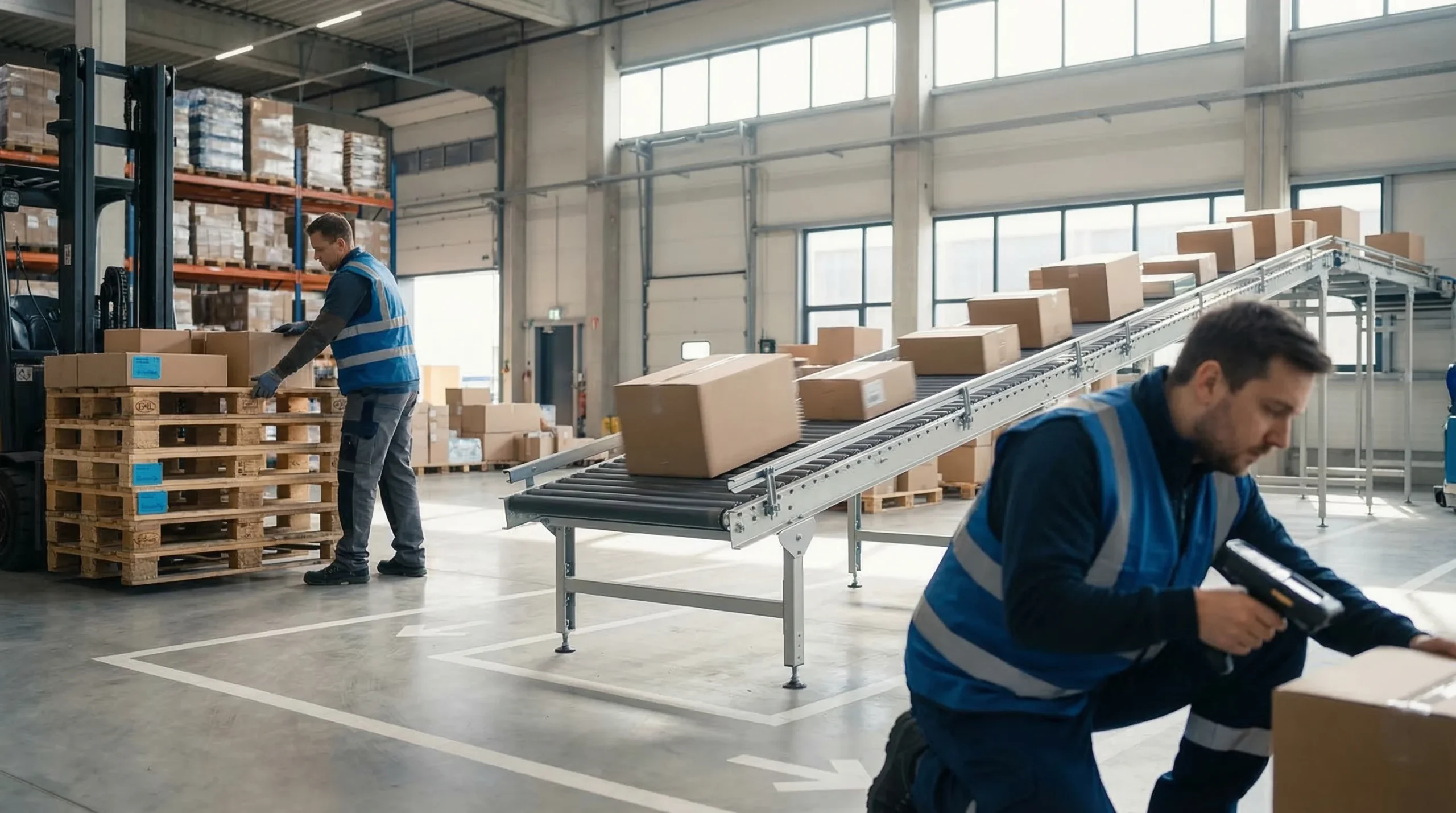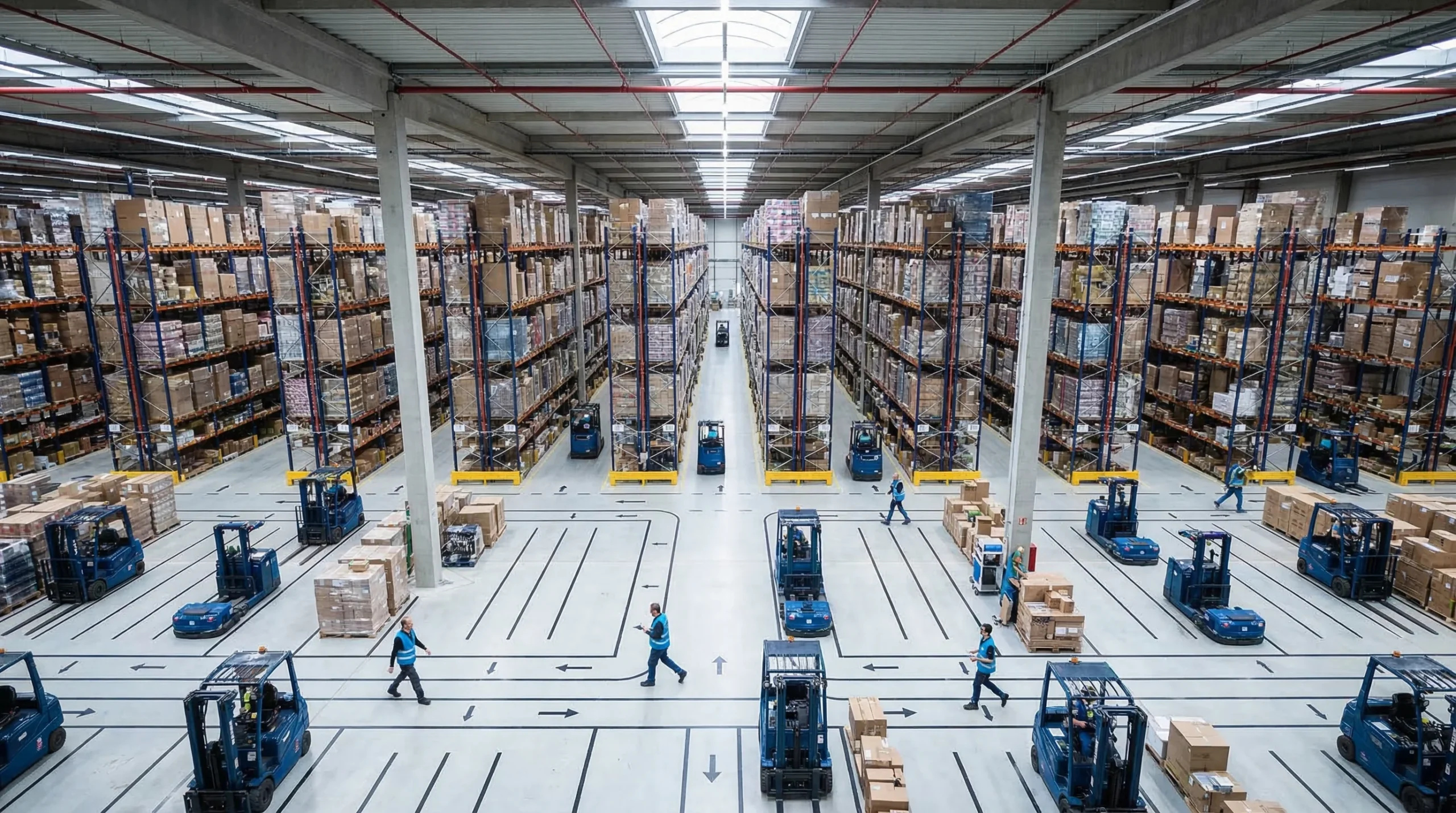
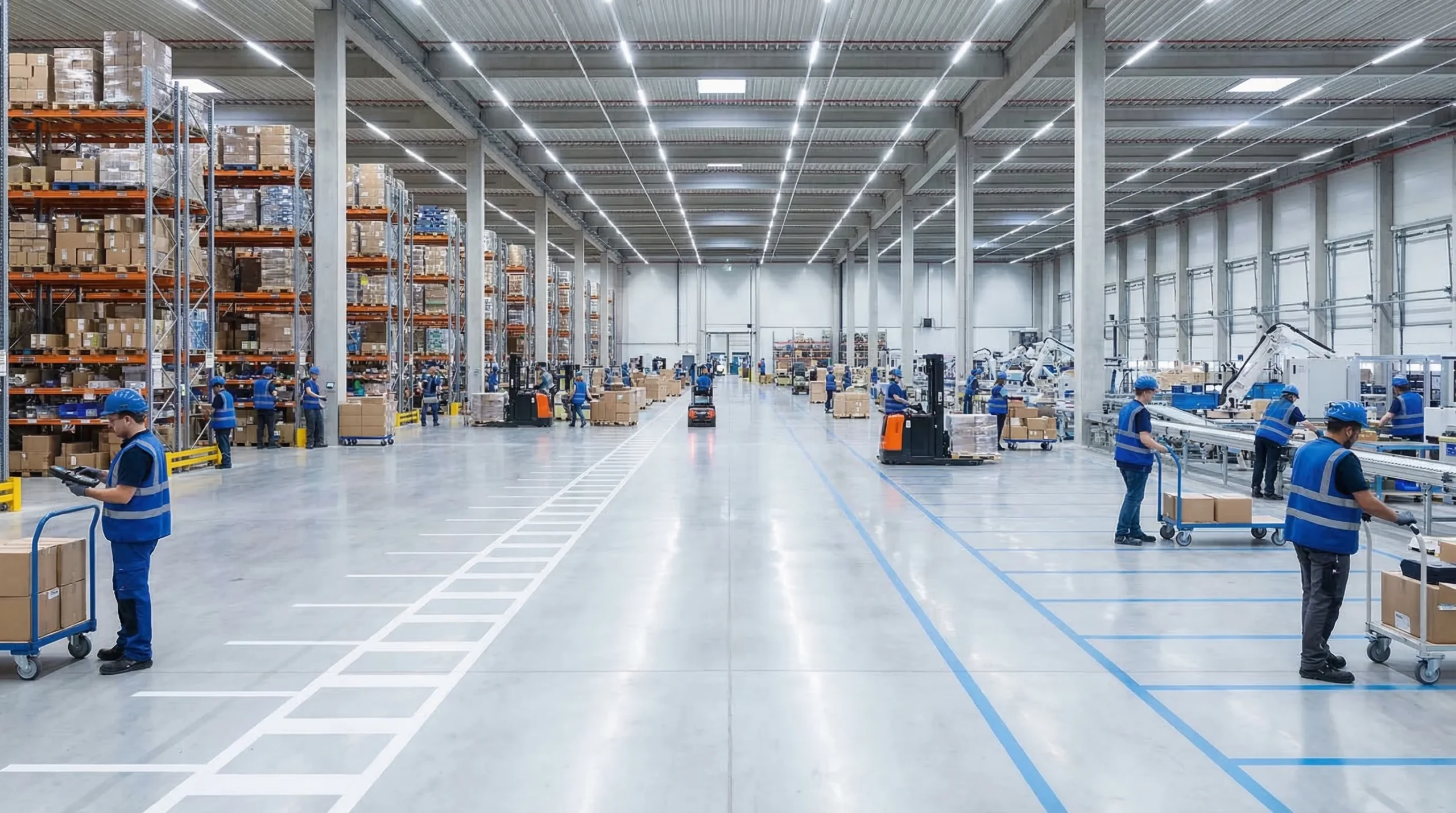
Warehouse automation solution, automation technology, automation warehouse system has become essential for modern businesses. Imagine a distribution center where orders pile up faster than workers can process them. Pallets sit in staging areas for hours, inventory counts never match system records, and the labor cost per unit shipped keeps climbing quarter after quarter. This scenario plays out daily in thousands of warehouses across North America – facilities caught between rising customer expectations and operational constraints that traditional methods can’t solve.
The path forward runs through warehouse automation solution technology. When properly implemented, automation technology transforms chaotic operations into precision-driven fulfillment engines. An effective automation warehouse system doesn’t just replace manual tasks – it reimagines how goods flow from receiving dock to shipping bay, creating efficiency gains that compound over time.
This guide examines warehouse automation from every angle: the technologies driving change, the implementation strategies that separate success from failure, the financial calculations that justify investment, and the emerging innovations reshaping what’s possible. Whether you’re exploring your first automated system or expanding existing capabilities, understanding these fundamentals will help you make decisions that deliver lasting value.
Why Warehouse Automation Has Become Essential for Modern Operations
The case for warehouse automation has strengthened dramatically in recent years. Labor markets have tightened across logistics hubs, making it harder to staff facilities and retain experienced workers. Meanwhile, customers have grown accustomed to rapid fulfillment – often expecting same-day or next-day delivery as standard service.
Consider a regional e-commerce fulfillment center processing 5,000 orders daily with a staff of 75 warehouse workers. Manual picking, packing, and sorting consume most of each shift. When order volumes spike during peak seasons, the only solution is temporary labor – workers who require training, make more errors, and leave after the rush ends.
This center faces a fundamental constraint: scaling operations requires proportionally more people, space, and supervision. The relationship between volume and cost remains stubbornly linear.
Breaking the Linear Scaling Problem
Automation changes this equation. A warehouse automation solution allows operations to handle volume increases without equivalent increases in labor or floor space. Automated systems work continuously, maintain consistent accuracy, and operate in spaces too dense for human workers to navigate efficiently.
The benefits extend beyond simple labor savings:
- Accuracy improvements – Automated picking and sorting systems typically achieve error rates below 0.1%, compared to 1-3% for manual operations
- Space utilization – Automated storage and retrieval systems (AS/RS) can store inventory in configurations that would be impractical for human pickers
- Throughput consistency – Automated systems maintain steady output regardless of shift changes, fatigue, or seasonal workforce fluctuations
- Safety improvements – Removing workers from repetitive lifting, reaching, and walking tasks reduces injury rates and associated costs
- Data capture – Every automated movement generates data that can be analyzed to identify bottlenecks and optimization opportunities
These advantages compound over time. A facility that automates key processes today positions itself to handle tomorrow’s volume growth without proportional cost increases.
The Competitive Pressure Factor
Beyond internal benefits, external pressures make automation increasingly necessary. When competitors adopt warehouse automation solutions, they gain cost structures that allow more aggressive pricing or service levels. Companies that delay automation may find themselves at a structural disadvantage.
Industry observers at Supply Chain Dive have documented this competitive dynamic across multiple sectors. Distribution businesses that once competed primarily on relationships and regional presence now face margin pressure from automated competitors who can offer faster fulfillment at lower operating costs.

Smarter Warehouse Management Starts Here
Logimax WMS delivers real-time visibility, automated workflows, and seamless ERP integration for warehouses of every size.
Request a Demo
Types of Warehouse Automation Solutions and Their Applications
The term “warehouse automation” covers an enormous range of technologies, from simple conveyor systems to fully autonomous mobile robots. Understanding the options helps identify which solutions match specific operational needs and investment parameters.
Goods-to-Person Systems
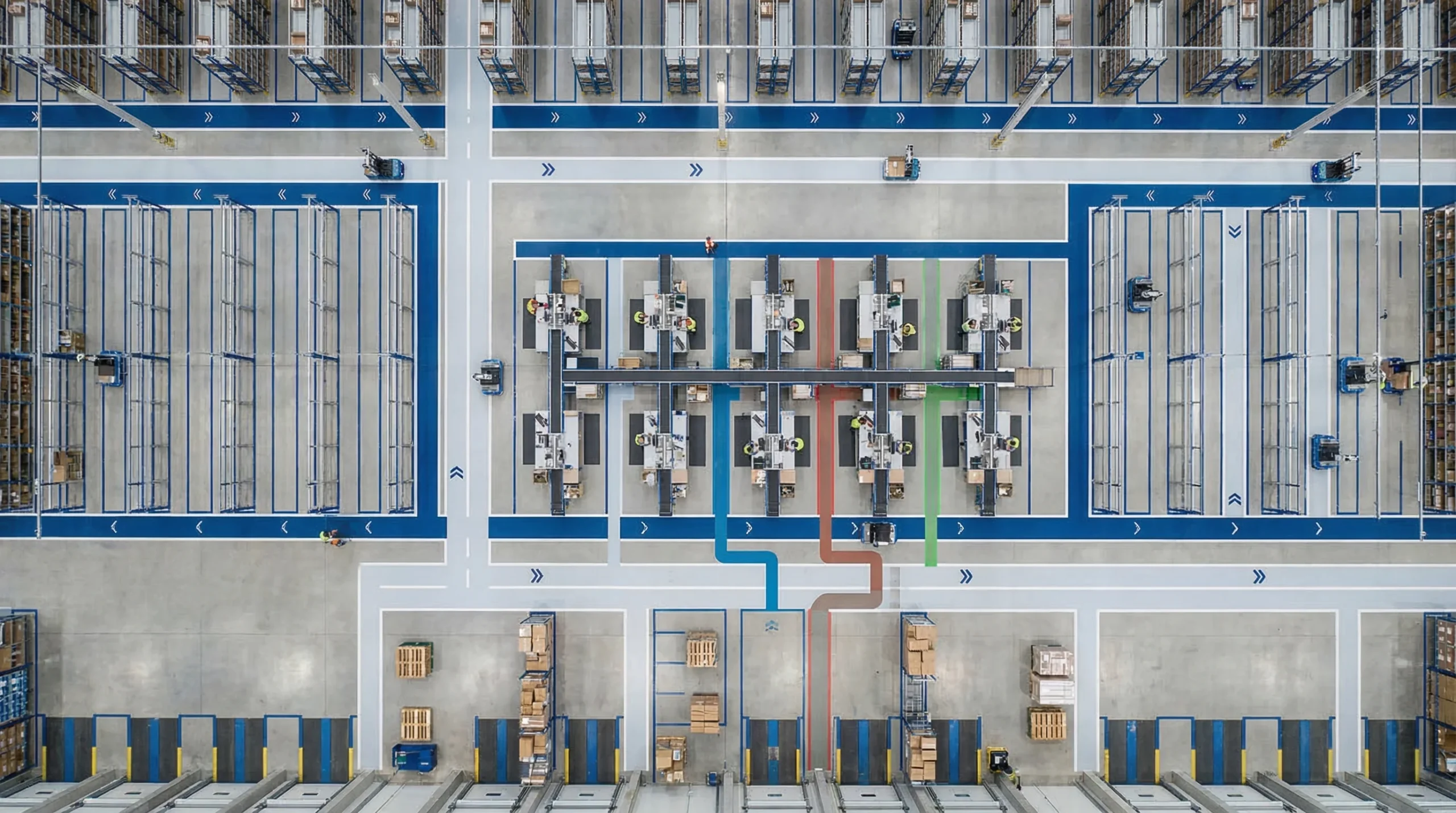
Traditional picking requires workers to walk through aisles, locate items, and transport them to packing stations. Goods-to-person systems invert this model – inventory comes to the worker instead of workers going to the inventory.
These systems typically use automated storage and retrieval systems (AS/RS) combined with conveyor networks or autonomous mobile robots. When an order requires an item, the system retrieves the relevant bin or pallet and delivers it to a stationary pick station. The worker picks the required quantity, confirms the pick, and the system returns the container to storage.
Benefits of goods-to-person automation technology include:
- Dramatic reduction in walking time – often 60-70% of a manual picker’s shift
- Higher picks per hour per worker
- Reduced training requirements – workers learn a single station rather than memorizing warehouse layout
- Improved ergonomics – items can be presented at optimal heights
These systems work particularly well for facilities with high SKU counts and moderate to high pick frequencies across many items.
Autonomous Mobile Robots (AMRs)
AMRs navigate warehouse floors independently, using sensors and mapping software to move around obstacles and find optimal paths. Unlike older automated guided vehicles (AGVs) that follow fixed routes marked by floor tape or wires, AMRs can adapt to changing layouts and dynamic environments.
Common AMR applications include:
- Zone picking assistance – Robots travel between zones, collecting items from multiple pickers before delivering complete orders to packing stations
- Shelf transport – Some AMRs lift entire shelving units and bring them to pick stations (the model pioneered by Kiva Systems and now used extensively in e-commerce fulfillment)
- Sortation – Robots carry items to designated outbound lanes based on destination or order requirements
- Replenishment – AMRs transport inventory from bulk storage to forward pick locations
The flexibility of AMR technology makes it attractive for facilities that need to scale automation gradually or adapt to changing requirements. Adding robots to a fleet requires minimal infrastructure changes compared to installing fixed conveyors or AS/RS systems.
Conveyor and Sortation Systems
Conveyors remain foundational automation technology in high-volume facilities. Modern systems incorporate scanning, weighing, and automated diverting to route items through complex paths with minimal human intervention.
Advanced sortation systems can process thousands of items per hour, reading barcodes or RFID tags and directing each item to the correct lane for outbound shipping. Facilities with high parcel volumes – particularly those shipping to many destinations – often find that conveyor and sortation automation delivers the fastest payback.
Automated Storage and Retrieval Systems
AS/RS technology stores and retrieves loads from defined storage locations using automated cranes, shuttles, or other mechanical systems. These systems maximize vertical space utilization, allowing facilities to store more inventory in the same footprint.
AS/RS installations range from small-scale solutions for case-picking operations to massive installations handling full pallets. The technology works especially well when:
- Real estate costs make vertical storage valuable
- Climate control requirements make dense storage energy-efficient
- Inventory requires protection from damage or contamination
- High throughput requires continuous, reliable movement
Robotic Picking and Packing
Robotic arms with advanced gripping systems and computer vision can now handle picking and packing tasks that previously required human dexterity. These systems excel with items that have consistent shapes and packaging.
While fully autonomous picking of arbitrary items remains challenging, robotic systems have proven effective for specific applications:
- Case picking and palletizing
- Depalletizing incoming shipments
- Pack-out operations with standardized packaging
- Sortation of uniform items
Many facilities combine robotic systems with human workers, using automation for predictable tasks while reserving human judgment for exceptions and complex items.
Core Automation Technology Powering Modern Warehouses
Behind every warehouse automation solution sits a technology stack that controls physical systems, coordinates activities, and connects warehouse operations to broader enterprise systems. Understanding these technologies helps evaluate solutions and plan implementations.
Warehouse Management Systems as the Foundation
A warehouse management system (WMS) serves as the operational brain of an automated facility. It tracks inventory locations, directs pick and put-away activities, manages labor allocation, and provides visibility into operations. For comprehensive warehouse management software solutions, the system must integrate tightly with automation equipment.
The WMS sends commands to automated systems – instructing an AS/RS to retrieve a specific bin, directing a conveyor divert, or assigning tasks to AMRs. It receives confirmation when movements complete, maintaining real-time accuracy of inventory positions.
Critical WMS capabilities for automated environments include:
- Real-time communication protocols – Millisecond-level response times for high-speed automation
- Wave and waveless processing – Flexibility to batch orders or process them individually based on operational needs
- Exception handling – Clear workflows when automated systems encounter problems
- Slotting optimization – Algorithms that position fast-moving items for efficient automated retrieval
- Task interleaving – Coordination that combines put-away and retrieval tasks for maximum equipment utilization
Warehouse Control Systems
While WMS handles inventory and order logic, warehouse control systems (WCS) manage material handling equipment directly. The WCS translates high-level WMS instructions into specific equipment commands – motor speeds, divert timing, scanner triggers, and the countless other signals that make physical systems function.
In some implementations, WMS and WCS functionality merge into unified platforms. In others, specialized WCS software sits between the WMS and equipment, handling the real-time control requirements that demand dedicated processing power.
Sensors and Identification Technology
Automated systems depend on accurate identification and tracking of items throughout the fulfillment process. Several technologies serve this need:
Barcode Scanning – Fixed scanners at conveyor points, handheld devices, and wearable scanners remain the primary identification method for most operations. Modern camera-based scanners can read damaged or poorly printed codes that laser scanners miss.
RFID – Radio frequency identification allows tracking without line-of-sight scanning. Items tagged with RFID chips can be read in bulk as they pass through portal readers. The technology works well for receiving, cycle counting, and tracking reusable containers.
Computer Vision – Camera systems combined with machine learning can identify products by appearance, read text, verify pack-out accuracy, and detect damage. Vision systems increasingly handle quality control tasks that previously required human inspection.
Dimensioning Systems – Automated measurement of item dimensions enables accurate cartonization (selecting the right box size) and carrier rate optimization.
Integration Platforms and APIs
Modern automation warehouse systems must communicate with many external systems: enterprise resource planning (ERP) software, transportation management systems (TMS), e-commerce platforms, and carrier integrations. Integration platforms and well-designed APIs make these connections manageable.
Facilities that implement automation technology without reliable integration often find that manual data entry and reconciliation consume gains achieved on the warehouse floor. Successful automation extends beyond physical systems to encompass the data flows that coordinate operations.
Analytics and Machine Learning
The data generated by automated systems creates opportunities for continuous improvement. Analytics platforms can identify:
- Bottlenecks limiting throughput
- Equipment maintenance needs before failures occur
- Slotting opportunities that reduce travel time
- Labor allocation adjustments based on workload patterns
- Inventory positioning changes that improve service levels
Machine learning models can predict demand patterns, optimize pick paths, and improve cartonization decisions. As automation systems mature, these analytical capabilities often deliver returns that rival the original equipment investment.
Implementing an Automation Warehouse System: A Practical Roadmap
Successful automation implementation requires careful planning, realistic expectations, and disciplined execution. The path from concept to operation typically spans months or years, depending on project scope.
Assessment and Planning Phase
Before selecting technologies, operations must undergo thorough analysis. Key activities include:
Process Mapping – Document current workflows in detail, including exception handling and seasonal variations. Understanding what happens today provides the foundation for designing what should happen tomorrow.
Data Analysis – Examine order profiles, SKU velocity distributions, peak volume patterns, and labor productivity metrics. This data drives equipment sizing and helps predict automation benefits.
Constraint Identification – Catalog limitations that will affect automation design: building characteristics, utility availability, lease terms, seasonal workforce availability, and capital budget constraints.
Strategic Alignment – Ensure automation plans support broader business strategy. A facility expected to move in three years requires different automation than one with a ten-year horizon.
Solution Design and Vendor Selection
With requirements defined, the design phase translates operational needs into specific automation configurations. This process typically involves:
Request for Proposal Development – Create detailed specifications that allow vendors to propose comparable solutions. Include volume projections, throughput requirements, accuracy targets, and integration needs.
Vendor Evaluation – Assess proposals based on technical fit, financial terms, vendor stability, and implementation track record. Reference checks with similar operations provide valuable insights.
Simulation and Validation – For complex installations, simulation modeling can verify that proposed systems will deliver required performance. This investment often prevents costly surprises during implementation.
Contract Negotiation – Automation contracts should include clear performance guarantees, acceptance testing protocols, and ongoing support terms. Poorly structured agreements create problems that persist for years.
Implementation Execution
With contracts signed, implementation moves through several stages:
Site Preparation – Physical changes may include floor leveling, utility upgrades, fire suppression modifications, and structural reinforcement. These activities often require specialized contractors and building permits.
Equipment Installation – Automation vendors install and commission physical systems, typically working in phases to maintain operational continuity. Facilities often continue manual operations in some areas while automation comes online in others.
Software Configuration – WMS, WCS, and equipment control software require extensive configuration and testing. This work often runs parallel to physical installation.
Integration Testing – End-to-end testing verifies that all systems communicate correctly and that automated workflows function as designed. Expect to discover issues during this phase – budget time for resolution.
Training – Staff need training on new procedures, equipment operation, and exception handling. Effective training programs address both technical skills and the cultural shift that automation requires.
Go-Live and Stabilization – Initial production operation typically reveals problems not found during testing. Plan for intensive support during the first weeks, with clear escalation paths for critical issues.
Change Management Considerations
Automation projects fail as often from organizational resistance as from technical problems. Successful implementations address the human element directly:
- Communicate early and honestly about changes and their rationale
- Involve operations staff in design decisions where their input adds value
- Address job security concerns directly – automation often shifts roles rather than eliminating them
- Celebrate milestones and recognize contributions
- Provide clear career paths for workers transitioning to automated environments
Coverage from sources like Logistics Management frequently emphasizes that workforce engagement determines whether automation investments deliver their full potential.
Financial Analysis: Understanding Costs and Returns of Warehouse Automation
Automation investments require rigorous financial analysis. The sums involved – often millions of dollars for comprehensive implementations – demand thorough understanding of costs, benefits, and risks.
Capital Investment Components
Major cost categories for warehouse automation solutions include:
Equipment Purchase – Physical systems like conveyors, AS/RS, robots, and scanning equipment. Prices vary enormously based on technology type, throughput capacity, and vendor.
Software Licensing – WMS, WCS, and equipment control software may involve perpetual licenses, subscription fees, or combinations. Understand both initial and ongoing costs.
Installation and Commissioning – Labor and materials to install equipment and bring systems to operational status. Site-specific factors can cause significant variation from initial estimates.
Integration – Connecting automation systems to existing enterprise software often requires custom development. Budget generously for this category – integration costs frequently exceed estimates.
Facility Modifications – Structural changes, utility upgrades, and other building modifications required to support automation.
Project Management – Internal and external resources to manage implementation. Complex projects may require dedicated staff for twelve months or longer.
Contingency – Prudent planning includes reserves for unexpected costs. Fifteen to twenty percent contingency is common for major automation projects.
Ongoing Operating Costs
Beyond initial investment, automation creates recurring expenses:
- Maintenance contracts – Vendor support agreements for equipment and software
- Spare parts inventory – Critical components kept on-site for rapid replacement
- Energy consumption – Automated systems require electricity; some installations significantly increase utility costs
- Software subscriptions – Annual fees for WMS, analytics platforms, and other software
- Internal support staff – Technical personnel to manage and troubleshoot automated systems
Quantifying Benefits
Return on investment calculations require honest assessment of expected benefits:
Labor Savings – The most common benefit, calculated by comparing labor hours required before and after automation at applicable wage rates. Include benefits, overtime, and temporary labor premiums in cost calculations.
Accuracy Improvements – Reduced shipping errors lower costs for returns processing, replacement shipments, and customer service. Accuracy gains also improve customer satisfaction and retention.
Space Utilization – Denser storage may allow operations to fit in smaller facilities or defer expansion plans. Value this benefit at applicable real estate costs.
Throughput Capacity – Handling higher volumes from existing facilities creates value when growth would otherwise require facility investment.
Inventory Carrying Costs – Better visibility and control may allow reduced safety stock levels, freeing working capital.
Safety and Compliance – Reduced injury rates lower workers’ compensation costs and avoid regulatory penalties.
Payback Period and ROI Calculations
Simple payback period – total investment divided by annual net savings – provides an initial screening metric. Most organizations require payback within three to five years for automation investments.
More sophisticated analysis uses discounted cash flow methods to account for the time value of money. Net present value (NPV) and internal rate of return (IRR) calculations help compare automation investments to alternative uses of capital.
Sensitivity analysis should test how results change under different assumptions. What if labor savings fall short by twenty percent? What if implementation takes six months longer than planned? Understanding these scenarios helps assess investment risk.
Financing Alternatives
Not all automation requires outright purchase. Alternative financing structures include:
- Operating leases – Treat automation as an operating expense rather than capital investment
- Robotics-as-a-service – Pay per unit processed or per robot deployed, shifting risk to the vendor
- Phased implementation – Spread investment over multiple budget years, starting with highest-return applications
These approaches can make automation accessible to organizations with capital constraints or uncertainty about long-term requirements.
Emerging Trends Shaping the Future of Warehouse Automation
Warehouse automation technology continues advancing rapidly. Understanding emerging trends helps organizations make investments that remain relevant as capabilities evolve.
Artificial Intelligence and Machine Learning Integration
AI capabilities increasingly enhance automation warehouse system performance. Applications include:
Demand Forecasting – Machine learning models that analyze historical patterns, external factors, and leading indicators to predict future demand with greater accuracy than traditional methods.
Dynamic Slotting – AI systems that continuously optimize inventory positioning based on changing velocity patterns, reducing travel time and improving throughput.
Predictive Maintenance – Algorithms that analyze equipment performance data to predict failures before they occur, enabling proactive maintenance that avoids unplanned downtime.
Autonomous Decision Making – Systems that handle exceptions and edge cases without human intervention, reducing the supervision burden of automated operations.
Collaborative Robotics
Collaborative robots (cobots) work alongside human workers rather than replacing them. These systems combine human judgment and dexterity with robotic strength and precision.
Cobot applications in warehousing include:
- Assisting with heavy lifting during order assembly
- Handling repetitive tasks while humans manage exceptions
- Providing ergonomic support that extends worker productivity
- Offering flexibility that pure automation cannot match
As sensor technology and safety systems improve, the boundary between human work zones and automated areas continues to blur.
Micro-Fulfillment and Urban Automation
Growing demand for rapid delivery is driving automation into smaller, urban-located facilities. Micro-fulfillment centers (MFCs) use dense automation to fulfill orders from locations close to customers, enabling same-day or even same-hour delivery.
These facilities typically occupy 10,000 to 20,000 square feet – a fraction of traditional distribution center size – yet can fulfill thousands of orders daily through intensive automation. Grocery retailers, quick-commerce startups, and traditional e-commerce companies all explore MFC strategies.
Sustainability-Focused Automation
Environmental considerations increasingly influence automation decisions. Relevant developments include:
- Energy-efficient motors and regenerative braking that reduce power consumption
- Automated cartonization that minimizes packaging waste
- Optimized routing that reduces vehicle movements and associated emissions
- Climate-controlled automation that operates efficiently in temperature-managed environments
Organizations with sustainability commitments find that modern automation can advance both efficiency and environmental goals.
Interconnected Ecosystem Development
Warehouse automation increasingly connects to broader supply chain systems. Real-time visibility from automated warehouses feeds transportation optimization, inventory planning, and demand sensing across the supply network.
Standards development and API maturation make these connections more practical. Operations that once required custom integration can now use standardized protocols, reducing implementation time and cost.
Automation-Ready Workforce Development
As automation expands, workforce requirements shift. Facilities need fewer manual laborers but more technicians, analysts, and system administrators. Organizations investing in automation must also invest in developing these capabilities.
Successful approaches include:
- Retraining programs that help existing workers transition to technical roles
- Partnerships with community colleges and technical schools
- Apprenticeship programs that combine classroom learning with hands-on experience
- Career ladders that show clear progression from entry-level to advanced positions
Building Your Warehouse Automation Strategy
Warehouse automation represents both an opportunity and a challenge for logistics operations. The technology exists to transform warehouse performance – reducing costs, improving accuracy, and enabling volume growth that manual operations cannot sustain. Realizing these benefits requires thoughtful strategy, disciplined implementation, and ongoing commitment to optimization.
Organizations at any stage of their automation journey can take concrete steps forward. Those just beginning should focus on process documentation and data collection – the foundation for informed decisions. Those evaluating specific solutions need rigorous analysis of costs, benefits, and implementation requirements. Those operating automated facilities should pursue continuous improvement, using the data their systems generate to identify enhancement opportunities.
The competitive landscape increasingly favors operations that embrace automation technology. Customer expectations for speed and accuracy continue rising. Labor market constraints show no signs of easing. These pressures will only intensify, making action today more valuable than waiting.
Ready to explore how warehouse automation can transform your operations? Contact the Logimax team for a consultation on your specific needs. Our experts can help you evaluate options, plan implementation, and build a roadmap toward automated excellence. You can also explore our warehouse management solutions to see how modern WMS technology integrates with automation equipment to deliver operational results.
The future of warehousing is automated. The question isn’t whether to adopt these technologies – it’s how quickly and effectively you can put them to work for your operation.
Frequently Asked Questions
Why is a warehouse automation solution essential for modern operations?
A warehouse automation solution is crucial for modern operations due to rising customer expectations and labor challenges. Automation technology enhances efficiency by reducing manual labor, improving accuracy, and enabling faster order processing. In a competitive market, automated systems help businesses meet demand without proportionally increasing labor costs. For example, a fulfillment center can handle peak seasons better with automation than with temporary workers.
How does automation technology improve warehouse efficiency?
Automation technology boosts warehouse efficiency by minimizing manual tasks and enhancing accuracy. Automated systems can process orders continuously with significantly lower error rates than manual operations. This leads to faster fulfillment and reduced labor costs. By optimizing space usage and reducing human error, warehouses can operate more smoothly and handle higher volumes efficiently. For instance, automated sorting systems consistently outperform manual picking in accuracy.
What are the benefits of an automation warehouse system?
An automation warehouse system offers benefits like increased accuracy, reduced labor costs, and improved efficiency. Automated systems maintain consistent operations, even in dense spaces, which are challenging for human workers. This leads to faster order processing and fewer errors. Additionally, automation allows for scalable operations without needing more space or staff. For example, automated picking systems typically outperform manual methods by achieving lower error rates.
How does warehouse automation help with labor challenges?
Warehouse automation addresses labor challenges by reducing the need for manual labor and improving retention. Automated systems can operate continuously, reducing the dependency on temporary workers during peak seasons. This helps in maintaining consistent productivity and accuracy. By optimizing processes, automation reduces the strain on existing staff, making it easier to retain experienced workers. For instance, automation can handle increased order volumes without hiring additional staff.
What role does automation technology play in order fulfillment?
Automation technology plays a crucial role in order fulfillment by streamlining processes and enhancing accuracy. Automated systems ensure quick and precise order processing, meeting the high expectations of modern customers. By reducing manual errors and speeding up operations, automation helps businesses provide faster delivery services. This is essential in a competitive market where same-day or next-day delivery is often expected. For example, automated systems deliver measurably higher accuracy than manual processes.