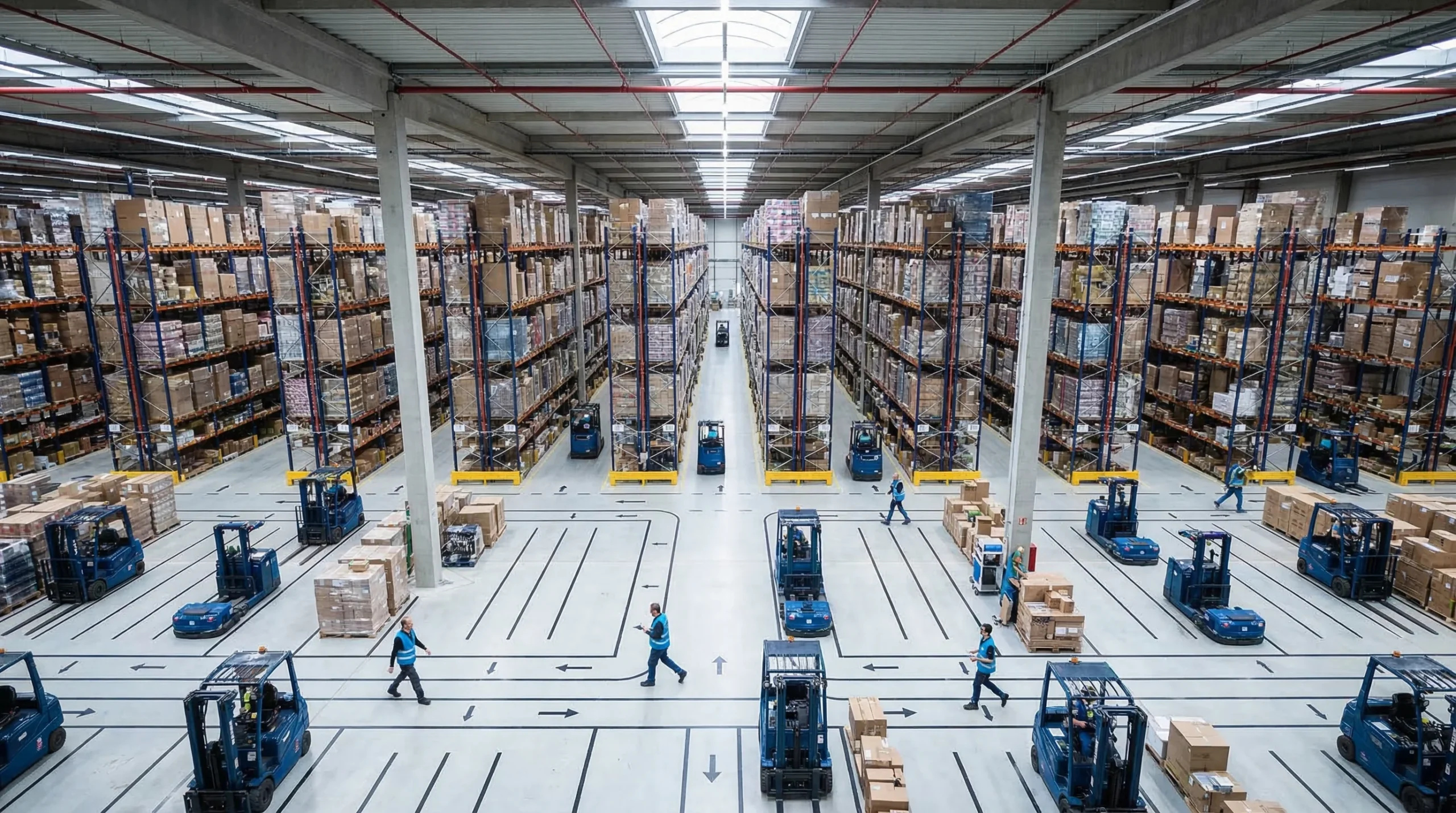

Demand planning software, ai demand forecasting, inventory forecasting tools has become essential for modern businesses. If you’ve ever watched inventory pile up in your warehouse while customers wait for out-of-stock items, you understand the frustration of misaligned supply and demand. Supply chain managers across retail and manufacturing face this challenge daily – balancing the cost of carrying excess inventory against the revenue lost from stockouts. The solution lies in modern demand planning software that transforms historical data into actionable predictions. When combined with AI demand forecasting capabilities and sophisticated inventory forecasting tools, businesses gain the visibility they need to make confident decisions about what to stock, when to reorder, and how much to hold.
This guide explores how these technologies work together to solve real supply chain problems. We’ll examine the core capabilities that matter most, demonstrate how artificial intelligence improves forecast accuracy, and show how the right tools can reduce waste while improving customer satisfaction. Whether you’re managing a retail distribution network or coordinating manufacturing production schedules, understanding these systems will help you build a more responsive, efficient operation.
Understanding Demand Forecasting Software and Its Importance
The gap between what customers want and what you have available represents one of the most expensive problems in supply chain management. Too much inventory ties up capital and warehouse space. Too little means lost sales and disappointed customers. Demand forecasting software exists to close this gap by predicting future needs based on patterns in your data.
The importance of accurate forecasting has grown as supply chains become more complex. Global sourcing, longer lead times, and rising customer expectations for fast delivery leave little room for error. A forecast that’s off by even a small percentage can cascade into significant problems – production delays, expedited shipping costs, or warehouse overflow. Modern forecasting tools address these challenges by processing more data, identifying subtler patterns, and updating predictions continuously as conditions change.
What is Demand Forecasting?
Demand forecasting is the process of estimating how much of each product customers will purchase over a specific future period. This estimate informs nearly every supply chain decision – from how much raw material to order to how many warehouse workers to schedule for next month.
Traditional forecasting relied heavily on simple methods like moving averages or seasonal indices calculated in spreadsheets. While these approaches provided baseline predictions, they struggled with several common scenarios:
- Products with irregular demand patterns or multiple seasonal peaks
- New items without historical sales data
- Market disruptions from competitors, economic shifts, or external events
- Promotions and marketing activities that temporarily alter buying behavior
- Complex relationships between related products or categories
Modern demand forecasting software handles these situations more effectively by incorporating multiple data sources, applying statistical algorithms automatically, and learning from forecast errors to improve over time. The result is a more nuanced, accurate picture of what’s likely to sell and when.
Key Features of Demand Forecasting Software
Effective forecasting platforms share several capabilities that distinguish them from basic spreadsheet approaches. Understanding these features helps you evaluate options and identify which capabilities matter most for your operation.
Automated data integration pulls information from multiple sources – point-of-sale systems, enterprise resource planning platforms, e-commerce channels, and even external data like weather or economic indicators. This comprehensive data foundation enables more accurate predictions than any single source could provide.
Algorithm selection and tuning applies the right statistical method to each product or category. Different items behave differently – a product with strong seasonal patterns requires different treatment than one with steady year-round demand. Good software handles this complexity automatically rather than forcing analysts to manually configure each forecast.

Exception management highlights forecasts that need human attention while allowing routine items to process automatically. This focus on “forecast by exception” lets planners spend their time where it matters most rather than reviewing thousands of SKUs that don’t require intervention.
Collaboration tools enable input from sales teams, marketing departments, and other stakeholders who possess knowledge the system cannot capture directly. A planned promotion, a competitor’s exit from the market, or a major customer’s expansion all affect demand in ways that require human insight to incorporate.
One Platform for Your Entire Operation
Seamless ERP integration connects your warehouse to accounting, purchasing, and sales — eliminating double entry and data silos.
Request a Demo
Exploring the Benefits of AI Demand Forecasting
Artificial intelligence has transformed what’s possible in demand prediction. Where traditional statistical methods excelled at finding linear relationships and seasonal patterns, AI demand forecasting identifies complex interactions that would be impossible to detect manually. This capability proves especially valuable as businesses collect more data from more sources and face more volatile market conditions.
The practical benefits extend beyond just more accurate numbers. AI-powered systems adapt faster when conditions change, provide better predictions for difficult-to-forecast items, and free up planning teams to focus on strategic decisions rather than calculation mechanics. For organizations struggling with forecast accuracy, adopting AI capabilities often produces measurable improvements within months of implementation.
Enhanced Accuracy with AI
Machine learning algorithms improve forecast accuracy by processing vastly more data and finding patterns too subtle for traditional methods to detect. Consider all the factors that might influence demand for a particular product – weather conditions, day of week, competitor pricing, social media sentiment, local events, and dozens more. Human analysts cannot track all these variables simultaneously, but AI systems can.
The improvement in accuracy varies by product type and data quality, but organizations often see meaningful reductions in forecast error after implementing AI-powered tools. More importantly, the improvements tend to concentrate in the areas that matter most – products with irregular demand, seasonal items, and new product introductions that traditionally proved difficult to predict.
AI also excels at identifying relationships between products. If purchasing patterns show that customers who buy product A frequently also buy product B, the system incorporates that insight into forecasts. When product A’s sales spike unexpectedly, the forecast for product B adjusts accordingly. These cross-product relationships are nearly impossible to manage manually at scale but emerge naturally from machine learning analysis.
Predictive Analytics in Demand Forecasting
Predictive analytics extends beyond simple forecasting to answer more sophisticated questions about future demand. Rather than just predicting how much will sell, advanced systems help you understand why demand might change and what factors have the greatest influence.
This deeper analysis supports better decision-making across the organization:
- Marketing teams can model how different promotional strategies would affect demand and inventory requirements before committing budgets
- Procurement specialists can anticipate supplier capacity needs months ahead and negotiate better terms
- Finance departments can generate more accurate revenue projections based on realistic demand scenarios
- Operations managers can plan warehouse staffing and transportation capacity proactively rather than reactively
Predictive analytics also enables scenario planning – running multiple “what if” analyses to understand potential outcomes. What happens to inventory if demand increases 20% above forecast? How much safety stock is needed to maintain 98% service levels given forecast uncertainty? These questions become answerable with sophisticated analytical tools that traditional spreadsheets cannot provide.
How Demand Planning Software Enhances Operational Efficiency
Demand planning software connects forecasting outputs to operational execution, ensuring that predictions translate into action. The best forecast in the world provides no value if it sits in a report while purchase orders and production schedules follow different numbers. Integration between planning and execution systems closes this gap.
Operational efficiency gains come from multiple sources – fewer expedited shipments, reduced overtime, lower carrying costs, and improved customer service. These benefits compound over time as organizations learn to trust their forecasts and build more responsive processes around them. The result is an operation that responds to actual market signals rather than reacting to crises.
Improving Supply Chain Operations
Coordinating activity across a complex supply chain requires shared visibility into expected demand. When everyone works from the same forecast, decisions align naturally. Suppliers know what to produce. Transportation providers can plan capacity. Warehouses can schedule labor. Without this shared view, each party optimizes independently, often creating problems for others in the chain.
Demand planning software serves as the central source of truth that enables this coordination. By publishing forecasts to all stakeholders and tracking actual results against predictions, these systems create accountability and continuous improvement. When forecasts prove wrong, the cause can be identified and addressed rather than buried in finger-pointing between departments.

Consider how a distribution center operates differently with good forecasting. Instead of scrambling to find space for unexpected shipments or pulling workers from other tasks to handle surprise order volumes, managers can plan labor and space allocation weeks ahead. Receiving appointments are scheduled when capacity is available. Picking resources match outbound volume. The operation runs smoothly because demand was anticipated rather than discovered.
Optimizing Inventory Levels
Inventory optimization represents one of the most significant financial benefits of effective demand planning. Every dollar tied up in excess inventory is a dollar not available for other purposes – expanding the product line, investing in equipment, or returning value to shareholders. At the same time, stockouts damage customer relationships and drive sales to competitors.
Finding the right balance requires understanding both forecast accuracy and acceptable risk levels. A product with highly accurate forecasts needs less safety stock than one with unpredictable demand. A critical item that customers cannot substitute requires higher service levels than a commodity product. Good planning software incorporates these considerations into inventory recommendations rather than applying one-size-fits-all rules.
The calculation of optimal inventory levels also considers practical constraints that simpler approaches ignore:
- Supplier minimum order quantities and volume discounts
- Warehouse space limitations and storage costs
- Product shelf life and obsolescence risk
- Seasonal patterns that require building inventory ahead of peak periods
- Lead time variability that increases uncertainty
By incorporating all these factors, demand planning software recommends inventory targets that balance cost, risk, and service level objectives. The result is lower total inventory investment while maintaining or improving customer fill rates.
The Role of Inventory Forecasting Tools in Supply Chain Management
Inventory forecasting tools provide the operational detail needed to execute planning decisions. While demand planning focuses on what customers will buy, inventory forecasting determines what you need to have on hand, considering lead times, safety stock, and replenishment cycles. This translation from demand to inventory is where many organizations struggle.
Effective inventory forecasting requires modeling the full replenishment cycle – how long orders take to arrive, how much variability exists in those lead times, and how demand fluctuates during the waiting period. Simple approaches that ignore this complexity consistently produce either too much inventory or too many stockouts. Modern tools handle these calculations accurately, producing inventory recommendations you can trust.
Managing Stock Levels
Stock level management involves continuous monitoring and adjustment as conditions change. A forecast made last month may no longer apply if demand patterns shift or supply constraints emerge. Inventory forecasting tools track actual consumption against predictions and flag when reorder points need adjustment.
The concept of dynamic safety stock illustrates this approach. Traditional methods set safety stock once, perhaps based on historical variability, then leave it unchanged until someone remembers to review it. Modern tools recalculate safety stock continuously based on recent forecast accuracy and demand volatility. When uncertainty increases, safety stock rises automatically. When patterns stabilize, excess buffer reduces.
Classification systems help prioritize attention across large product catalogs. Not every SKU deserves the same level of analysis. High-value, high-volume items justify sophisticated forecasting and tight inventory control. Slow-moving products with minimal revenue impact can be managed more simply. Inventory forecasting tools typically include classification capabilities that segment products and apply appropriate methods to each segment.
Reducing Waste and Costs
Excess inventory creates costs beyond the capital tied up in products. Warehouse space has real cost – rent, utilities, insurance, and labor to manage the stock. Products that sit too long may become obsolete, damaged, or simply unsaleable at full price. In industries with perishable goods, excess inventory may spoil entirely, turning potential profit into literal waste.
Inventory forecasting tools reduce these costs by improving the match between supply and demand. When you order the right quantities at the right times, less product sits idle waiting for buyers. Fewer items reach expiration or obsolescence. Less warehouse space is consumed by slow-moving stock that provides no customer value.

The environmental benefits merit mention as well. Reduced overproduction means fewer resources consumed manufacturing items that won’t sell. Lower inventory means less transportation and storage energy. Less obsolescence means less material heading to landfills. Organizations increasingly track these sustainability metrics alongside traditional financial measures, and better forecasting contributes to improvement on both fronts.
Integrating Forecasting Tools with Existing Systems
The value of any forecasting solution depends heavily on how well it connects with other business systems. A standalone tool that requires manual data entry and exports recommendations to spreadsheets creates more work than it saves. Effective integration means forecasts flow automatically into purchasing systems, production schedules, and inventory management platforms – becoming part of daily operations rather than a separate exercise.
Integration considerations extend beyond technical connectivity to include process alignment. The best system integrations match the timing of forecasts to the rhythm of business decisions. Weekly sales and operations planning meetings need forecasts updated weekly. Daily warehouse labor scheduling needs daily demand visibility. Quarterly budgeting needs longer-horizon projections. Flexible integration supports all these use cases.
Compatibility and System Requirements
Modern forecasting platforms are designed to work within existing technology environments rather than requiring wholesale replacement of current systems. Standard integration methods like APIs, file transfers, and database connections enable data exchange with common warehouse management software and other enterprise systems.
Key integration points typically include:
- ERP systems for transactional data, master data, and purchase order generation
- Point-of-sale systems for demand signals at the customer level
- Warehouse management platforms for inventory positions and receipt timing
- Transportation management systems for lead time visibility
- Business intelligence tools for reporting and analysis
Data quality often presents a bigger challenge than technical connectivity. Forecasting accuracy depends on accurate historical data – sales transactions, inventory adjustments, returns, and transfers all need to be captured correctly. Integration projects should include data validation steps to identify and correct quality issues before they corrupt forecasts.
User Experience and Implementation Support
Technology capabilities mean little if users struggle to work with the system effectively. The best forecasting tools balance sophisticated algorithms with interfaces that planners can understand and trust. When users don’t understand how a forecast was generated, they’re unlikely to act on it confidently.
Effective implementations include training programs that build both technical skills and conceptual understanding. Planners need to know how to use the software, but they also need to understand forecasting principles well enough to recognize when results don’t make sense. This combination of tool proficiency and domain knowledge produces the best outcomes.
Change management deserves equal attention. Introducing new forecasting tools often changes established workflows and decision rights. People who previously controlled forecasts in spreadsheets may resist centralized systems. Departments accustomed to making independent decisions may struggle with coordinated planning processes. Addressing these organizational dynamics is as important as getting the technology right.
According to Supply Chain Dive, organizations that invest in change management alongside technology implementation see significantly higher adoption rates and faster time to value. The technology works only when people use it.
Building a Business Case for Forecasting Investment
Justifying investment in demand forecasting capabilities requires quantifying expected benefits against implementation costs. While the value seems obvious to those struggling with inventory problems, building a compelling business case demands concrete numbers and realistic assumptions.
Start by measuring current performance. What is your forecast accuracy today, and what does each percentage point of error cost in excess inventory or lost sales? What is your inventory turnover, and how does it compare to industry benchmarks? How much did you spend on expedited shipping last year due to stockouts? These baseline metrics establish the opportunity for improvement.
Quantifying Forecast Improvement Benefits
The financial impact of better forecasting flows through multiple channels. Direct benefits include reduced inventory carrying costs, fewer stockouts, and lower expediting expenses. Indirect benefits include improved customer satisfaction, stronger supplier relationships, and freed-up working capital for other investments.
Consider a simplified example: a company carrying $10 million in average inventory with 25% annual carrying cost spends $2.5 million yearly just to hold that stock. If improved forecasting reduces average inventory by 15% while maintaining service levels, the annual savings exceed $375,000 – likely enough to justify significant technology investment.
Similar calculations apply to stockout costs. Lost sales, emergency shipments, and customer defection all carry real costs that better forecasting can reduce. Gathering these numbers for your specific operation builds the case for investment far more effectively than generic industry claims.
Total Cost of Ownership Considerations
Evaluating forecasting solutions requires looking beyond software license fees to the total cost of ownership. Implementation services, integration development, training programs, and ongoing support all contribute to the real cost of any solution. Cloud-based options may reduce upfront investment but create ongoing subscription costs. On-premise deployments may require infrastructure investments.
Time to value matters as much as total cost. A solution that delivers results in three months may justify higher cost than one requiring eighteen months to implement. The opportunity cost of delayed benefits often exceeds the price difference between alternatives.
Scalability considerations affect long-term costs as well. A solution that works for your current operation but cannot grow with the business creates future migration headaches. Evaluating how costs change as transaction volumes, user counts, and data volumes increase helps avoid unpleasant surprises down the road.
Common Implementation Challenges and How to Address Them
Even the best forecasting technology can fail to deliver expected value if implementation challenges aren’t addressed proactively. Understanding common obstacles helps you plan for them and increase the likelihood of success.
Data quality issues top the list of implementation challenges. Forecasting systems depend on accurate historical data, and many organizations discover significant gaps or errors once they start analyzing their information systematically. Missing transactions, incorrect product codes, and inconsistent units of measure all corrupt forecasts built on that foundation.
Addressing Data Quality Problems
Fixing data quality requires both immediate cleanup and ongoing governance processes. Before implementation, conduct a thorough audit of the data sources that will feed the forecasting system. Identify gaps, inconsistencies, and errors. Develop rules for handling common problems – how to treat promotional periods, how to adjust for stockouts that suppressed sales, how to handle product transitions.
Ongoing data governance ensures quality doesn’t degrade after the initial cleanup. Define ownership for key data elements. Establish validation rules that catch errors at entry rather than discovering them in forecast results. Monitor data quality metrics regularly and address problems quickly before they compound.
Sometimes working around data limitations proves more practical than fixing them completely. Forecasting algorithms can be configured to handle known data issues – adjusting for stockouts, smoothing promotional spikes, or excluding corrupted periods. These workarounds shouldn’t become permanent substitutes for proper data management, but they can enable progress while longer-term fixes proceed.
Managing Organizational Change
Forecasting system implementations often fail not because the technology doesn’t work but because people don’t change how they operate. Sales teams continue providing optimistic projections rather than realistic estimates. Buyers override system recommendations based on gut feel. Managers hold excess inventory “just in case” despite what the forecast shows.
Overcoming this resistance requires demonstrating value early and building trust gradually. Start with a limited pilot where success is likely. Show skeptics concrete results – improved accuracy, reduced stockouts, lower inventory – that they can verify against their own experience. As evidence accumulates, expand the scope while continuing to prove value.
Accountability mechanisms help reinforce new behaviors. Track forecast accuracy by contributor and make results visible. Measure the outcomes of override decisions – did the change improve or worsen the result? When people see that the system outperforms their intuition most of the time, resistance fades.
According to research published by Gartner, organizations with structured change management programs achieve better outcomes from supply chain technology investments. The human factors matter as much as the technical ones.
Future Trends in Demand Forecasting
The capabilities of demand forecasting tools continue advancing rapidly. Understanding emerging trends helps you make investment decisions that remain relevant as the field evolves.
Machine learning models grow more sophisticated each year, identifying patterns that current algorithms miss. Deep learning techniques borrowed from image recognition and natural language processing are being adapted for demand prediction with promising early results. These advances will likely deliver another step-change in forecast accuracy over the coming years.
External Data Integration
Forecasting systems increasingly incorporate external data sources beyond traditional sales history. Weather data helps predict demand for seasonal products. Economic indicators signal shifts in consumer spending. Social media sentiment provides early warning of changing preferences. Competitive intelligence reveals market share shifts.
The challenge lies in determining which external signals actually improve forecasts versus adding noise. Not every data source that seems relevant actually predicts demand better. Effective systems test correlations rigorously and incorporate only those sources that demonstrably improve accuracy.
Real-time data streams enable faster response to changing conditions. Rather than updating forecasts weekly or monthly, systems can adjust continuously as new information arrives. Point-of-sale data from this morning influences replenishment recommendations this afternoon. Shipping delays announced by carriers trigger automatic forecast adjustments. This responsiveness proves especially valuable in volatile markets.
Collaborative Planning Evolution
Supply chain partners increasingly share forecasting information to improve end-to-end performance. Retailers share point-of-sale data with suppliers who can then plan production more accurately. Manufacturers share production schedules with logistics providers who can position capacity accordingly. These collaborative relationships require technology platforms that facilitate secure data sharing.
The shift toward demand sensing – detecting changes in real-time rather than predicting months ahead – represents a fundamental evolution in forecasting philosophy. Traditional methods focused on long-horizon predictions that enabled efficient production planning. Demand sensing emphasizes rapid detection and response, acknowledging that accurate long-term forecasts may be impossible in volatile markets.
Both approaches have value, and leading organizations typically combine them. Long-term forecasts drive strategic capacity decisions while short-term sensing enables tactical adjustments. The forecasting tools of the future will support both modes seamlessly.
Conclusion
Effective demand forecasting transforms supply chain operations from reactive firefighting to proactive planning. With the right demand planning software, supported by AI demand forecasting capabilities and accurate inventory forecasting tools, organizations can dramatically improve their ability to match supply with demand. The result is lower inventory investment, fewer stockouts, reduced waste, and happier customers.
The technology has matured significantly in recent years. Cloud-based platforms have made sophisticated forecasting accessible to mid-sized organizations that previously couldn’t afford dedicated planning systems. Machine learning algorithms have improved accuracy beyond what traditional statistical methods could achieve. Integration capabilities have reduced implementation complexity and time to value.
But technology alone doesn’t guarantee success. Organizations that achieve the best results combine capable tools with clean data, trained users, and management commitment to using forecasts in decision-making. They start with realistic expectations, prove value incrementally, and continuously improve their processes as they learn.
If you’re struggling with inventory imbalances, inaccurate forecasts, or disconnected planning processes, now is an excellent time to explore modern solutions. Schedule a demo with our team to see how advanced forecasting capabilities can address your specific challenges. Our specialists can help you evaluate your current processes, identify improvement opportunities, and develop an implementation approach that fits your organization.
Ready to learn more about building a responsive, efficient supply chain? Explore our warehouse management solutions to understand how forecasting integrates with broader operational capabilities. Better demand prediction is just one piece of the puzzle – the real value comes from connecting forecasts to execution across your entire operation.
Frequently Asked Questions
How does demand planning software benefit businesses?
Demand planning software benefits businesses by predicting future inventory needs based on historical data. This helps ensure optimal stock levels, preventing both overstock and stockouts. By accurately forecasting demand, businesses can reduce carrying costs and improve customer satisfaction. These tools also enable better decision-making by providing insights into purchasing trends and seasonality.
What role does AI play in demand forecasting?
AI enhances demand forecasting by analyzing complex data patterns to improve prediction accuracy. It processes large datasets quickly, identifying trends that traditional methods might miss. AI-driven tools continuously update forecasts as new data becomes available, adapting to changing market conditions. This leads to more precise inventory management and efficient supply chain operations.
Why are inventory forecasting tools essential for supply chains?
Inventory forecasting tools are essential for supply chains as they help balance stock levels and demand. They minimize the risk of stockouts and excess inventory, reducing costs and improving service levels. These tools provide insights into reorder points and optimal stock quantities, ensuring timely product availability. By leveraging historical sales data, they enhance decision-making and operational efficiency.
What is the importance of accurate demand forecasting?
Accurate demand forecasting is crucial for aligning inventory with customer demand, minimizing costs and maximizing sales. It helps businesses avoid overstock and stockouts, optimizing cash flow and warehouse space. With precise forecasts, companies can better plan production schedules and reduce expedited shipping expenses. This accuracy is increasingly important in complex global supply chains with high customer expectations.
How do demand planning software, ai demand forecasting, inventory forecasting tools work together?
Demand planning software, AI demand forecasting, and inventory forecasting tools work together to streamline supply chain management. They transform data into actionable insights, predicting demand and optimizing inventory levels. AI enhances these forecasts with real-time data analysis, while inventory tools ensure stock aligns with predictions. This synergy reduces waste, improves customer satisfaction, and supports strategic decision-making across the supply chain.