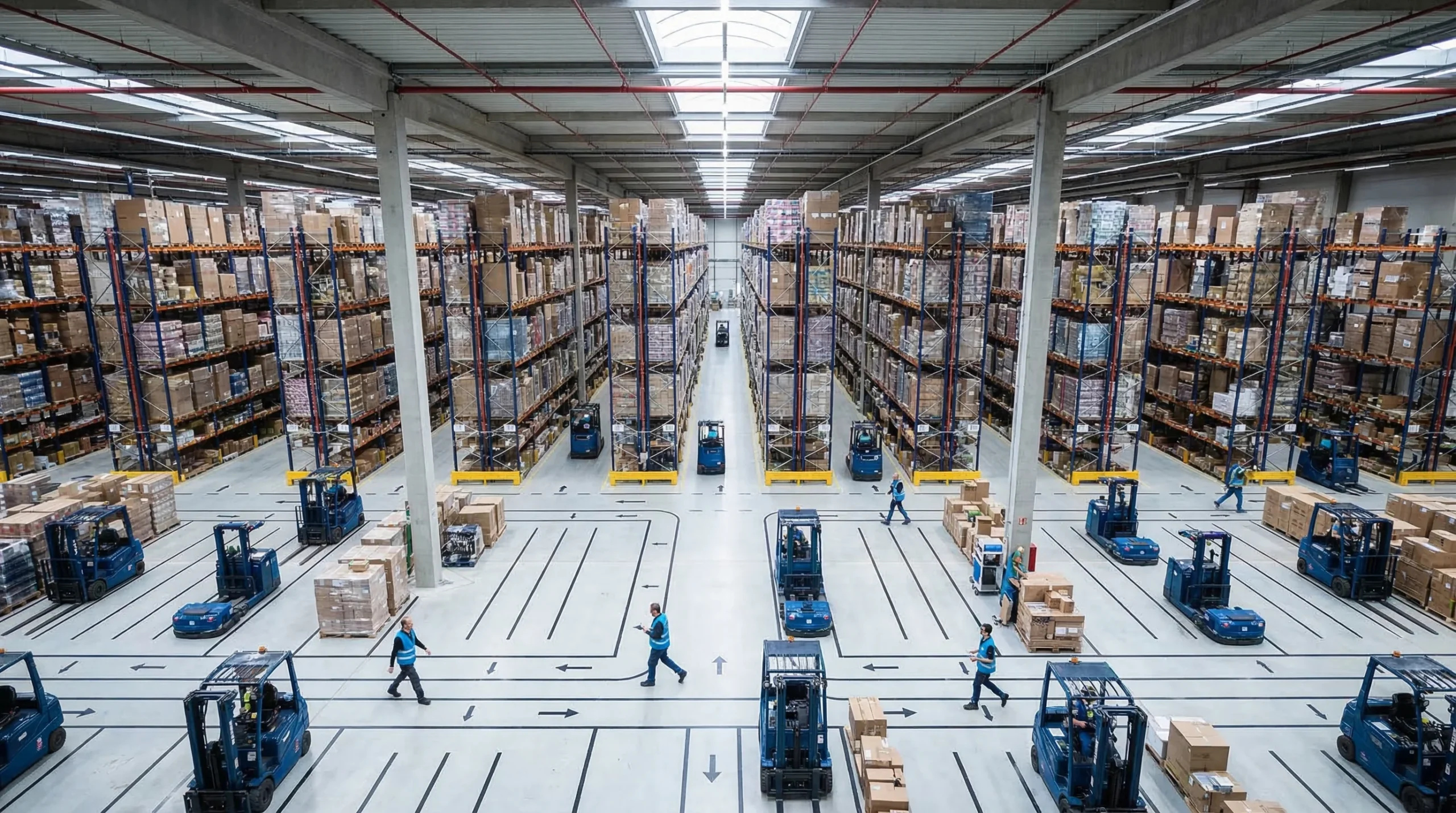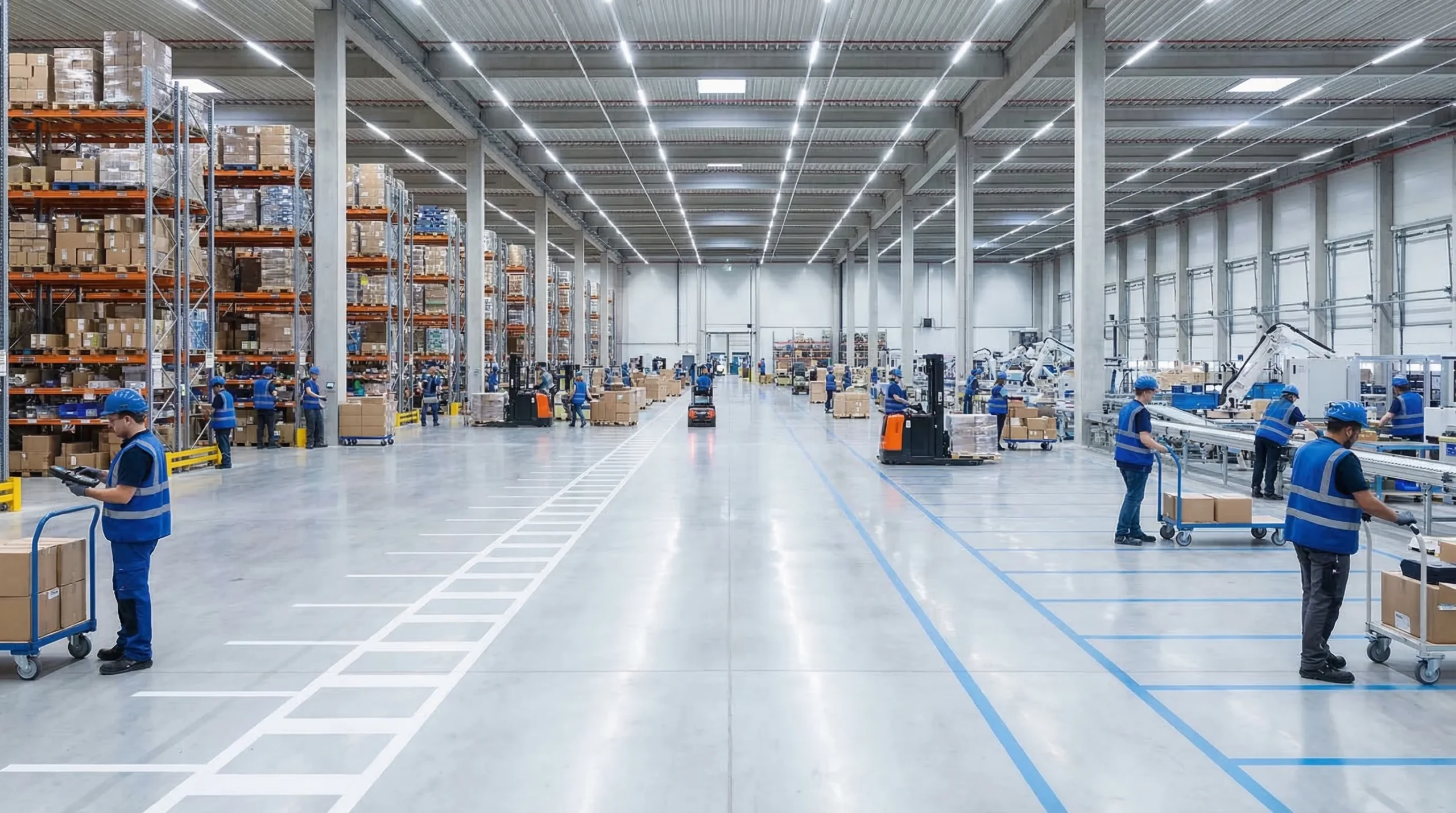
A lean inventory strategy where goods arrive at the warehouse precisely when needed for production or order fulfillment, minimizing storage time and carrying costs. This approach requires sophisticated coordination between suppliers, transportation, and warehouse operations to ensure materials flow seamlessly from receiving dock to their next destination without extended storage periods.
JIT receiving reduces warehousing costs by eliminating the need for large buffer inventories and extensive storage space. It also minimizes inventory carrying costs, reduces obsolescence risk, and improves cash flow by decreasing working capital tied up in stock. However, this strategy demands robust supplier relationships, reliable transportation networks, and advanced planning systems to prevent stockouts.
For example, an automotive manufacturer might schedule parts deliveries to arrive within hours of assembly line needs, allowing components to move directly from receiving to production without warehousing. Success requires real-time visibility, accurate demand forecasting, and contingency plans for supply disruptions.