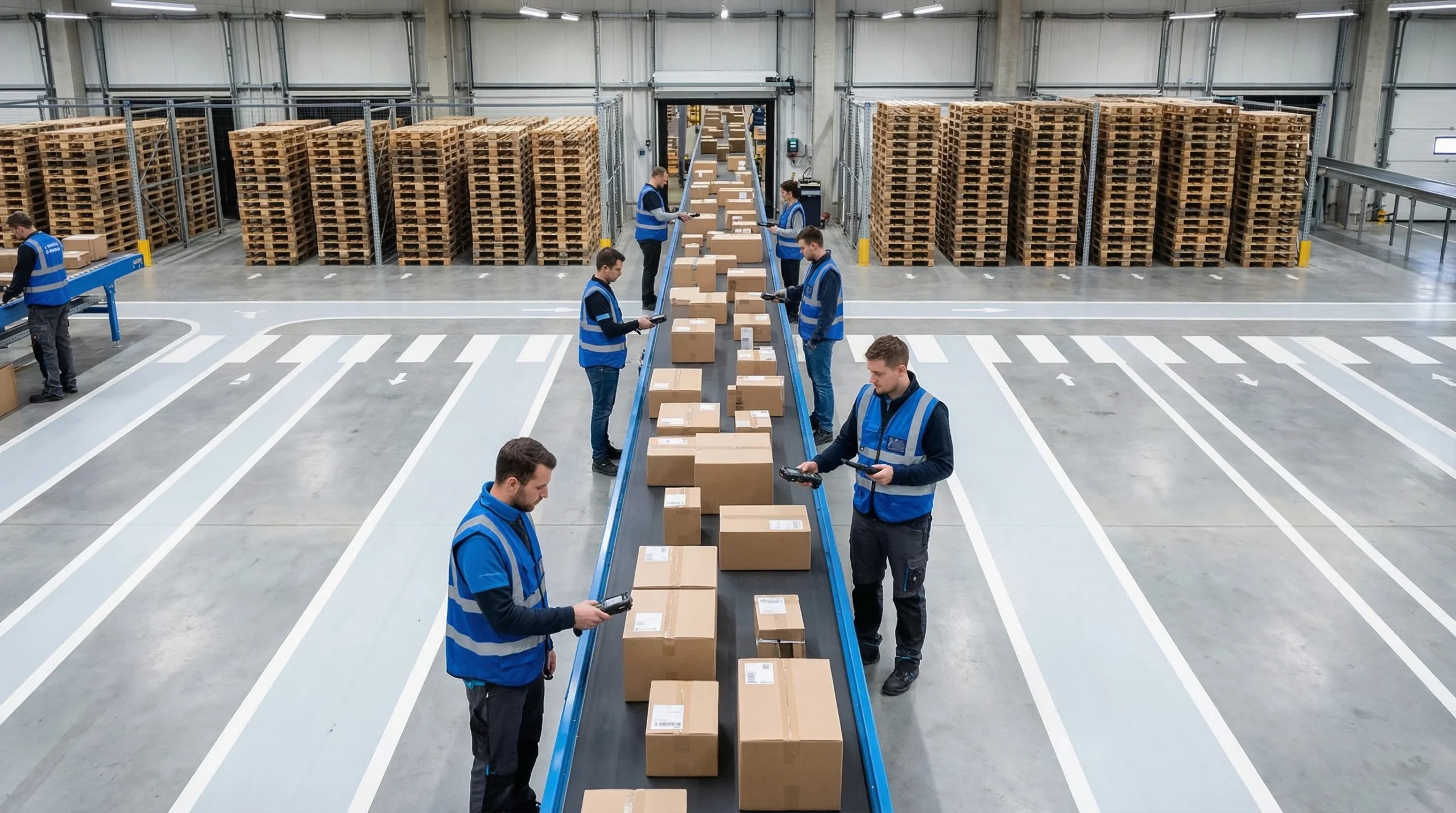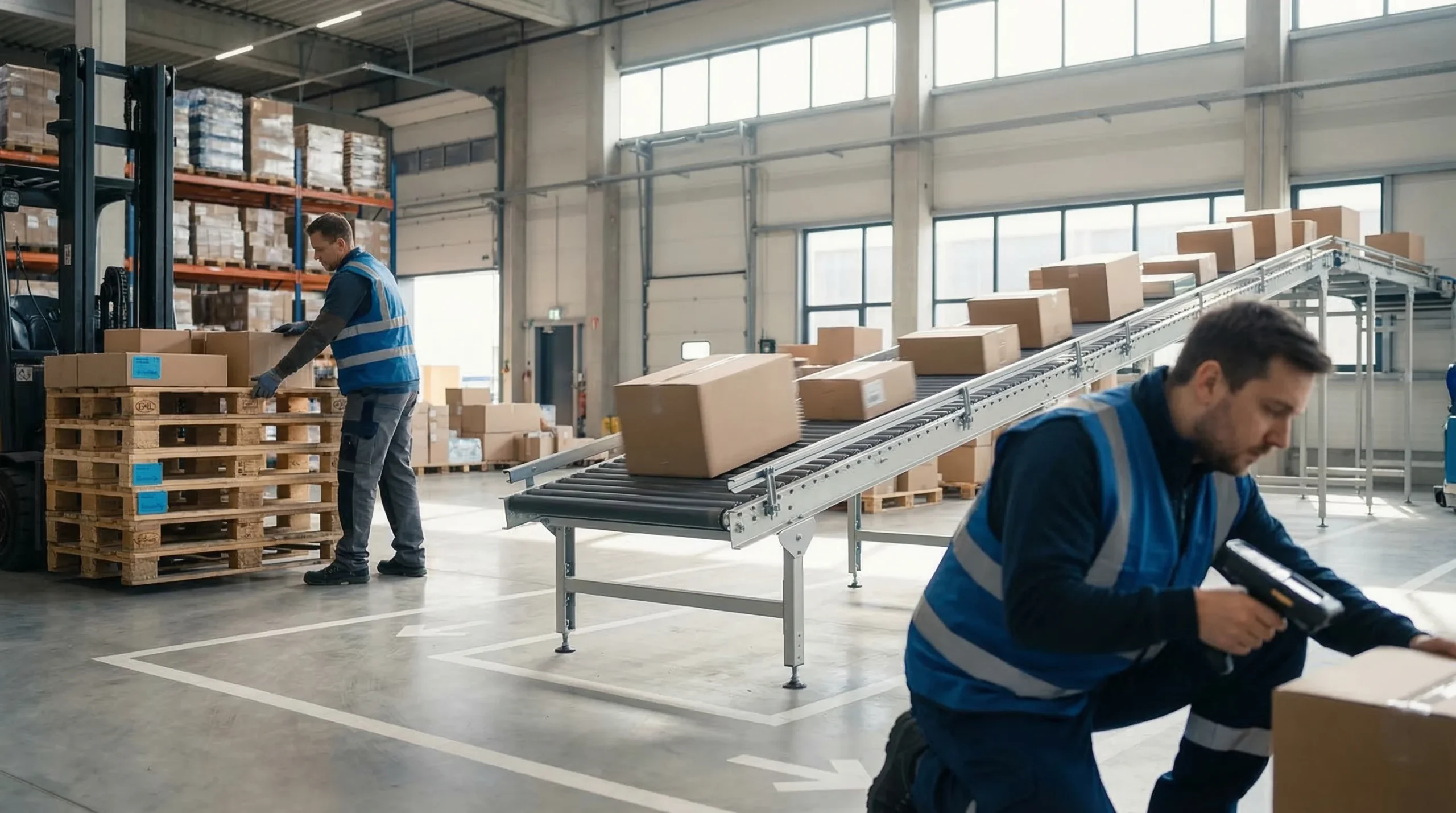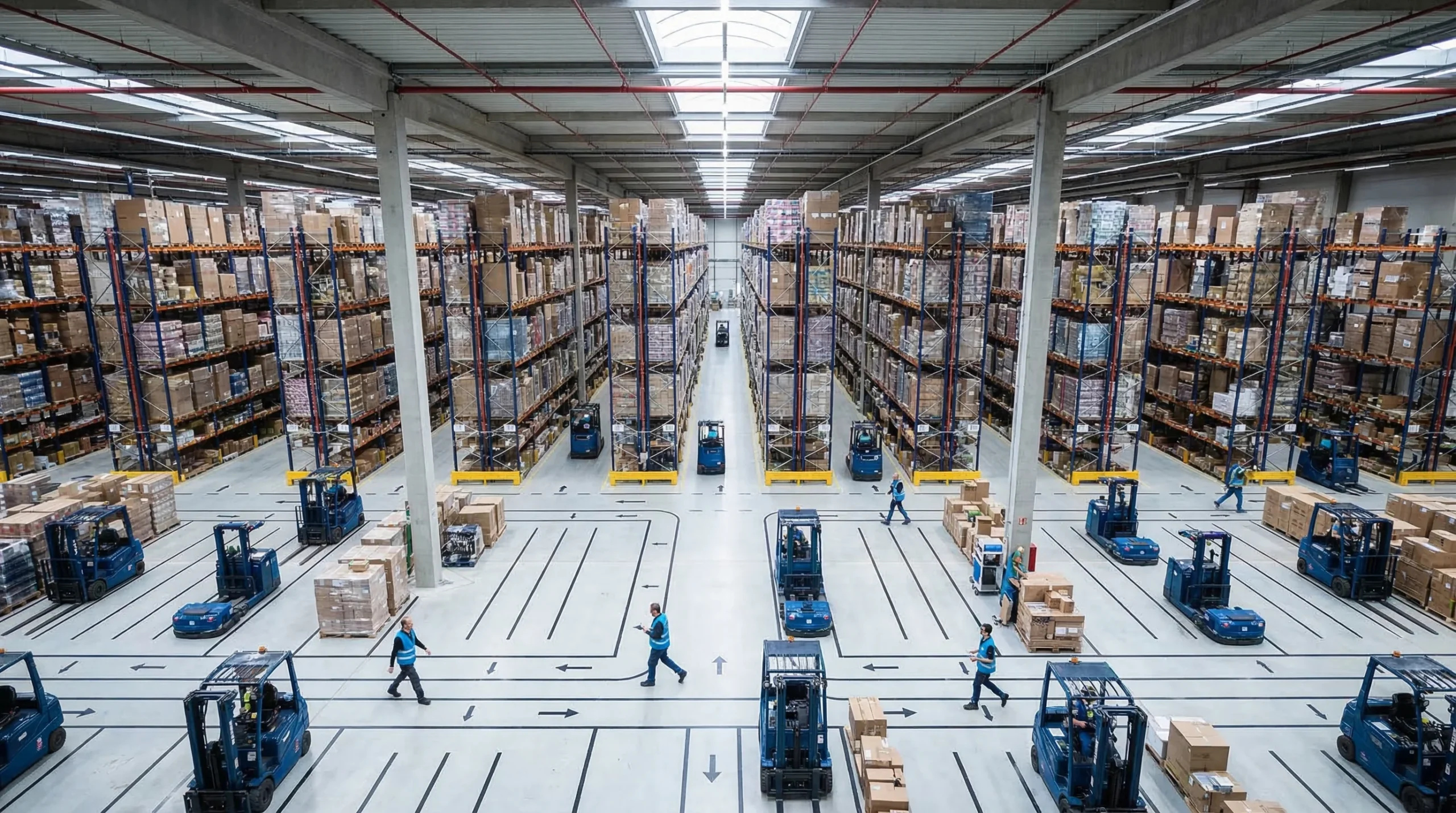
A warehouse optimization technique where a WMS intelligently combines multiple types of tasks into a single worker’s route to maximize efficiency and minimize travel time. Instead of having workers complete all picking tasks before moving to putaway or replenishment activities, the system dynamically sequences different task types based on proximity, priority, and resource availability.
This approach significantly reduces non-productive travel time and improves overall warehouse productivity. By analyzing real-time conditions like worker location, task urgency, and equipment availability, the WMS creates optimized workflows that keep workers continuously engaged in value-added activities.
For example, a picker completing an order in aisle 12 might receive a putaway task for the same aisle, followed by a replenishment task nearby, rather than walking empty-handed back to a staging area. This intelligent sequencing can improve productivity by 15-25% while reducing worker fatigue and operational costs. Task interleaving is particularly valuable in high-volume facilities where travel time represents a significant portion of total labor hours.