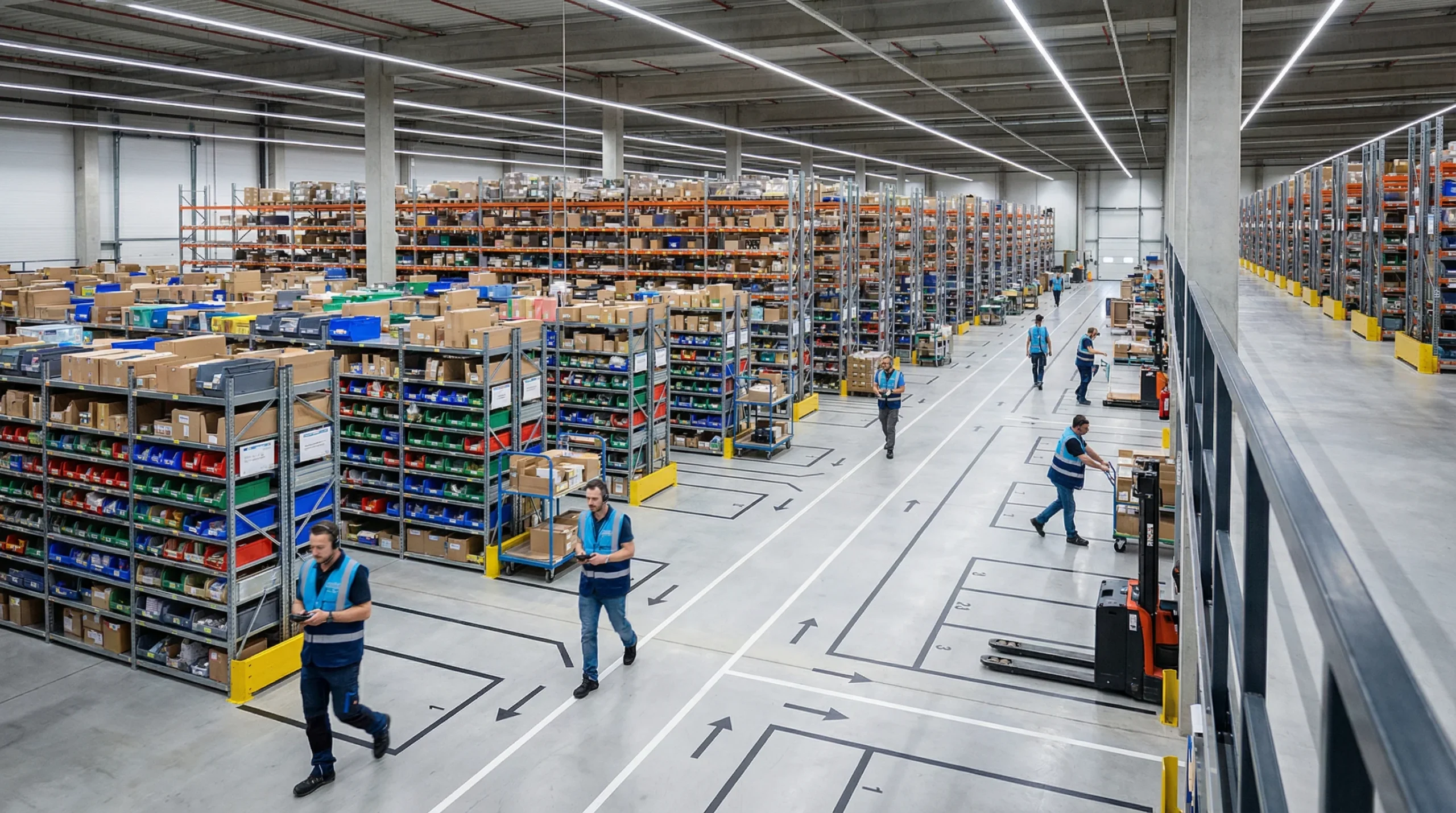

Barcode scanners for inventory, barcode scanning system for inventory, wireless barcode scanner for inventory has become essential for modern businesses. Imagine a distribution center where every product sits in its designated location, yet workers still spend hours each day hunting for items that seem to have vanished into thin air. Clipboards pile up near workstations, and by the time someone discovers a data entry error, three shipments have already gone out with the wrong quantities. This scenario plays out in manufacturing facilities everywhere, draining productivity and profits alike. The solution often lies in implementing reliable barcode scanners for inventory tracking, paired with a comprehensive barcode scanning system for inventory management that eliminates guesswork from daily operations. When manufacturers add a wireless barcode scanner for inventory tasks, they gain the flexibility to capture data anywhere on the floor without being tethered to fixed workstations.
This guide explores how barcode technology transforms manufacturing operations from chaotic to controlled. You will learn about different scanner types, implementation strategies, and the real-world applications that make these systems valuable. Whether you manage a small production facility or oversee multiple warehouse locations, understanding barcode technology helps you make informed decisions about upgrading your inventory processes.
Why Barcode Systems Matter in Modern Manufacturing
Manufacturing has always demanded precision. Raw materials must arrive on time, production schedules depend on accurate component counts, and finished goods need to reach customers without delay. Manual inventory methods worked when operations were smaller and simpler, but today’s manufacturing environment requires speed and accuracy that paper-based systems cannot deliver.
Consider a production line that assembles electronic components. Each finished unit contains dozens of parts from multiple suppliers. Without accurate tracking, a single missing component can halt an entire assembly line while workers scramble to locate replacement stock. These disruptions cascade through the production schedule, affecting delivery commitments and customer relationships.
The Real Cost of Manual Inventory Errors
Inventory errors rarely stay contained. A miscounted shipment leads to stockouts, which trigger emergency reorders at premium prices. Overstocked items tie up capital and warehouse space while slowly becoming obsolete. Workers waste time recounting shelves instead of performing value-added tasks. The cumulative effect hits both the bottom line and employee morale.
Barcode systems address these problems by creating a single source of truth for inventory data. Every scan updates the central database immediately, giving managers accurate information for purchasing decisions and production planning. The technology removes human interpretation from data entry, replacing it with consistent, reliable capture.
Accuracy That Scales With Growth
Small manufacturing operations sometimes manage inventory through institutional knowledge. Long-tenured employees know where everything sits and how much stock remains on hand. This approach falls apart when the business grows, staff turns over, or new product lines expand the SKU count beyond what anyone can memorize.
Barcode systems scale naturally with business growth. Adding new products simply means generating new barcode labels and entering items into the system. Training new employees takes hours rather than months because the technology guides workers through standard procedures. The system maintains accuracy regardless of how many products or people interact with it.

Understanding Barcode Scanners for Inventory Applications
Not all barcode scanners serve the same purpose. The manufacturing environment presents unique challenges that influence which scanner type works best for specific applications. Understanding these differences helps you select equipment that matches your operational needs without overspending on unnecessary features.
Handheld Scanners: Versatility for Variable Tasks
Handheld barcode scanners for inventory remain the most common choice in manufacturing facilities. Workers carry these devices to wherever items need scanning, making them ideal for receiving, cycle counting, and quality inspections. Modern handheld units read both traditional linear barcodes and two-dimensional codes like QR and Data Matrix formats.
The ergonomic design of current handheld scanners reduces fatigue during extended use. Many models feature pistol grips that fit naturally in the hand, while others offer straight configurations for workers who prefer different scanning angles. Durability ratings indicate how much abuse the scanner can withstand, an important consideration in industrial settings where drops and impacts occur regularly.
Fixed-Mount Scanners: Automated Capture Points
Fixed-mount scanners attach permanently to conveyor lines, doorways, or workstations. Items pass through the scanner’s field of view, and the system captures barcode data automatically without manual intervention. This configuration works well for high-volume operations where scanning each item individually would create bottlenecks.
Manufacturing facilities often position fixed scanners at transition points between process stages. A scanner at the end of an assembly line can verify that completed units match work orders before they proceed to packaging. Another at the shipping dock confirms that outbound items correspond to customer orders. These automated checkpoints catch errors before they leave the facility.
Mobile Computer Scanners: Computing Power on the Move
Mobile computers combine scanning capability with full computing functions in a single rugged device. Workers can scan items, view inventory records, receive pick instructions, and update system data without returning to a fixed terminal. These devices run specialized warehouse applications that guide workflows and enforce proper procedures.
The processing power of mobile computers supports complex tasks that simple scanners cannot handle. Workers can look up part specifications, check alternative storage locations for out-of-stock items, or access troubleshooting guides directly on the device screen. This information availability reduces errors and speeds decision-making on the floor.
Selecting the Right Barcode Scanning System for Inventory Control
Choosing a barcode scanning system for inventory management involves more than picking scanners off a catalog page. The complete system includes hardware, software, network infrastructure, and the labels or tags that carry barcode data. Each component must work together reliably to deliver the accuracy and efficiency gains that justify the investment.
Barcode Format Considerations
The barcode format you choose affects scanner selection, label size, and data capacity. Linear barcodes like Code 128 and Code 39 remain popular for their simplicity and universal readability. These one-dimensional codes encode alphanumeric characters in varying bar widths and spaces.
Two-dimensional codes pack more data into smaller spaces. A single 2D barcode can contain:
- Part numbers and serial numbers
- Lot and batch identification
- Manufacturing dates and expiration dates
- Supplier information and certifications
- Links to detailed specifications or documentation
Manufacturing facilities often use 2D codes when tracking requirements extend beyond simple identification. Industries with strict traceability regulations, such as aerospace and medical device manufacturing, frequently mandate 2D codes that carry complete part genealogy information.
Connectivity and Network Requirements
Modern barcode systems connect to central databases through wired or wireless networks. Real-time connectivity ensures that every scan immediately updates inventory records visible throughout the organization. Batch processing, where scanners store data locally and upload periodically, still has applications in environments where network coverage proves challenging.
Network reliability becomes critical when operations depend on real-time data. Dead zones in wireless coverage can strand workers with non-functional equipment, creating frustration and workarounds that undermine system accuracy. A thorough site survey before implementation identifies coverage gaps that need additional access points or signal amplification.
Software Integration With Existing Systems
Barcode scanning hardware captures data, but software determines what happens with that information. The scanning system must integrate with your enterprise resource planning platform, warehouse management software, and any other systems that rely on inventory data. Disconnected systems create data silos that defeat the purpose of accurate barcode capture.
Integration complexity varies depending on the systems involved and the data flows required. Some implementations use simple file transfers between systems, while others require real-time API connections that update records instantly across multiple platforms. Understanding your integration requirements early in the selection process prevents costly surprises during implementation.

Implementing a Barcode Scanning System: Steps and Strategies
Successful implementation of a barcode scanning system for inventory requires careful planning and systematic execution. Rushing the process often leads to workarounds and exceptions that erode the accuracy the system should provide. A methodical approach establishes strong foundations that support long-term operational improvements.
Assessing Current State and Defining Goals
Before selecting any technology, document your current inventory processes thoroughly. Map out how materials move through your facility, where data gets captured or created, and what problems occur most frequently. This assessment reveals the specific pain points that barcode technology should address.
Goal definition should be specific and measurable. Rather than aiming vaguely for “better inventory accuracy,” establish targets like reducing inventory variance from five percent to under one percent. Clear goals guide technology selection and provide benchmarks for evaluating success after implementation.
Pilot Testing Before Full Rollout
Pilot programs test the system in controlled conditions before committing to full deployment. Select a representative area of your operation for the pilot, ideally one that includes common challenges without being so critical that problems would cause major disruptions. The pilot reveals practical issues that planning alone cannot anticipate.
During the pilot phase, gather feedback from the workers who use the system daily. They identify usability problems, missing features, and workflow conflicts that technical evaluations miss. Their buy-in also smooths the transition when you expand the system to other areas.
Training for Consistent Adoption
Technology only works when people use it correctly. Comprehensive training covers not just how to operate scanners but why accurate scanning matters to the organization. Workers who understand the downstream effects of skipped scans or incorrect entries become partners in maintaining data quality rather than obstacles to overcome.
Training should address common problem scenarios:
- What to do when a barcode will not scan
- How to handle items without labels
- Proper procedures for damaged or defective materials
- When and how to request supervisor assistance
- Reporting system problems or suggested improvements
Overcoming Resistance to Change
Some workers view new technology as a threat to their expertise or job security. Others simply prefer familiar methods and resist learning new procedures. Addressing these concerns directly prevents passive resistance that undermines system effectiveness.
Involving workers in the implementation process builds ownership and reduces resistance. Ask experienced staff to help identify process improvements, test equipment options, and develop training materials. Their practical knowledge improves the final system while their participation creates advocates who encourage peers to embrace the change.
The Advantages of Wireless Barcode Scanners for Inventory Operations
Wireless technology has transformed how manufacturers approach barcode scanning. A wireless barcode scanner for inventory tasks frees workers from cables and fixed positions, enabling data capture wherever materials exist. This mobility creates efficiency gains that justify the additional cost over tethered alternatives.
Mobility That Matches Modern Workflows
Manufacturing workflows rarely follow straight lines. Materials move between receiving docks, storage areas, production lines, quality stations, and shipping zones. Workers who scan items at each transition need equipment that moves with them rather than forcing them to transport items to scanning stations.
Wireless scanners support natural movement patterns. A worker unloading a delivery truck can scan each pallet at the dock rather than bringing pallets to a terminal inside the warehouse. Cycle counters walk through storage areas scanning items on shelves without trailing cables that snag on racking or create trip hazards.
Reduced Infrastructure Costs
Wired scanners require network drops at every scanning location. Adding new scan points means running cables through ceilings, walls, or cable trays. The infrastructure cost often exceeds the scanner cost, especially in facilities with high ceilings or limited existing network coverage.
Wireless systems need only sufficient access point coverage to maintain connectivity. Adding new scanning locations requires no new cabling, only ensuring that the wireless network reaches the area. This flexibility supports reconfiguration as operations evolve without expensive infrastructure changes.
Battery and Connectivity Considerations
Wireless freedom comes with battery management responsibilities. Scanners that die mid-shift disrupt workflows and frustrate workers. Modern devices offer full-shift battery life, but facilities need charging systems and spare batteries to handle extended operations or depleted units.
Wireless connectivity also requires attention. Coverage gaps prevent scanning in certain areas, while interference from other equipment can cause intermittent problems. Enterprise-grade wireless infrastructure designed for industrial environments performs better than consumer-grade equipment pressed into commercial service.

Practical Applications of Wireless Barcode Scanners in Manufacturing
Wireless barcode scanners for inventory serve numerous manufacturing applications beyond basic inventory tracking. Understanding these use cases helps identify opportunities to extend barcode technology throughout your operations for maximum return on investment.
Receiving and Putaway Operations
Receiving begins the inventory lifecycle, and errors here propagate through all downstream processes. Wireless scanners let workers verify deliveries against purchase orders directly at the dock. Each scan confirms that received items match what suppliers claim to have shipped, catching discrepancies before acceptance.
Putaway benefits from scanner-directed workflows. Instead of workers choosing storage locations based on convenience or habit, the system assigns locations that optimize space utilization and retrieval efficiency. The scanner displays the assigned location and confirms correct placement, eliminating the misplacements that cause inventory inaccuracies.
Production Floor Tracking
Manufacturing operations need visibility into work-in-process inventory, not just raw materials and finished goods. Wireless scanners at production stations track when materials enter each process stage, how long they remain there, and when they move to the next step. This data supports production scheduling and identifies bottlenecks that limit throughput.
Quality control integrations allow scanners to record inspection results alongside inventory movements. A failed inspection automatically quarantines the item and triggers appropriate workflows for rework or disposal. This connection between quality and inventory systems prevents defective materials from reaching customers or contaminating good stock.
Order Picking and Shipping
Pick accuracy directly affects customer satisfaction and return rates. Wireless scanners guide pickers to correct locations and verify that selected items match order requirements before they leave the pick zone. The scanner alerts workers immediately when they select wrong items, preventing errors from advancing through the process.
Shipping verification provides the final accuracy check before orders leave your facility. Scanners confirm that packed items match packing lists and shipping labels before carriers accept them. This last checkpoint catches picking errors that somehow passed earlier verifications and prevents expensive shipping of wrong products.
Cycle Counting and Inventory Audits
Regular cycle counting maintains inventory accuracy without the operational disruption of wall-to-wall physical inventories. Wireless barcode scanners for inventory counting let workers move through storage areas efficiently, scanning items and entering counts that the system compares against expected quantities.
Variance identification becomes automatic. When counts differ from system records, the scanner flags the discrepancy for investigation. Some systems route variance approvals through supervisors to ensure accountability, while others allow workers to correct obvious errors immediately. Either approach maintains data integrity while minimizing investigation overhead.
Real-World Impact: How Barcode Systems Transform Manufacturing Operations
Consider a regional manufacturer of industrial components that supplies automotive assembly plants. Before implementing barcode scanning, the company relied on paper travelers that accompanied parts through production and handwritten logs that tracked shipments. Missing paperwork caused delays while workers reconstructed records from memory and partial documentation.
After deploying barcode scanners for inventory throughout the facility, the transformation was striking. Receiving accuracy improved dramatically because workers scanned every incoming shipment against purchase orders. Storage locations became reliable because putaway scanning enforced proper placement. Production tracking moved from periodic updates to real-time visibility.
Efficiency Gains That Compound Over Time
The initial efficiency improvements came from eliminating obvious waste: time spent searching for items, recounting inventory, and correcting shipping errors. These gains alone often justify barcode system investments through reduced labor costs and improved customer service.
Deeper benefits emerge as accurate data enables better decision-making. Purchasing can rely on inventory records for reorder decisions instead of building in safety buffers that tie up working capital. Production planning becomes more reliable when component availability matches system records. Sales can promise delivery dates with confidence because they trust the data.
Cost Reductions Beyond Labor Savings
Imagine a growing e-commerce fulfillment center that ships directly to consumers. Before barcode implementation, the company experienced a significant rate of returns due to wrong items shipped. Each return cost money in shipping, restocking labor, replacement shipment, and customer service time.
After implementing a barcode scanning system for inventory verification, wrong-item shipments dropped substantially. The reduction in returns paid for the scanning system within months, and ongoing savings flowed directly to the bottom line. Customer satisfaction improved as well, reducing churn and increasing repeat purchases.
Emerging Trends in Barcode Technology for Manufacturing
Barcode technology continues evolving as related technologies mature and new capabilities emerge. Manufacturers planning current investments should understand these trends to make decisions that remain relevant as the landscape shifts.
RFID Complementing Barcode Systems
Radio frequency identification reads tags without line-of-sight scanning. An RFID reader can detect hundreds of tagged items simultaneously, making it valuable for bulk operations where individual barcode scanning would be impractical. Manufacturing facilities increasingly use RFID for pallet-level tracking while maintaining barcodes for item-level precision.
The technologies complement rather than replace each other. RFID excels at counting items in containers, tracking assets through facilities, and automating checkpoint verification. Barcodes remain superior for positive identification of specific items, detailed data capture, and cost-sensitive applications where RFID tag prices are prohibitive.
Image-Based Scanning Advances
Traditional laser scanners read barcodes by measuring reflected light patterns. Image-based scanners capture actual pictures of barcodes and use sophisticated algorithms to decode them. This approach reads damaged or poorly printed codes that laser scanners cannot interpret, reducing frustration and workarounds in real-world conditions.
Image capture also enables additional functionality. The same scanner that reads a barcode can capture photos of damaged packaging, read text through optical character recognition, or document conditions for quality records. These expanded capabilities increase return on scanner investments.
Integration With Broader Automation
Barcode systems increasingly connect with automated material handling equipment. Autonomous mobile robots read barcodes to navigate facilities and identify pick locations. Automated storage and retrieval systems use barcode verification to confirm correct item placement and retrieval. These integrations extend barcode benefits beyond manual operations.
Data analytics applied to barcode scan history reveals operational patterns that manual observation misses. Analysis might identify locations where scanning delays occur frequently, suggesting process or layout improvements. Or it might reveal workers who need additional training based on error patterns in their scan data. This analytical capability transforms scan records from transaction logs into operational intelligence as noted in recent manufacturing industry research.
Preparing Your Organization for Barcode System Success
Technology alone does not guarantee results. Organizations that achieve the best outcomes from barcode systems share certain characteristics that support successful implementation and ongoing operation. Developing these organizational capabilities alongside technology deployment maximizes return on investment.
Data Quality as an Organizational Priority
Barcode systems capture data accurately, but they cannot fix fundamental problems with item master records, location definitions, or process documentation. Organizations must commit to maintaining clean data as an ongoing priority, not just a project task. This commitment requires clear ownership, regular audits, and processes for identifying and correcting problems.
Change control disciplines prevent data quality erosion after initial cleanup. New items need complete, accurate records before they enter inventory. Location changes must update system records immediately. Process modifications need corresponding system updates. Without these disciplines, data quality degrades over time until the system becomes unreliable.
Continuous Improvement Mindset
Initial implementation never captures all possible benefits. Organizations that treat deployment as a starting point rather than an endpoint continue finding improvements for years afterward. Regular reviews of system performance, user feedback, and emerging capabilities identify opportunities to extend value.
Worker suggestions often surface the best improvement ideas. Front-line staff see problems and opportunities that managers miss from their more distant vantage points. Creating channels for these suggestions and acting on valuable ones maintains engagement and drives ongoing optimization as highlighted by supply chain industry analysts.
Vendor Partnership Selection
Hardware and software vendors become long-term partners in your success. Selection criteria should extend beyond initial purchase price to consider support quality, upgrade paths, integration capabilities, and financial stability. The lowest-cost option often proves most expensive when support fails or the vendor exits the market.
Reference checks with existing customers reveal vendor performance under real-world conditions. Ask about responsiveness when problems occur, quality of training and documentation, and willingness to accommodate special requirements. These factors matter more than feature checklists when you face implementation challenges or operational emergencies.
Moving Forward With Barcode Technology
Barcode systems have proven their value in manufacturing environments for decades, yet many facilities still operate without them or with outdated implementations that fail to capture available benefits. The technology is mature, reliable, and cost-effective for operations of virtually any size.
Starting the journey does not require massive investment or radical operational changes. Pilot programs in limited areas demonstrate benefits while building organizational knowledge and confidence. Success in initial areas builds momentum for expansion while revealing lessons that improve subsequent deployments.
The competitive pressure to improve inventory accuracy and operational efficiency will only increase. Manufacturers who delay barcode adoption fall further behind competitors who already capture these benefits. Those who act now position themselves for sustained advantage as they refine and extend their systems over time.
Ready to explore how barcode technology can transform your manufacturing operations? Contact the Logimax team to discuss your specific challenges and learn about implementation approaches that fit your situation. You can also explore our warehouse management solutions to understand how barcode scanning integrates with comprehensive inventory management capabilities. Take the first step toward the accuracy and efficiency your operations deserve.
Frequently Asked Questions
How do barcode scanners for inventory improve efficiency?
Barcode scanners for inventory streamline operations by reducing manual errors and speeding up data entry. They provide real-time updates to inventory systems, ensuring accurate stock levels and minimizing the risk of stockouts or overstocking. By automating these processes, companies can focus on more strategic tasks, enhancing overall productivity. For example, a wireless barcode scanner allows workers to update inventory data on the go, further increasing efficiency.
What is a barcode scanning system for inventory management?
A barcode scanning system for inventory management is a comprehensive solution that integrates barcode technology with inventory control software. It automates data collection, ensuring accurate and timely updates to inventory records. This system helps businesses track stock levels, manage reorders, and reduce errors associated with manual data entry. By providing a single source of truth, it enhances decision-making and operational efficiency across the supply chain.
Why choose a wireless barcode scanner for inventory tasks?
A wireless barcode scanner for inventory offers flexibility and mobility, allowing workers to scan items anywhere in the facility. This eliminates the need for fixed workstations and reduces time spent walking back and forth. Wireless scanners are especially beneficial in large warehouses or manufacturing floors, where mobility is key to maintaining productivity. By enabling real-time data capture, they ensure inventory records are always up-to-date and accurate.
What are the benefits of using barcode scanners in manufacturing?
Using barcode scanners in manufacturing enhances accuracy and efficiency by automating inventory tracking and reducing manual errors. They provide real-time data updates, which are crucial for maintaining production schedules and managing supply chains effectively. Barcode scanners also help prevent stockouts and overstock situations, optimizing inventory levels. In a fast-paced manufacturing environment, this technology supports better decision-making and ensures smooth operations.
How does a barcode scanning system prevent inventory errors?
A barcode scanning system prevents inventory errors by automating data entry and ensuring accuracy in stock records. Each scan updates the central database instantly, reducing the likelihood of miscounts and discrepancies. This real-time tracking allows for precise inventory management, minimizing the risk of stockouts or excess inventory. By eliminating manual counting errors, the system supports efficient inventory control and enhances overall operational efficiency.