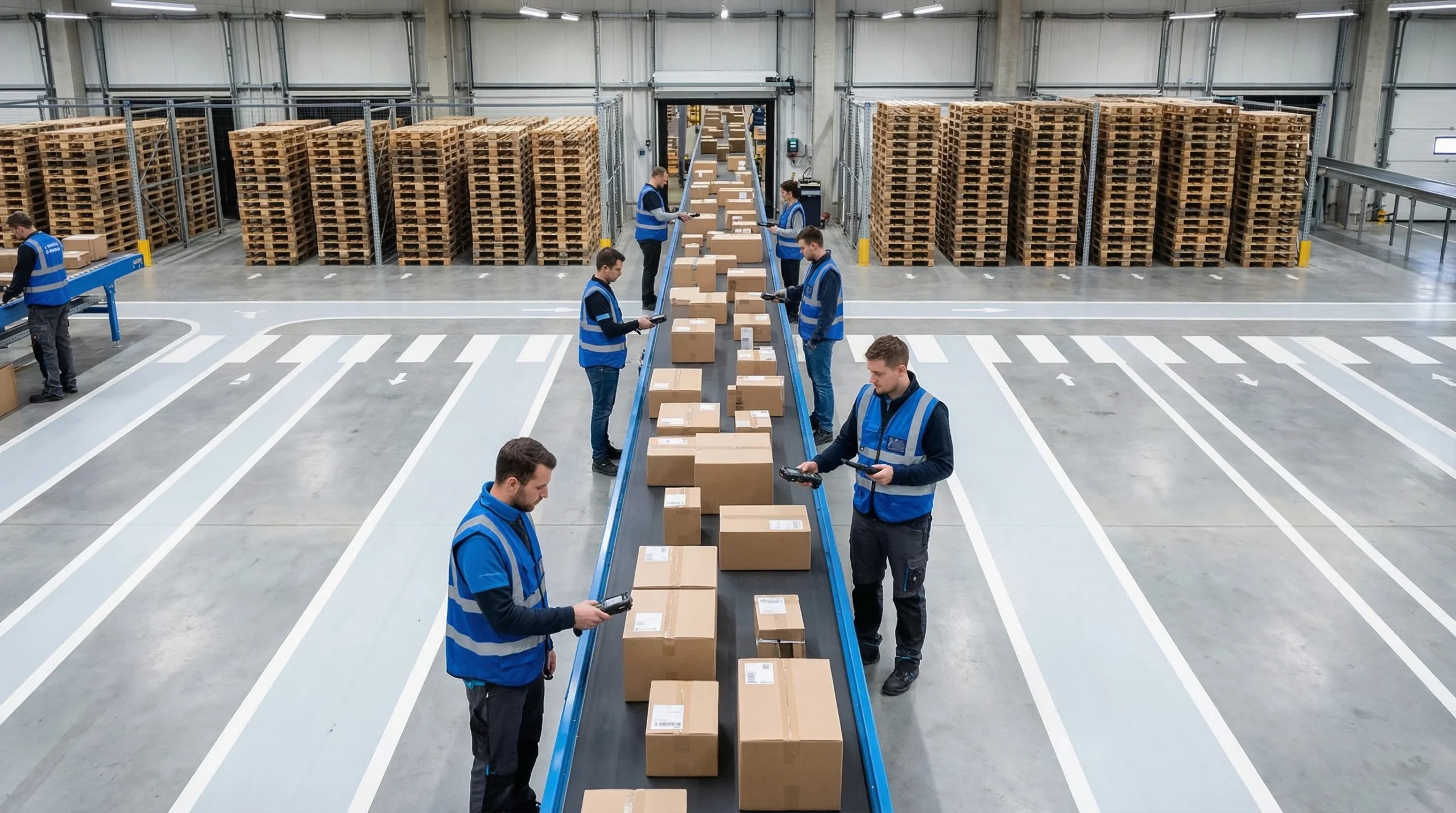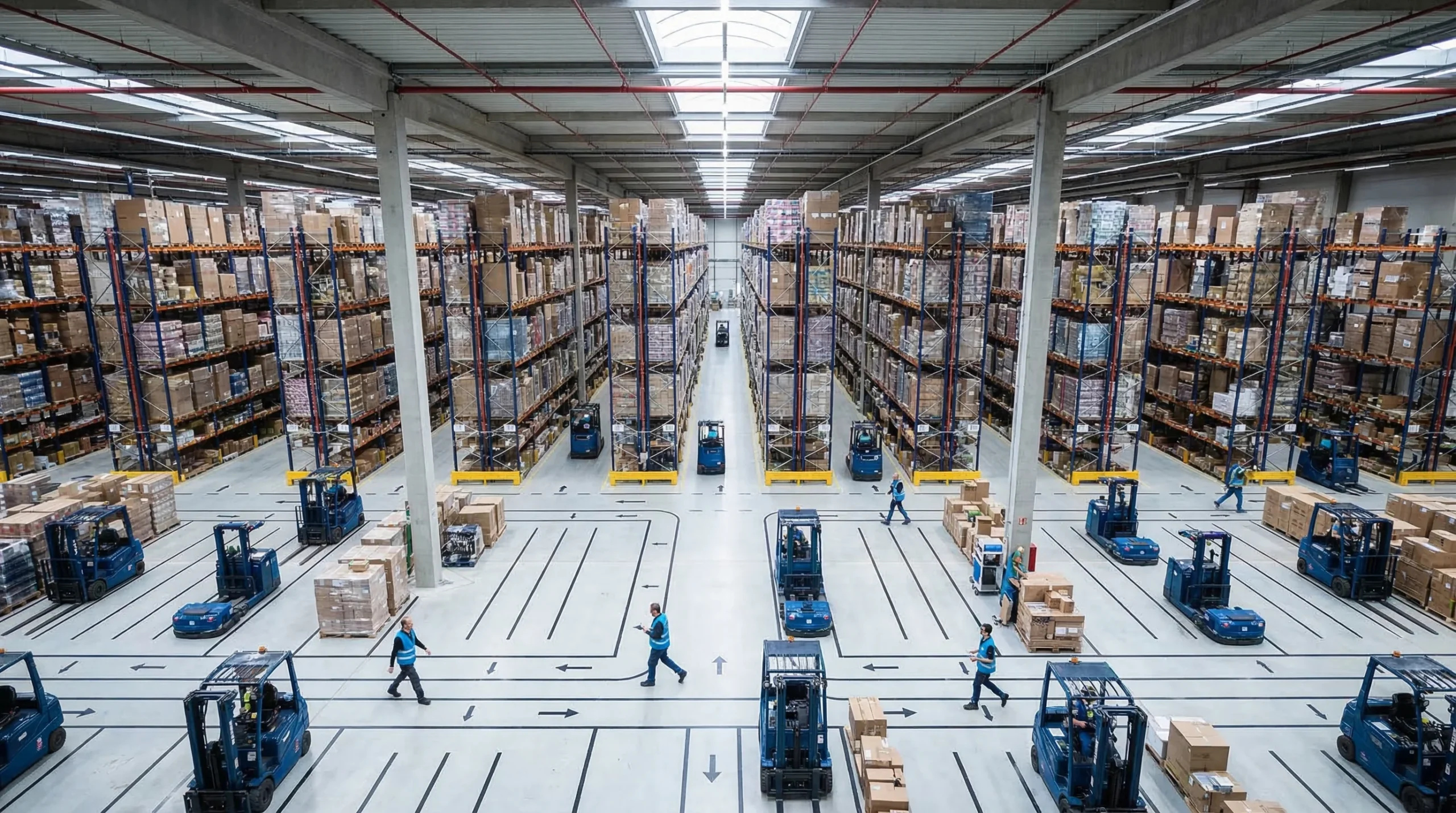
A systematic approach to arranging warehouse aisles to maximize space utilization, improve picking efficiency, and reduce travel time for warehouse workers. This process involves analyzing product velocity, storage requirements, and workflow patterns to determine the optimal width, length, and configuration of aisles throughout the facility.
Effective aisle optimization directly impacts operational costs and productivity by minimizing unnecessary worker movement and maximizing storage density. Wider aisles accommodate larger equipment like forklifts but reduce storage capacity, while narrower aisles increase storage but may slow picking operations. The key is finding the right balance based on your specific operations.
For example, a distribution center might place fast-moving items in wider aisles near shipping areas for quick access, while slower-moving inventory is stored in narrower aisles in less accessible zones. Modern WMS solutions use data analytics to continuously evaluate and recommend aisle layout improvements based on real picking patterns and seasonal demand fluctuations.