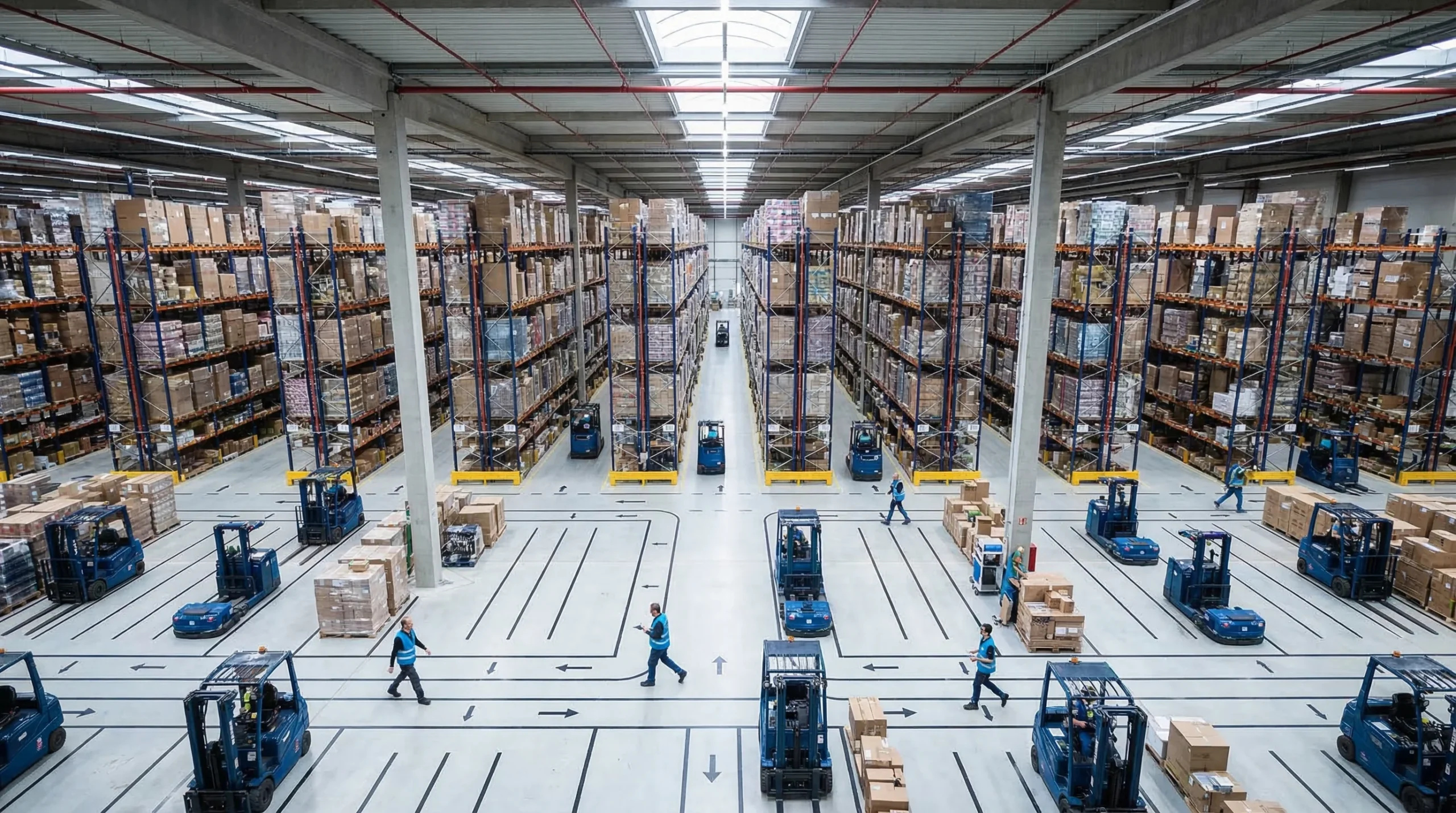
A production method that creates distinct, countable products with specific identities and configurations, such as automobiles, electronics, furniture, and appliances. Unlike process manufacturing which produces bulk materials or liquids, discrete manufacturing results in finished goods that can be individually tracked, serialized, and inventoried as separate units.
This manufacturing approach significantly impacts warehouse management requirements, as each finished product typically requires unique handling, storage specifications, and tracking capabilities. Discrete manufacturers often deal with complex bill-of-materials, multiple product variants, and assembly components that must be carefully managed throughout the supply chain.
For example, a smartphone manufacturer needs warehouse systems capable of tracking individual device serial numbers, managing hundreds of component parts, handling product configurations with different colors and storage capacities, and supporting quality control processes for each unit. WMS solutions for discrete manufacturing must accommodate lot tracking, serial number management, and complex picking strategies to support assembly operations.