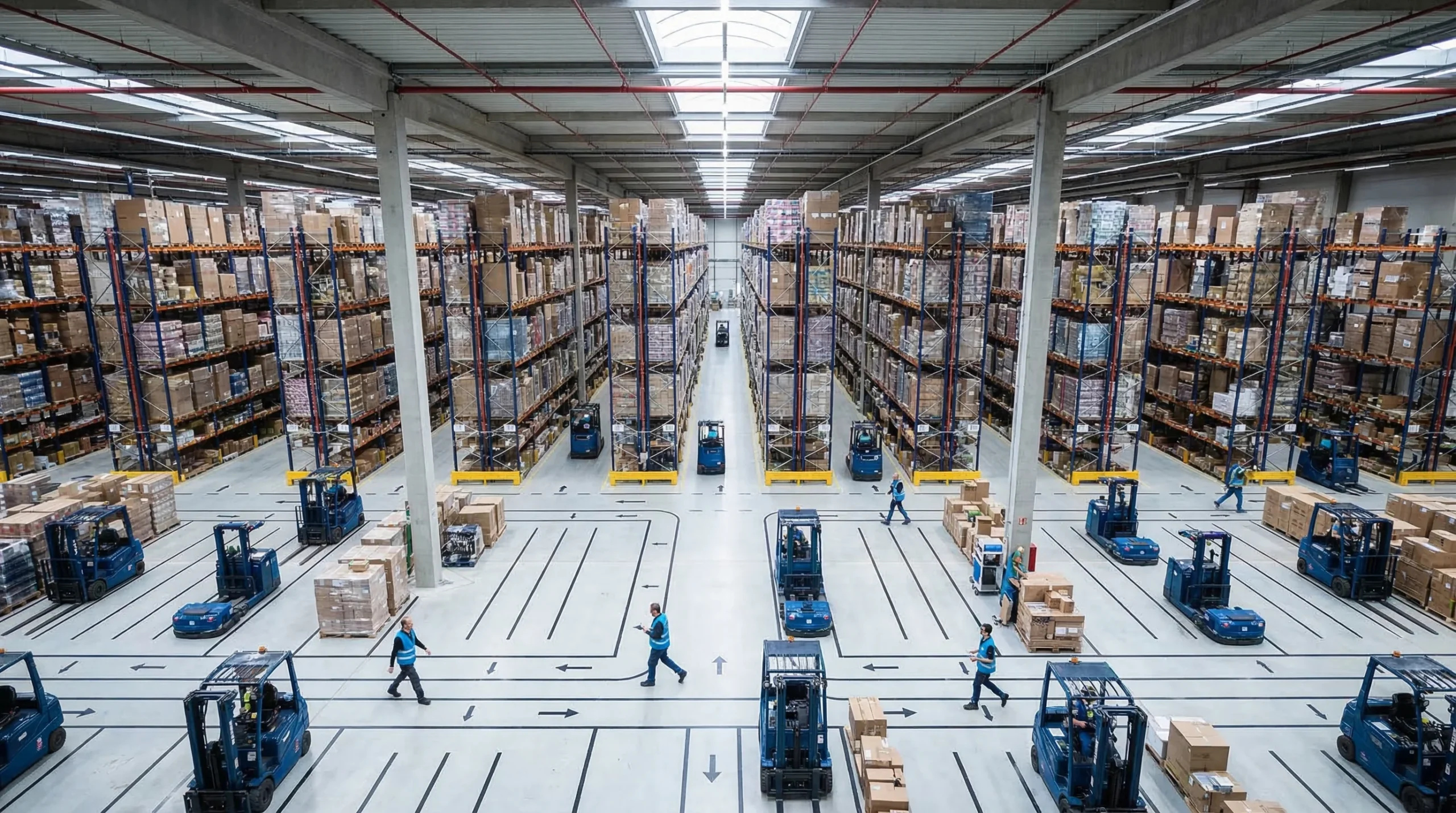
The inefficient use of storage space that occurs when partial pallets or cases are stored in locations designed for full units, creating gaps and unused cubic space within the warehouse. This phenomenon gets its name from the scattered, hole-filled pattern it creates in storage areas, similar to a honeycomb structure.
Honeycomb loss significantly impacts warehouse efficiency by reducing overall storage capacity and increasing operational costs. When products are picked from full pallets or cases, the remaining partial quantities often stay in oversized locations, preventing optimal space utilization. This leads to higher storage costs per unit and may force warehouses to rent additional space prematurely.
For example, if a full pallet location holds 48 cases but only 12 cases remain after picking, the remaining inventory occupies the same footprint as the original full pallet. Advanced WMS solutions address this through dynamic slotting algorithms that automatically relocate partial quantities to appropriately-sized pick locations, maximizing storage density and operational efficiency.