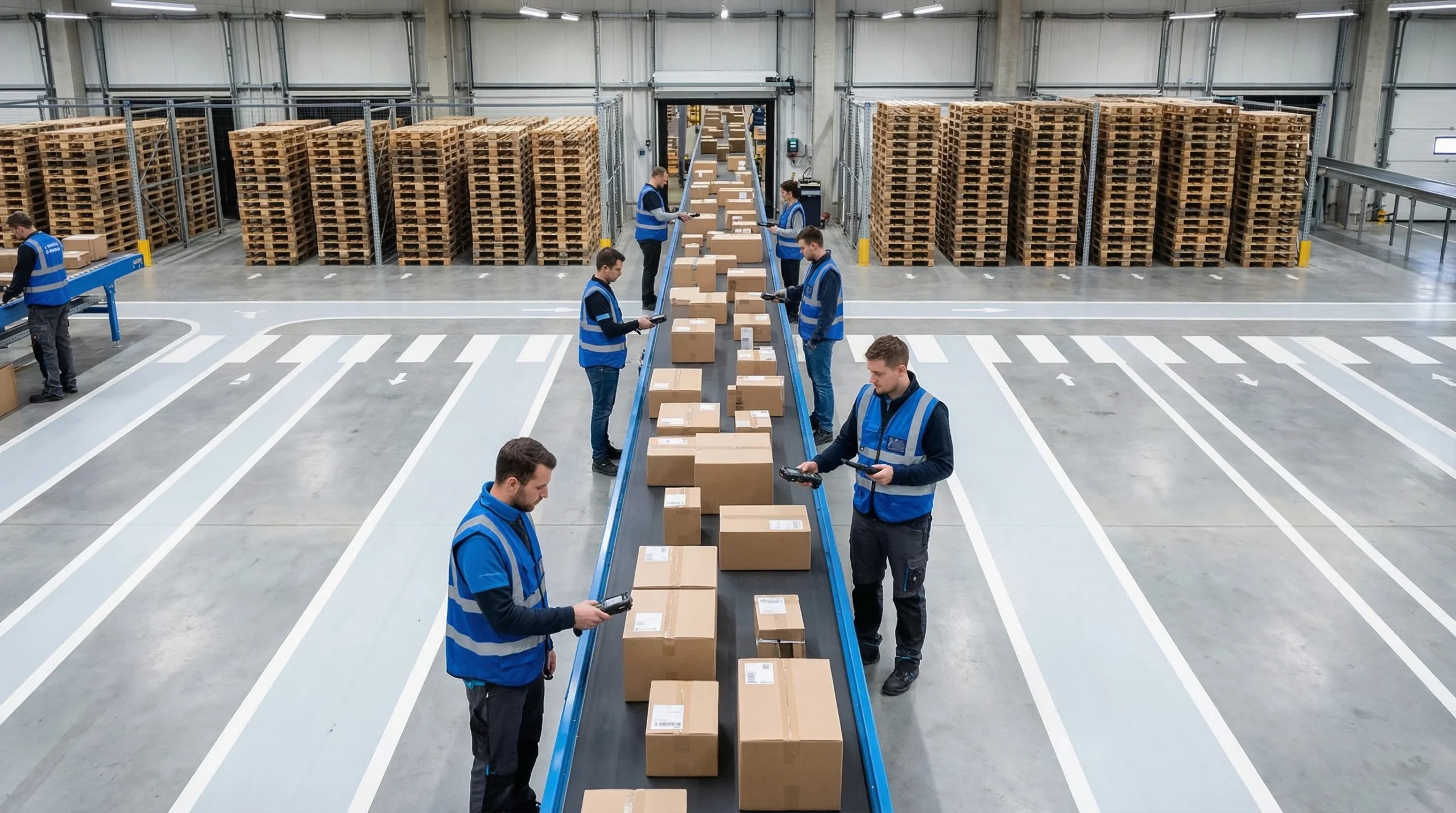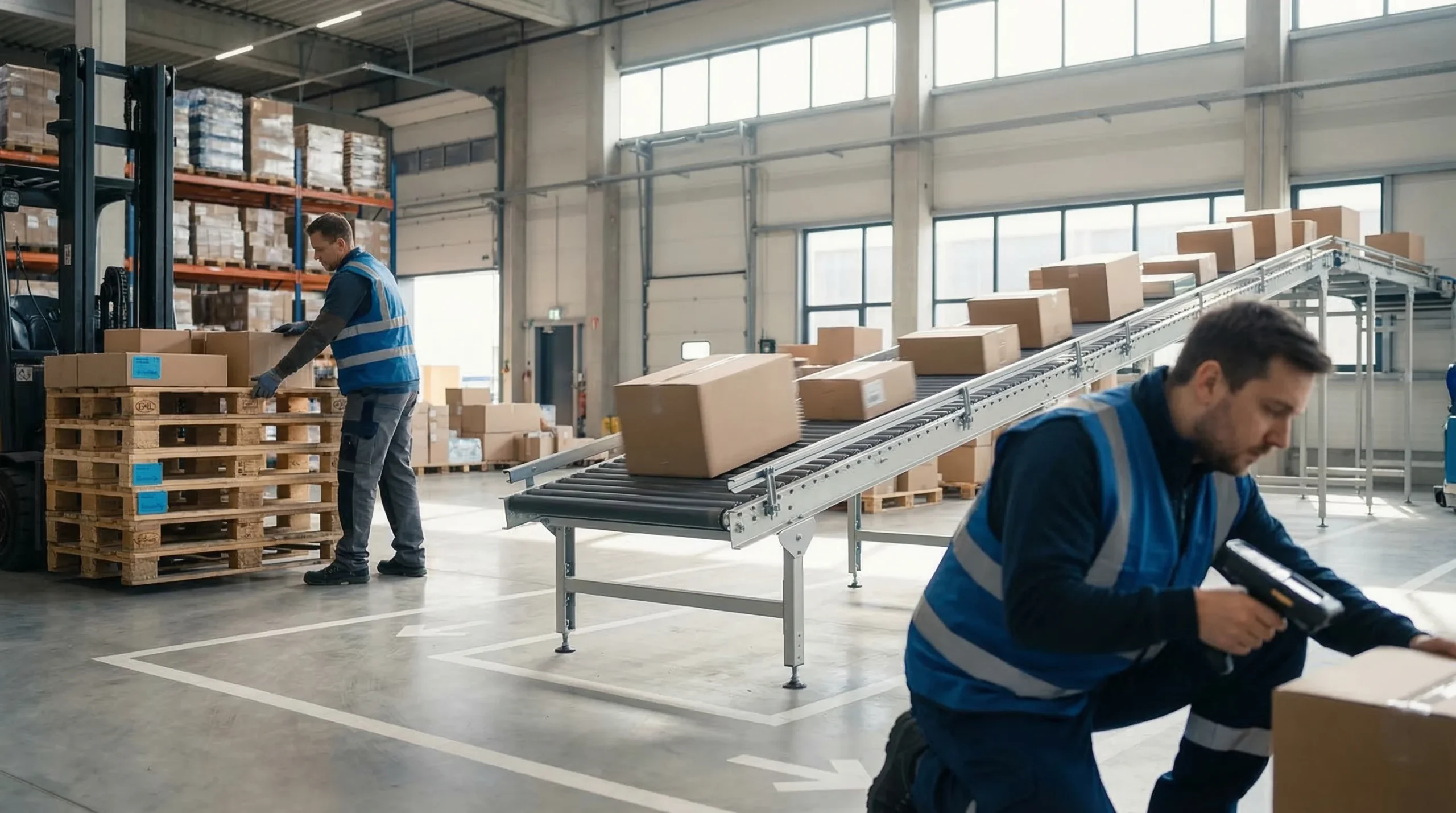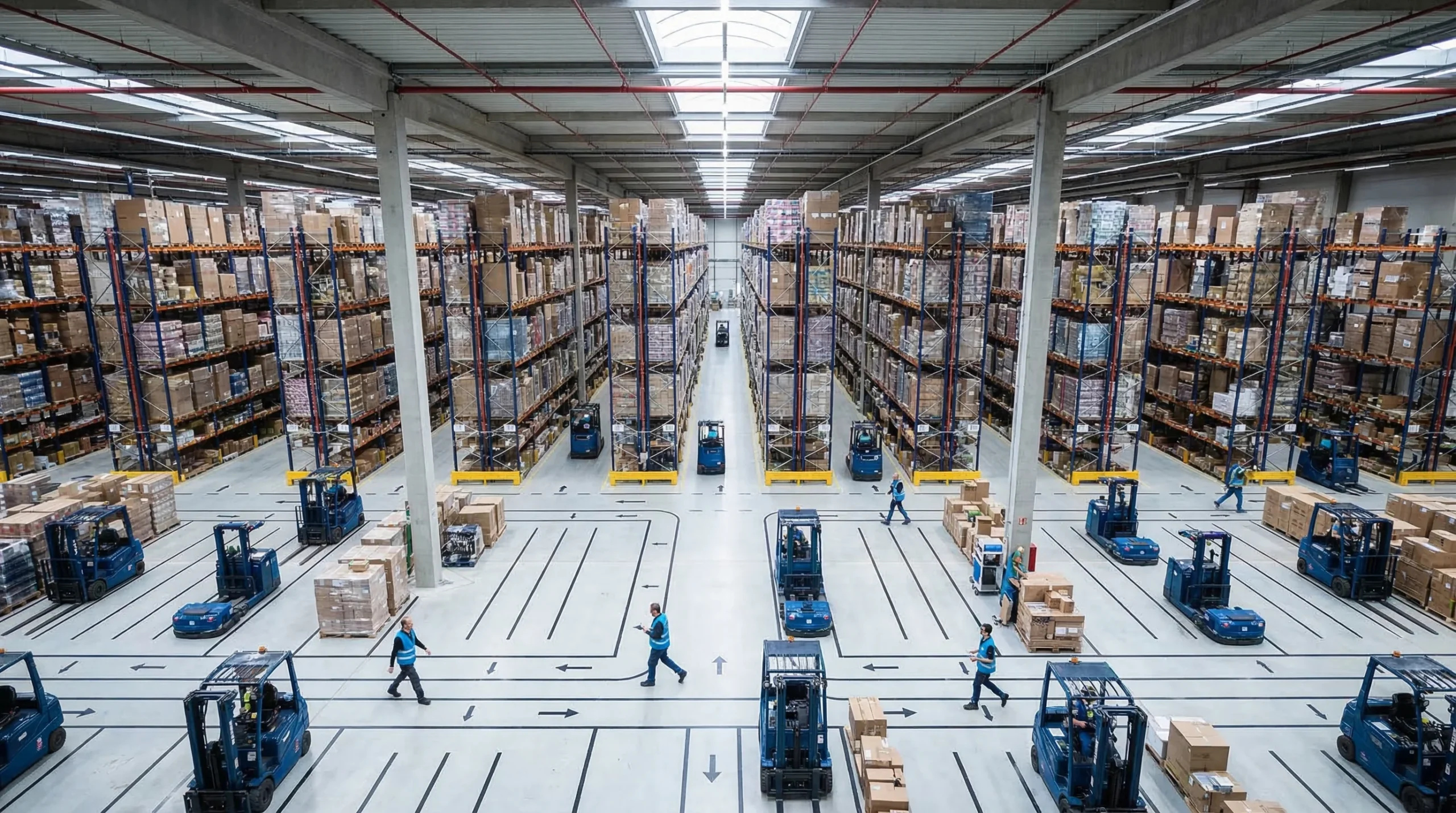
A warehouse picking strategy where multiple order pickers work simultaneously in different zones or sections of the warehouse to fulfill orders concurrently. Unlike sequential picking where one picker completes an entire order before moving to the next, parallel picking divides order fulfillment tasks across multiple workers who can operate independently in their designated areas.
This approach significantly reduces overall order processing time and increases warehouse throughput, particularly beneficial during peak periods or when handling large, complex orders. Modern WMS platforms coordinate parallel picking activities by intelligently assigning tasks based on picker location, workload balancing, and inventory availability across zones.
For example, when processing a 50-item order, one picker might gather electronics from Zone A while another simultaneously collects household goods from Zone B, with both contributions later consolidated at a packing station. This method maximizes labor efficiency and enables faster order fulfillment compared to traditional single-picker approaches.