Artificial intelligence warehouse, artificial intelligence warehouse management, use of ai in warehouse management has become essential for modern businesses. Artificial intelligence warehouse management has moved from experimental technology to operational necessity for distribution centers seeking competitive advantages. The use of AI in warehouse management now touches every aspect of operations, from inventory forecasting to robotic picking systems. For warehouse managers evaluating their options, understanding how artificial intelligence warehouse technologies compare becomes essential for making informed investment decisions.
This guide examines the current state of AI in warehousing, presents real implementation scenarios, and compares different approaches to help you determine which path fits your operation. Rather than hype, you’ll find practical analysis of benefits, challenges, and realistic expectations for what AI can deliver in warehouse environments today.
Understanding Artificial Intelligence in Warehouse Management
Before comparing tools and approaches, it helps to establish what artificial intelligence warehouse management actually means in practical terms. AI in this context refers to software systems that can learn from data, identify patterns, and make decisions or recommendations without explicit programming for every scenario.
The Progression of AI in Warehousing
Warehouse technology has evolved through distinct phases. Early warehouse management systems focused on tracking inventory locations and processing orders. The next generation added optimization algorithms for pick paths and labor scheduling. Current artificial intelligence warehouse systems represent another leap forward, incorporating machine learning capabilities that improve over time.
The distinction matters because many vendors label traditional rule-based systems as “AI” when they lack genuine learning capabilities. True AI systems in warehouse management can:
- Analyze historical patterns to predict future demand without manual configuration
- Adapt recommendations based on changing conditions and feedback
- Identify anomalies and potential issues before they become problems
- Optimize complex decisions across multiple variables simultaneously
Understanding these capabilities helps separate marketing claims from genuine artificial intelligence warehouse management functionality when evaluating solutions.
Core Technologies Driving Warehouse AI
Several underlying technologies enable the use of AI in warehouse management. Each serves different functions and appears in various combinations across warehouse solutions.
Machine Learning forms the foundation of most warehouse AI applications. These algorithms analyze historical data to identify patterns and make predictions. For warehouse applications, machine learning powers demand forecasting, inventory optimization, and labor planning. The key advantage is that these systems improve accuracy as they process more data from your specific operation.
Computer Vision enables AI systems to interpret visual information from cameras and sensors. In warehouses, this technology supports quality inspection, inventory counting, and safety monitoring. Computer vision systems can identify products, detect damage, and verify picks without human intervention.
Natural Language Processing allows warehouse systems to understand and respond to voice commands and text-based queries. This technology simplifies operator interactions with warehouse management systems and enables voice-directed picking with more natural communication patterns.
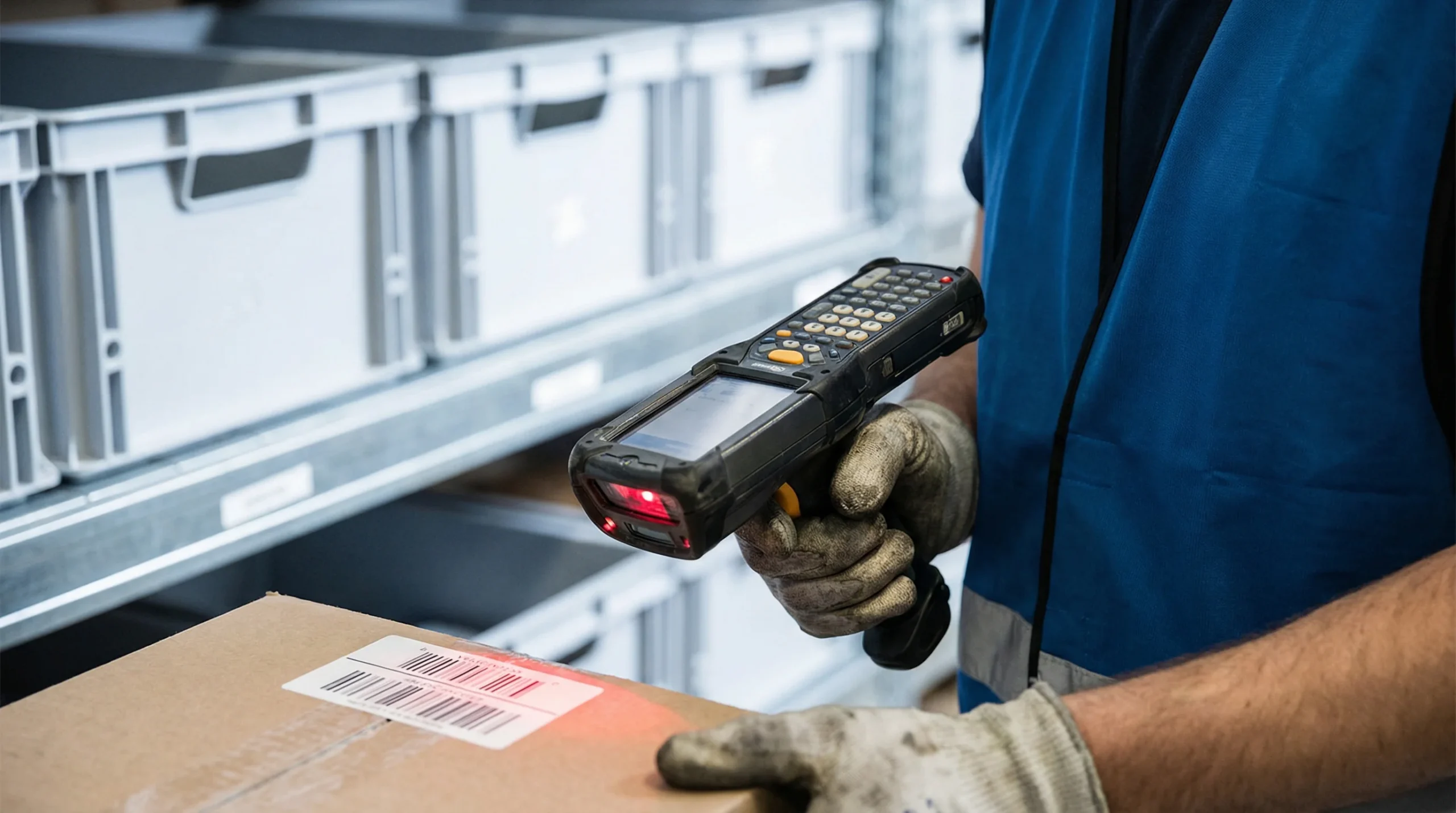
Robotic Process Automation combined with AI creates systems that can handle physical tasks with intelligence. Autonomous mobile robots (AMRs) use AI to navigate warehouse floors, avoid obstacles, and optimize their routes in real-time.
Smarter Warehouse Management Starts Here
Logimax WMS delivers real-time visibility, automated workflows, and seamless ERP integration for warehouses of every size.
Request a Demo
Benefits of Artificial Intelligence Warehouse Management Software
The advantages of implementing AI in warehouse operations extend across multiple operational dimensions. However, benefits vary significantly based on implementation approach, existing infrastructure, and operational characteristics.
Operational Efficiency Improvements
Artificial intelligence warehouse management delivers efficiency gains through several mechanisms. Demand forecasting powered by machine learning typically produces more accurate predictions than traditional statistical methods, especially for items with complex seasonality or trend patterns. This accuracy translates directly into better inventory positioning and reduced stockouts.
Pick path optimization represents another area where AI excels. Traditional systems calculate efficient routes based on static rules. AI-powered systems continuously learn from actual pick data, identifying patterns that static rules miss. They account for factors like real-time congestion, picker experience levels, and product characteristics.
Labor planning benefits from AI’s ability to process multiple variables simultaneously. Rather than relying on simple volume-based forecasts, artificial intelligence warehouse systems consider order characteristics, product mix, special handling requirements, and historical productivity patterns when generating labor recommendations.
Order batching and wave planning present complex optimization problems well-suited to AI approaches. Traditional systems use fixed rules for grouping orders. AI systems can optimize across multiple objectives, balancing factors like carrier cutoff times, zone efficiency, and workload distribution dynamically.
Cost Reduction Mechanisms
The financial benefits of AI in warehouse management stem from multiple sources. Reduced inventory carrying costs result from more accurate demand forecasting. When systems predict demand more precisely, operations can maintain lower safety stock levels while achieving the same or better service levels.
Labor cost reductions come through several channels. Improved pick path efficiency means workers complete more picks per hour. Better labor planning reduces overtime costs and temporary staffing needs. Automated quality checks reduce the labor required for inspection processes.
Error reduction provides both direct and indirect cost benefits. Picking errors generate costs through returns processing, replacement shipping, and customer service interactions. AI-powered verification systems catch errors before shipment, while intelligent slotting recommendations reduce error rates by positioning high-velocity items in easily accessible locations.
Space utilization improvements lower real estate costs. AI systems can identify opportunities to consolidate inventory, optimize vertical space usage, and improve location assignments. These capabilities become increasingly valuable as warehouse space costs continue rising in many markets.
Real-World AI Implementation Scenarios
Understanding how organizations approach AI implementation provides practical context for evaluating options. These scenarios represent common patterns observed across distribution operations, though specific results depend on operational characteristics and implementation quality.
Scenario: Improving Order Processing Speed
Consider a mid-sized e-commerce fulfillment operation processing several thousand orders daily. Order processing bottlenecks limit growth potential, and traditional optimization approaches have reached diminishing returns. Manual pick path planning cannot keep pace with inventory changes and order volume fluctuations.
Implementing artificial intelligence warehouse management for pick optimization typically addresses this challenge through several mechanisms. The AI system analyzes historical pick data to identify inefficiencies in current processes. It then generates optimized pick sequences accounting for real-time inventory positions, worker locations, and order priorities.
Organizations pursuing this approach often report meaningful improvements in picks per labor hour. The specific magnitude depends on starting conditions, with operations using less sophisticated prior systems seeing larger gains. Implementation timelines typically span several months, including system integration, initial learning periods, and process adjustments.
Key success factors include quality data integration, operator training, and realistic expectations during the learning period. AI systems require time to develop accurate models of specific operational patterns.
Scenario: Reducing Labor Costs Through Intelligent Automation
Large distribution operations with repetitive, high-volume tasks present opportunities for AI-driven automation. Imagine a warehouse handling standardized products with consistent packaging, processing high daily volumes with significant labor costs for routine tasks.
The use of AI in warehouse management for this scenario often combines robotic systems with intelligent orchestration. Autonomous mobile robots handle product transport between zones. AI systems coordinate robot movements, optimizing fleet utilization and preventing congestion.
This approach can reduce labor requirements for specific tasks substantially, though automation investments require careful analysis. Capital costs for robotic systems remain significant, and ROI calculations must account for implementation costs, ongoing maintenance, and operational adjustments required during transition periods.
Operations considering this path should evaluate their product characteristics carefully. Items with non-standard packaging, fragile contents, or high variability present challenges for current automation technologies. Hybrid approaches combining automation for suitable products with manual handling for others often prove more practical than full automation.
Comparing AI Approaches for Warehouse Management
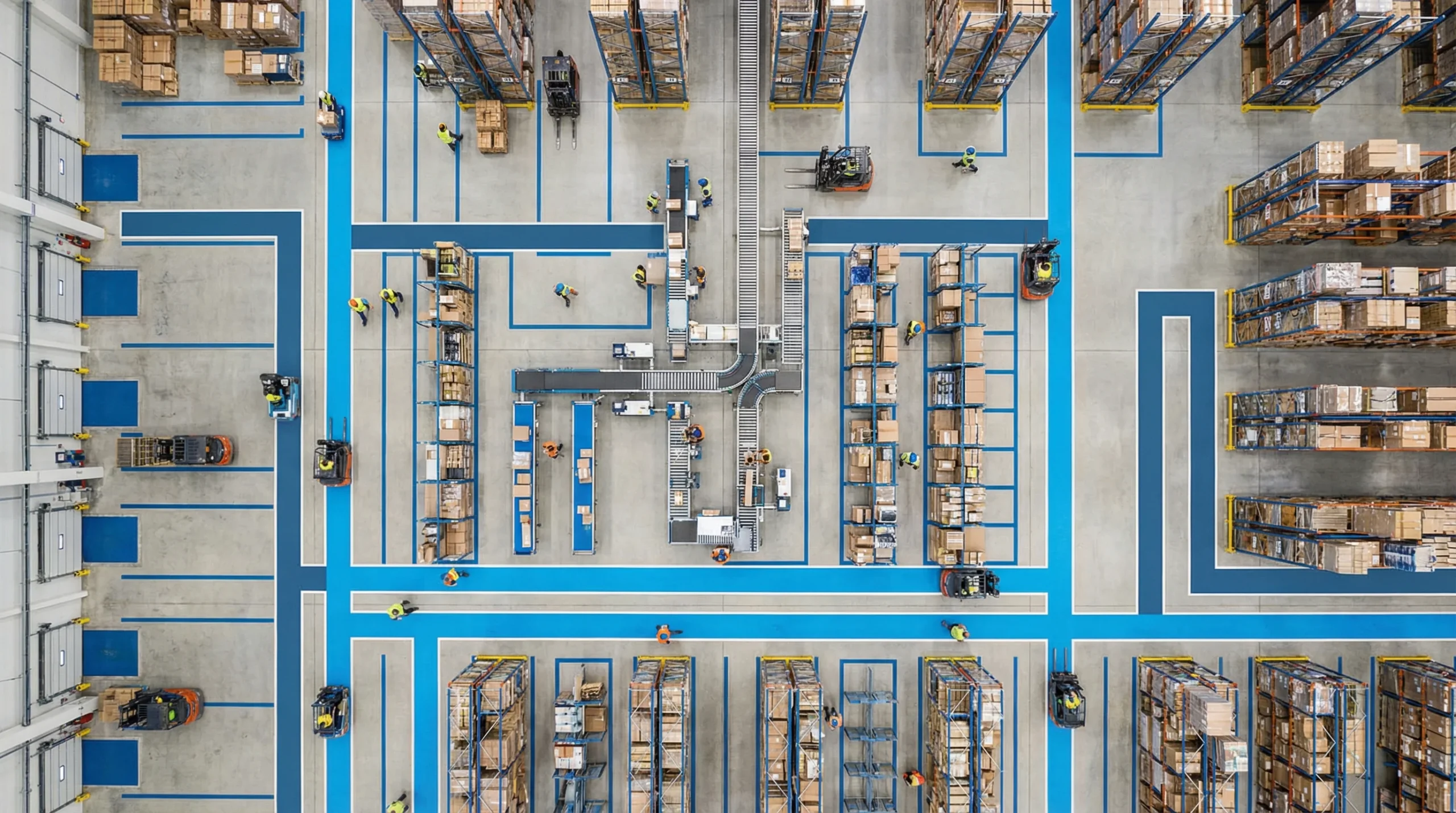
Organizations evaluating artificial intelligence warehouse solutions face choices between different implementation approaches, each with distinct advantages and trade-offs. This comparison framework helps identify which approach aligns with specific operational needs and constraints.
Approach 1: Embedded AI Within WMS Platforms
Many modern warehouse management software solutions incorporate AI capabilities directly within their core platforms. This integrated approach offers several advantages for organizations seeking to adopt AI capabilities.
Advantages of embedded AI:
- Single vendor relationship simplifies support and accountability
- Tight integration between AI features and core WMS functionality
- Lower implementation complexity compared to multi-vendor approaches
- Consistent user interface across AI and traditional features
- Licensing and cost structures typically more straightforward
Limitations to consider:
- AI capabilities bounded by vendor’s development priorities
- May lack specialized features available from point solutions
- Upgrade cycles tied to overall platform updates
- Less flexibility to select individual components
This approach works well for organizations prioritizing simplicity and integration over specialized functionality. It’s particularly suitable for operations where AI represents an enhancement to existing processes rather than a transformational initiative.
Approach 2: Specialized AI Point Solutions
Dedicated AI platforms focusing on specific warehouse functions represent an alternative approach. These solutions typically excel in narrow domains like demand forecasting, labor management, or robotic orchestration.
Advantages of point solutions:
- Deep functionality in specific domains
- Often incorporate latest AI advances more quickly
- Can select best-in-category for each function
- Flexibility to replace individual components without full system changes
- May offer more sophisticated customization options
Limitations to consider:
- Integration complexity increases with multiple vendors
- Data synchronization challenges between systems
- Multiple vendor relationships to manage
- Higher total implementation effort
- Potential for gaps or overlaps between solutions
Point solutions fit organizations with specific high-value use cases where specialized capabilities justify additional complexity. Operations with sophisticated IT resources to manage integrations benefit most from this approach.
Approach 3: Custom AI Development
Some organizations with unique requirements or substantial technical resources pursue custom AI development. This approach involves building AI capabilities specifically designed for operational characteristics.
Advantages of custom development:
- Complete alignment with specific operational needs
- Potential competitive advantage from proprietary capabilities
- Full control over development priorities and timing
- No dependency on vendor roadmaps
- Can incorporate unique data sources and business logic
Limitations to consider:
- Highest implementation cost and timeline
- Requires specialized technical talent (difficult to recruit and retain)
- Ongoing maintenance and development responsibility
- Risk of technical debt accumulation
- Missing out on vendor innovations and best practices
Custom development typically makes sense only for very large operations where AI provides strategic differentiation and resources exist to sustain long-term development. Most organizations find commercial solutions more practical.
Comparison Summary
The following comparison highlights key decision factors across approaches:
- Implementation Speed: Embedded AI fastest, point solutions moderate, custom development slowest
- Total Cost of Ownership: Embedded AI typically lowest, point solutions moderate, custom highest
- Flexibility: Custom highest, point solutions moderate, embedded AI most constrained
- Integration Complexity: Embedded AI simplest, point solutions require more effort, custom variable
- Specialized Functionality: Point solutions typically strongest, custom depends on investment, embedded AI adequate for most needs
- Risk Profile: Embedded AI lowest risk, point solutions moderate, custom highest
Most mid-sized distribution operations find embedded AI capabilities within modern WMS platforms offer the best balance of capability, simplicity, and risk management. Point solutions make sense for specific high-value applications where standard capabilities prove insufficient.
Future Trends in Artificial Intelligence Warehouse Management
Understanding emerging trends helps organizations plan technology investments with future capabilities in mind. Several developments will shape artificial intelligence warehouse management over coming years.
Emerging Technologies to Watch
Generative AI Applications will extend beyond current implementations. While today’s warehouse AI focuses primarily on prediction and optimization, generative AI may enable new capabilities like automated process documentation, training content creation, and natural language interfaces for system configuration. These applications remain nascent but could simplify warehouse technology management.
Edge Computing Integration enables AI processing closer to where data originates. Rather than sending all sensor data to cloud systems for analysis, edge AI processes information locally on devices like cameras, scanners, and robots. This approach reduces latency, improves reliability, and enables real-time decision-making even when network connectivity proves unreliable.
Digital Twin Technologies create virtual representations of physical warehouse operations. AI systems can test optimization strategies in digital environments before implementing changes in actual operations. This capability reduces implementation risk and enables more aggressive optimization experimentation.
Autonomous Mobile Robots continue advancing rapidly. Current-generation AMRs handle transport tasks effectively. Emerging systems incorporate more sophisticated manipulation capabilities, enabling robots to handle picking tasks for suitable products. As these technologies mature and costs decrease, more operations will find automation economically viable.
Collaborative AI Systems represent a shift from AI replacing human workers to AI augmenting human capabilities. These systems provide workers with real-time guidance, quality feedback, and decision support rather than automating tasks entirely. This approach often proves more practical than full automation while still delivering significant productivity improvements.
Predicted Industry Shifts
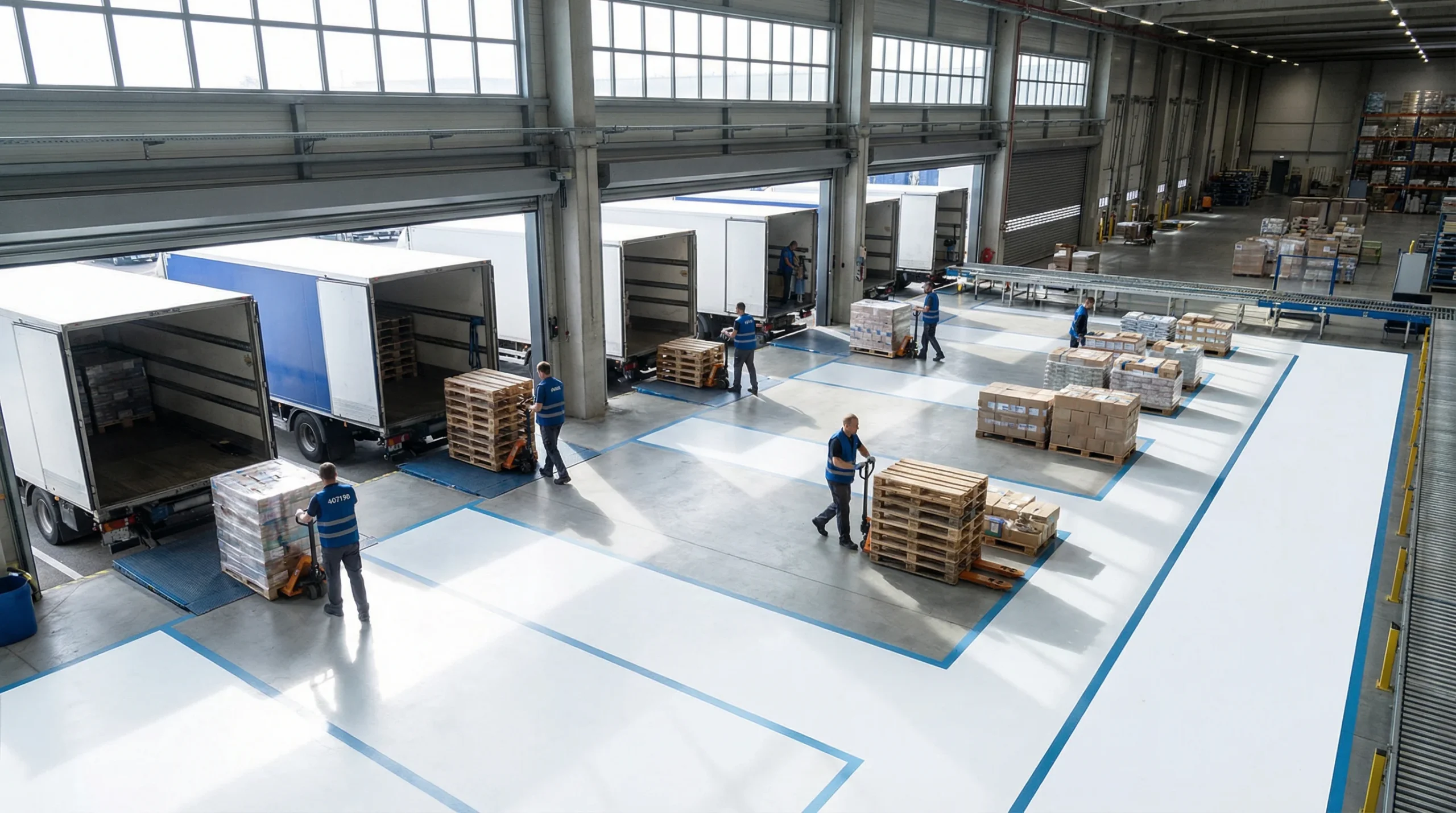
Several broader trends will influence how artificial intelligence warehouse technologies develop and deploy.
Democratization of AI capabilities will continue. Advanced AI features that once required specialized data science teams are becoming accessible through standard software interfaces. This trend enables smaller operations to benefit from AI without extensive technical resources.
Integration standards are emerging to simplify connecting AI systems with warehouse infrastructure. As these standards mature, implementing multi-vendor AI solutions will become less complex, reducing barriers to adoption.
Sustainability applications for warehouse AI are growing. AI systems can optimize energy consumption, reduce packaging waste, and improve transportation efficiency. As sustainability pressures increase, these capabilities will become more prominent in vendor offerings.
Supply chain-wide AI coordination represents the next frontier. Today’s AI systems typically optimize individual warehouse operations. Future systems will coordinate across entire supply networks, considering upstream and downstream implications of decisions.
For additional insights on AI trends in logistics, Supply Chain Digital provides regular coverage of emerging technologies and their applications.
Challenges and Solutions in AI Integration for Warehouses
Implementing artificial intelligence warehouse management successfully requires addressing common challenges. Understanding these obstacles and proven mitigation strategies improves implementation outcomes.
Overcoming Implementation Barriers
Data Quality Issues frequently undermine AI implementations. AI systems depend on accurate, complete data for training and operation. Many warehouses discover their historical data contains gaps, inconsistencies, or errors that limit AI effectiveness.
Addressing data quality requires systematic assessment before implementation. Identify critical data elements for planned AI applications. Evaluate current data quality against requirements. Implement data cleansing processes and establish ongoing data governance practices. Budget time for data preparation in implementation plans.
Integration Complexity increases implementation difficulty and cost. AI systems must connect with existing WMS platforms, warehouse control systems, and enterprise systems. These integrations require careful planning and testing.
Mitigate integration challenges by selecting AI solutions designed for your existing technology stack. Evaluate vendor integration experience with your specific systems. Consider middleware platforms that simplify connections between systems. Plan integration work early in implementation timelines.
Change Management Resistance often emerges when introducing AI systems. Workers may fear job displacement or distrust AI recommendations. Supervisors may resist changes to established processes.
Successful implementations invest in change management alongside technical implementation. Communicate clearly about AI purposes and expected impacts. Involve frontline workers in design and testing. Demonstrate how AI supports rather than replaces human judgment. Celebrate early wins to build momentum.
Unrealistic Expectations set implementations up for perceived failure even when delivering genuine value. Vendors sometimes oversell capabilities, and stakeholders may expect immediate dramatic improvements.
Combat unrealistic expectations through honest assessment of achievable benefits. Start with pilot implementations to establish realistic baselines. Set incremental milestones rather than single go-live success criteria. Document and communicate actual results compared to reasonable benchmarks.
Ensuring Data Security
AI systems often require access to sensitive operational data, raising security considerations that require attention.
Data Privacy Concerns arise when AI systems process information about inventory, orders, customers, and operations. Cloud-based AI solutions transmit data to external systems, creating potential exposure points.
Address privacy concerns by understanding exactly what data AI systems access and where it’s stored. Evaluate vendor security certifications and practices. Implement appropriate access controls. Consider on-premises or hybrid deployment options for sensitive applications.
Algorithm Security becomes relevant as AI systems make or influence operational decisions. Malicious actors could potentially manipulate AI inputs to cause harmful outputs or access proprietary business logic embedded in AI models.
Protect AI systems through standard application security practices including authentication, authorization, and monitoring. Evaluate vendor approaches to model security. Implement anomaly detection for AI inputs and outputs that might indicate manipulation attempts.
Vendor Dependency Risks emerge when critical operations depend on third-party AI systems. Service outages, vendor business changes, or pricing adjustments could impact operations.
Manage vendor risks through contractual protections including SLAs, data portability provisions, and transition assistance requirements. Maintain fallback processes for critical functions. Consider vendor financial stability and market position when selecting partners.
For broader perspectives on technology security in warehouse operations, Forbes’ coverage of AI in warehousing offers relevant insights on industry practices.
Evaluating AI Readiness for Your Warehouse Operation
Before committing to artificial intelligence warehouse management investments, assessing organizational readiness helps ensure successful outcomes. Several factors indicate whether an operation will benefit from AI adoption.
Data Infrastructure Assessment
AI systems require data to function effectively. Evaluate your current data capabilities:
- Data Collection: Do you capture the transaction data AI systems need? Consider order histories, inventory movements, labor activities, and system events.
- Data Storage: Is historical data accessible for AI training? Many implementations require multiple years of transaction history.
- Data Quality: Are records accurate and complete? Garbage in produces garbage out with AI systems.
- Data Integration: Can data from multiple sources be combined? AI often delivers most value when connecting disparate data streams.
Operational Characteristics
Certain operational patterns benefit more from AI than others:
- Volume: Higher transaction volumes provide more data for AI learning and more opportunities to apply optimizations.
- Complexity: Operations with many variables, exceptions, and decision points benefit more than simple, standardized operations.
- Variability: When patterns change frequently, AI’s adaptive capabilities prove more valuable than static rule systems.
- Cost Sensitivity: Operations where small efficiency improvements generate significant savings justify AI investments more easily.
Organizational Capabilities
Technical and organizational factors influence implementation success:
- IT Resources: Do you have staff capable of managing AI system integrations and ongoing operations?
- Change Tolerance: Is your organization prepared to adjust processes based on AI recommendations?
- Executive Sponsorship: Do leaders understand and support AI initiatives through inevitable implementation challenges?
- Continuous Improvement Culture: Will the organization actually use AI insights to drive changes?
Operations scoring well on these dimensions typically achieve better outcomes from AI implementations. Those with significant gaps should address foundational elements before investing heavily in advanced AI capabilities.
Making the Right Choice for Your Operation
Selecting the right approach to artificial intelligence warehouse management requires balancing multiple factors. No single solution fits all operations, and the best choice depends on your specific circumstances.
Decision Framework
Consider these questions when evaluating options:
What specific problems need solving? Start with clear business objectives rather than technology for its own sake. Identify where current processes fall short and quantify the impact of improvements.
What resources can you commit? Evaluate available budget for software, implementation services, and ongoing operations. Consider internal staffing to support implementation and manage systems long-term.
What timeline makes sense? Some approaches deliver value quickly while others require longer implementation periods. Match your timeline expectations to realistic implementation durations for different approaches.
What risk tolerance exists? Conservative organizations may prefer proven embedded AI capabilities. Those willing to accept more risk in exchange for potential advantages might consider point solutions or custom development.
How will success be measured? Define clear metrics before implementation. Understand what improvements justify investment and how you’ll attribute changes to AI versus other factors.
Moving Forward
The use of AI in warehouse management continues expanding as technologies mature and costs decrease. Organizations that develop AI capabilities thoughtfully position themselves for ongoing competitive advantages.
Start by understanding your current state clearly. Assess data quality, identify high-value improvement opportunities, and evaluate organizational readiness. With this foundation, you can evaluate specific solutions against real requirements rather than generic promises.
Consider phased approaches that deliver early value while building toward more sophisticated capabilities. Pilot implementations provide learning opportunities and demonstrate value before major commitments.
Most importantly, remember that AI represents a tool to achieve business objectives, not an objective itself. Keep focus on operational outcomes, and let business requirements guide technology decisions rather than the reverse.
Conclusion
Artificial intelligence warehouse management offers genuine opportunities to improve operational efficiency, reduce costs, and enhance service levels. However, realizing these benefits requires thoughtful evaluation of options, realistic expectations, and careful implementation.
The comparison between embedded AI, point solutions, and custom development reveals trade-offs between simplicity and specialization. Most operations benefit from starting with integrated capabilities within modern warehouse management platforms, adding specialized solutions only where standard features prove insufficient.
Success depends as much on organizational factors as technology selection. Data quality, change management, and clear objectives determine whether AI implementations deliver promised value. Organizations that address these fundamentals create conditions for AI success.
As you evaluate artificial intelligence warehouse options for your operation, consider partnering with experienced providers who understand both technology possibilities and operational realities. Contact the Logimax team to discuss how AI capabilities might benefit your specific warehouse challenges. You can also explore Logimax warehouse management solutions to understand how modern WMS platforms incorporate AI-driven optimization.
The future of warehouse management increasingly involves artificial intelligence. Taking time now to understand options and develop capabilities positions your operation for success as these technologies continue evolving.
Frequently Asked Questions
What is artificial intelligence warehouse management?
Artificial intelligence warehouse management involves using AI technologies to optimize warehouse operations. It includes tasks like inventory forecasting, robotic picking, and anomaly detection. AI systems learn from data to make decisions without explicit programming for each scenario. This approach enhances efficiency and accuracy in managing complex warehouse environments.
How does AI improve warehouse management efficiency?
AI improves warehouse management efficiency by automating decision-making processes and optimizing operations. It uses machine learning to analyze historical data and predict future demand, improving inventory management. AI systems can also adapt to changing conditions, enhancing flexibility and responsiveness. This leads to reduced errors and increased productivity in warehouse environments.
What are the benefits of using AI in warehouse management?
The benefits of using AI in warehouse management include improved accuracy, efficiency, and decision-making. AI systems can predict demand, optimize inventory, and automate repetitive tasks, reducing human error. They also provide real-time insights and adapt to changes, enhancing operational flexibility. These capabilities lead to cost savings and a competitive advantage in the logistics industry.
What technologies drive artificial intelligence warehouse systems?
Machine learning is a core technology driving artificial intelligence warehouse systems. It enables systems to analyze data, identify patterns, and make predictions. Other technologies include robotics for automated picking and IoT for real-time data collection. These technologies work together to enhance the efficiency and effectiveness of warehouse operations.
How do AI systems in warehouses differ from traditional systems?
AI systems in warehouses differ from traditional systems by using machine learning to improve over time. Unlike rule-based systems, AI can adapt to new data and changing conditions. This allows for more accurate demand forecasting and inventory management. Traditional systems often lack this adaptability and learning capability, making AI a more advanced solution for modern warehouses.