Introduction: Why Warehouse Security Matters
Warehouse security has become a critical concern for modern distribution centers, 3PLs, and logistics operations. With billions of dollars in inventory, equipment, and sensitive data flowing through warehouse facilities daily, the stakes for comprehensive security protection have never been higher. Today’s warehouse managers face an evolving landscape of security threats that extend far beyond traditional concerns about external theft.
The National Safety Council reports that workplace assaults alone resulted in 20,050 injuries and illnesses involving days away from work and 392 fatalities in 2020, making violence the fifth leading cause of death in the workplace. Meanwhile, cybersecurity threats have grown exponentially as warehouses become increasingly digitized through warehouse management systems, IoT devices, and automated equipment.
Effective warehouse security requires a multi-layered approach that addresses three primary threat categories: theft (both internal and external), physical security risks including workplace violence and property damage, and cybersecurity vulnerabilities that can compromise operations and sensitive data. The financial impact of security breaches extends beyond immediate losses to include operational disruptions, legal liabilities, insurance claims, and damage to customer relationships.
This comprehensive guide will equip warehouse managers with the knowledge and strategies needed to build a robust security framework that protects people, property, inventory, and digital assets while maintaining operational efficiency and regulatory compliance.
Smarter Warehouse Management Starts Here
Logimax WMS delivers real-time visibility, automated workflows, and seamless ERP integration for warehouses of every size.
Request a Demo
Understanding Warehouse Security Threats
Modern warehouse security threats fall into three interconnected categories that require distinct yet coordinated response strategies. Understanding the full spectrum of potential risks is essential for developing effective protection measures.
Internal vs. External Threats
Contrary to popular belief, warehouses face greater risk from internal threats than external ones. Employees, contractors, and authorized visitors have legitimate access to facilities, making them capable of exploiting security vulnerabilities more easily than outside criminals. However, external threats remain significant, particularly organized retail crime rings and opportunistic thieves targeting high-value inventory.
Theft-Related Threats
Warehouse theft encompasses multiple categories including employee theft of company property, inventory shrinkage, financial fraud, and data theft. The diversity of valuable assets in warehouse environments—from office supplies and tools to high-value merchandise and sensitive customer information—creates numerous opportunities for criminal activity.
Physical Security Threats
Physical threats include workplace violence, intentional property damage, arson, vandalism, and ideological attacks. These threats can result in serious injuries, fatalities, operational disruptions, and significant property damage. The interconnected nature of modern supply chains means that physical security incidents can have far-reaching consequences beyond the immediate facility.
Cybersecurity Threats
As warehouses increasingly rely on digital systems for operations, cybersecurity threats have become a critical concern. Cyber-physical systems that integrate information technology (IT) and operational technology (OT) create new vulnerabilities that criminals can exploit to steal data, disrupt operations, or demand ransoms.
Theft Prevention Strategies
Implementing comprehensive theft prevention requires addressing both the human and technological aspects of warehouse security. Effective strategies must balance security measures with operational efficiency while maintaining a positive workplace culture.
Company Property Protection
Company-owned property theft represents one of the highest-risk categories for internal theft. While small items like office supplies are commonly stolen, warehouse environments present opportunities for more significant losses including tools, equipment, and technology.
Most Frequently Stolen Items:
- Office Supplies: Staplers, batteries, first-aid items, coffee, cleaning products, paper clips, and pens
- Paper Products: Copy paper, post-it notes, paper towels, toilet paper, and notepads
- Technology: Laptops, cell phones, chargers, cables, tablets, printers, scanners, and headsets
- Tools: Wrenches, hammers, drills, tape guns, safety equipment, and measuring tools
- Documents and Data: Competitive bid proposals, banking information, and customer lists
Tool and Equipment Security
Implement a comprehensive tool tracking system using barcoded or RFID asset tags. Each tool should have a unique identifier that connects it to a central database tracking its location, condition, and assignment history. This system enables real-time monitoring of tool locations and quick identification of missing items.
Establish tool and equipment cribs with restricted access to limit who can check out company property. Implement a scanning system that requires employees to scan their ID badges when checking tools in or out, creating an automatic record of who had each tool and when. This accountability measure significantly reduces theft opportunities while providing clear audit trails.
Conduct regular audits of tool inventories to identify missing items quickly. Daily check-ins and check-outs should be reconciled with physical counts, and any discrepancies should be investigated immediately. Consider implementing a tool replacement fee system where employees are financially responsible for lost or damaged equipment.
Supply Chain Security
Designate a supply supervisor to manage all office and operational supplies. This person should maintain detailed inventory records, conduct weekly counts, and implement a requisitioning system for unusual supply requests. Centralized supply management creates accountability and helps identify unusual consumption patterns that might indicate theft.
Establish clear policies about personal use of company supplies and communicate consequences for policy violations. While minor personal use might be acceptable, clear boundaries help prevent abuse and establish expectations for appropriate behavior.
Technology Asset Protection
Track all computerized equipment through your IT department or office manager. Maintain detailed logs including model numbers, serial numbers, assigned users, assignment dates, equipment condition, and return dates. Regular audits of technology assets help identify missing equipment and unusual patterns that might indicate theft.
Implement device management software that enables remote tracking and data wiping for mobile devices. This technology provides additional security for valuable equipment while protecting sensitive data if devices are lost or stolen.
Document and Data Security
Establish strict access controls for sensitive documents and data. Implement a classification system that identifies different levels of sensitive information and establishes appropriate handling procedures for each category. Limit access to sensitive information based on job responsibilities and business need.
Use document management systems that track who accesses sensitive files and when. Regular audits of document access logs can help identify unauthorized access attempts or unusual patterns that might indicate data theft.
Inventory Protection Measures
Customer inventory represents a significant theft risk that requires specialized protection strategies. Implement cycle counting programs that provide regular verification of inventory levels without disrupting operations. Use statistical sampling methods to focus counting efforts on high-value or high-risk items.
Establish secure storage areas for high-value merchandise with restricted access controls. These areas should have enhanced monitoring systems including cameras, motion sensors, and access logging. Consider implementing buddy system requirements for accessing high-security areas.
Use inventory management systems that provide real-time visibility into stock levels and movement. Configure alerts for unusual inventory transactions or discrepancies that might indicate theft. Regular analysis of inventory data can help identify patterns suggesting internal or external theft.
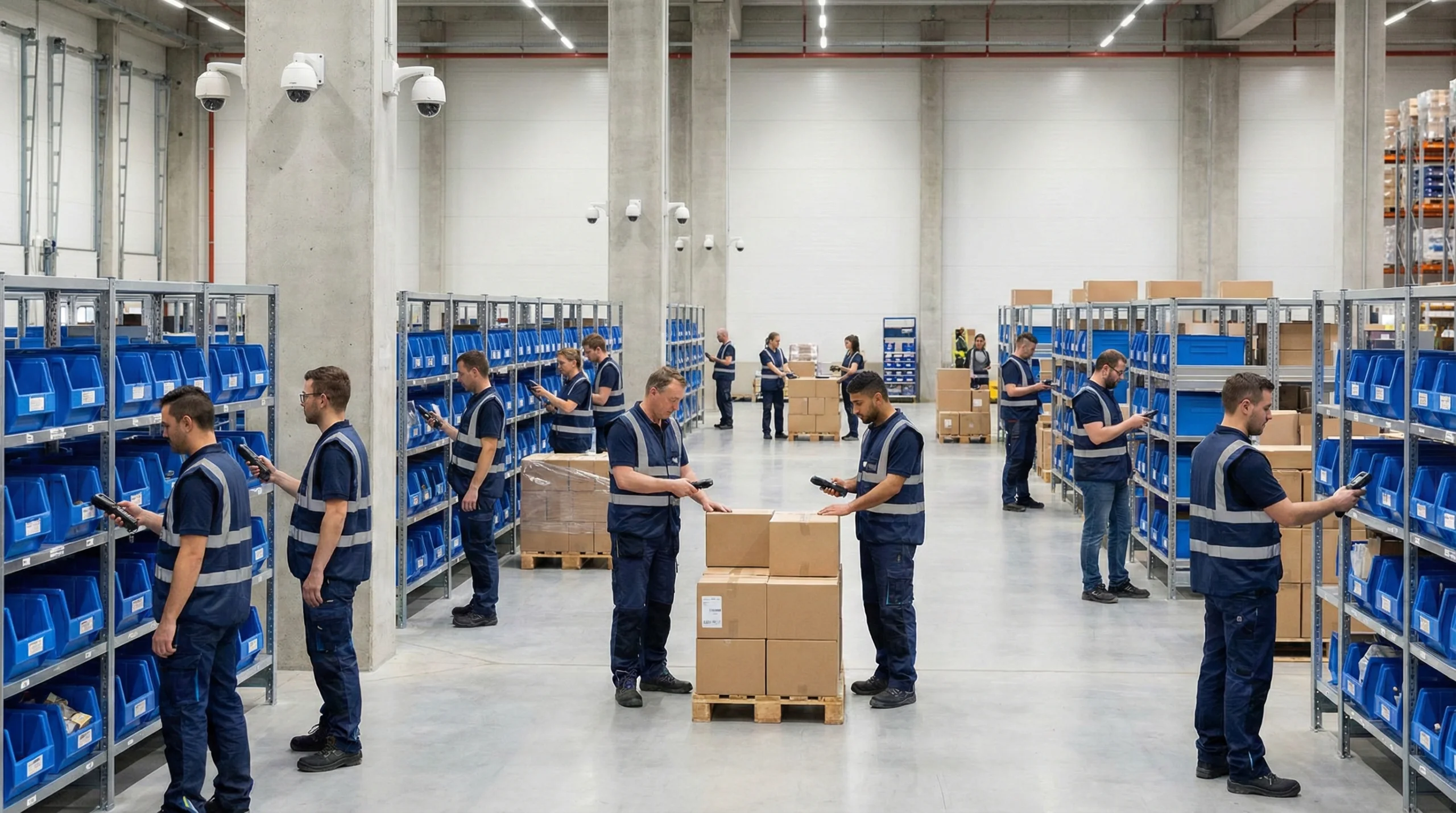
Physical Security Measures
Physical security forms the foundation of comprehensive warehouse protection. Effective physical security creates multiple layers of defense that deter criminals, detect unauthorized access, and enable rapid response to security incidents.
Perimeter Security
Establish clear perimeter boundaries using fencing, barriers, and landscaping that channeling visitors and vehicles through controlled access points. Perimeter security should eliminate blind spots and create clear sight lines for surveillance systems. Consider the height and construction of barriers based on your facility’s specific risk profile and local crime patterns.
Install adequate lighting around the entire perimeter, focusing particular attention on entry points, loading docks, and areas where valuable inventory is stored or processed. Motion-activated lighting can provide energy efficiency while ensuring adequate illumination when needed. Lighting should eliminate shadows and dark areas where criminals might hide.
Access Control Systems
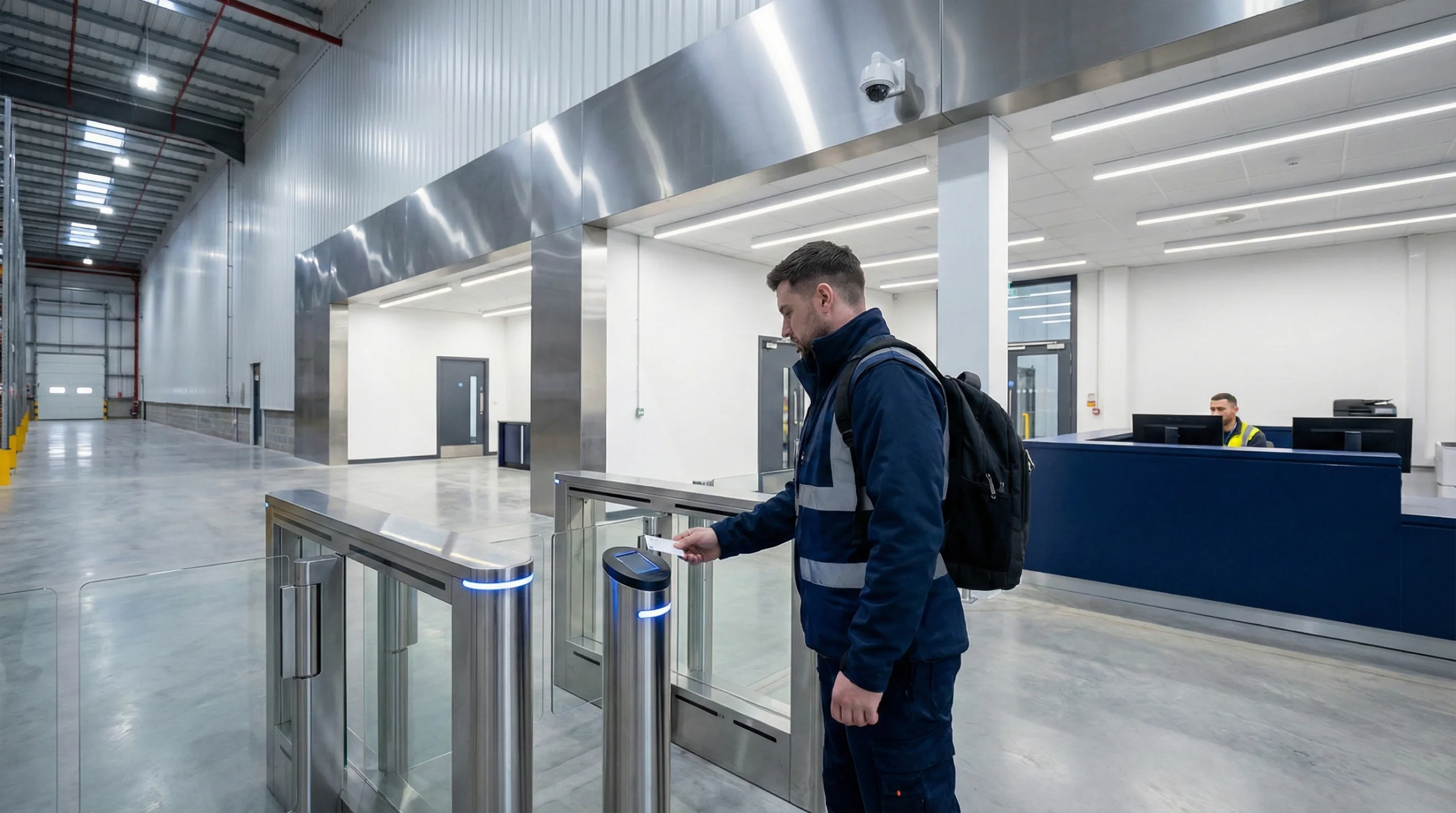
Implement comprehensive access control that manages who can enter different areas of your facility and when. Use electronic card readers, biometric systems, or mobile credentials that provide detailed logging of entry attempts. Access permissions should be based on job responsibilities and updated regularly as employee roles change.
Establish visitor management procedures that require registration, identification verification, and escort requirements for non-employees. Temporary access credentials should expire automatically, and visitor logs should be reviewed regularly for security purposes.
Create different security zones within your facility with escalating access requirements for more sensitive areas. Loading docks might require basic employee access, while high-value storage areas might require management approval and buddy system protocols.
Surveillance Systems
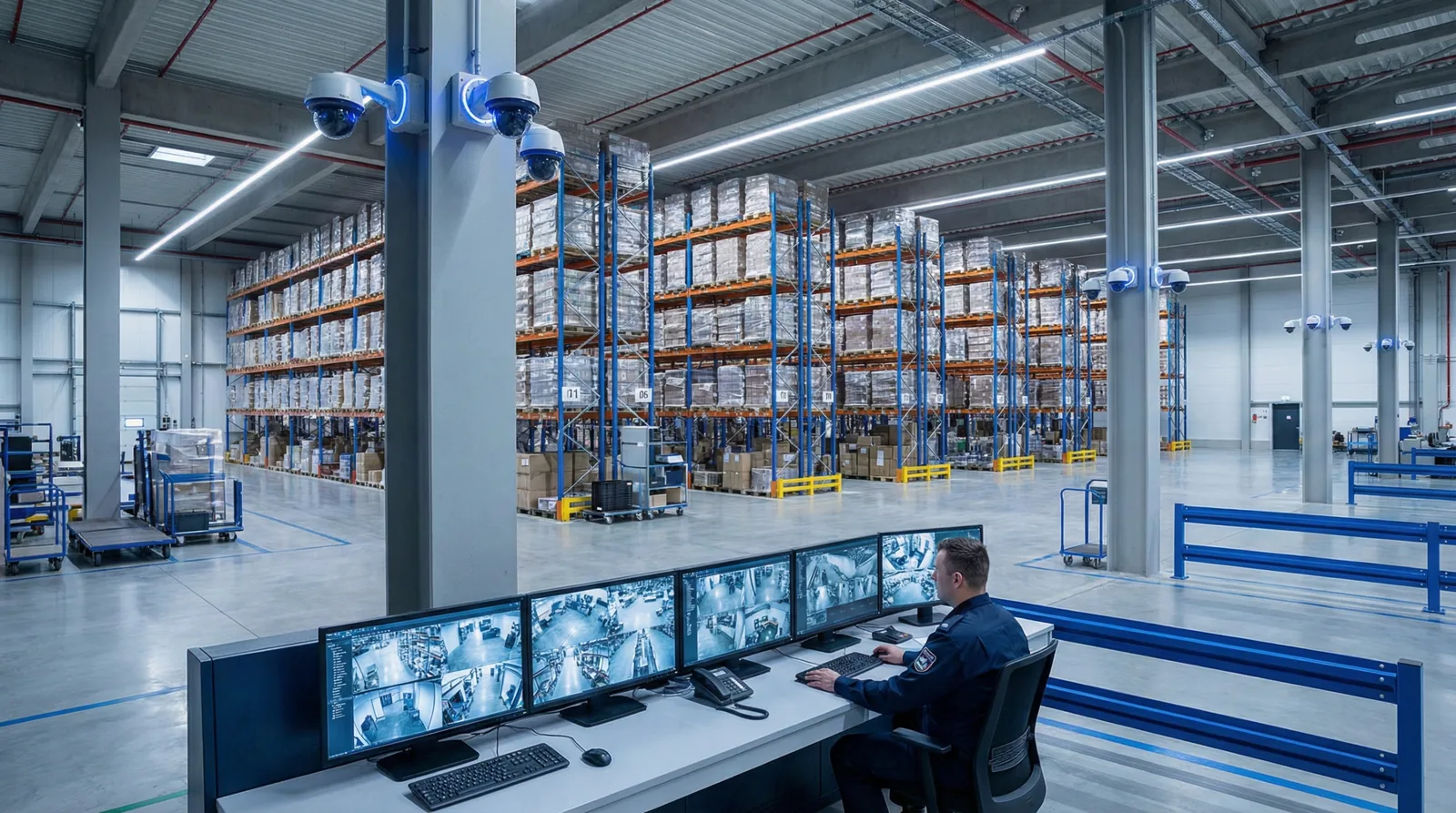
Install comprehensive video surveillance that covers all critical areas including entry points, loading docks, storage areas, office spaces, and parking areas. Modern IP camera systems provide high-resolution recording with remote monitoring capabilities and intelligent analytics that can detect unusual activities automatically.
Position cameras to eliminate blind spots while respecting employee privacy in appropriate areas like restrooms and break rooms. Use a combination of fixed and pan-tilt-zoom cameras to provide both continuous monitoring and detailed investigation capabilities.
Implement video analytics software that can detect unusual activities like loitering, unauthorized access attempts, or suspicious behavior patterns. These systems can generate automatic alerts that enable faster response to potential security incidents.
Establish video retention policies that balance storage costs with investigation needs. Critical areas might require longer retention periods, while less sensitive areas might use shorter retention schedules. Ensure that video systems comply with applicable privacy laws and regulations.
Alarm Systems
Install intrusion detection systems that monitor for unauthorized access outside normal operating hours. Modern systems can differentiate between different types of motion and provide zone-specific alerts that help security personnel respond appropriately.
Implement panic buttons in strategic locations that enable employees to summon help quickly in emergency situations. These systems should connect directly to local law enforcement or security monitoring services for rapid response.
Use environmental monitoring systems that detect fire, flood, extreme temperatures, or other conditions that could threaten people or property. These systems should integrate with building management systems to enable automatic responses like sprinkler activation or HVAC shutdown.
Workplace Violence Prevention
Develop comprehensive workplace violence prevention policies that establish clear expectations for behavior and consequences for violations. Training programs should help employees recognize warning signs and report concerns appropriately.
Behavioral Warning Signs to Monitor:
- Declining job performance and unexplained absenteeism
- Withdrawn behavior, depression, or comments about suicide
- Resistance to change and accusations of unfair treatment
- Evidence of excessive drug or alcohol abuse
- Non-compliance with company policies
- Severe emotional or mood swings
- Paranoid delusions or conspiracy theories
Establish threat assessment procedures that involve security professionals, human resources, and management in evaluating potential risks. These teams should have clear protocols for investigating concerns and implementing appropriate interventions.
Conduct regular emergency drills that prepare employees for various scenarios including active shooter situations, medical emergencies, and natural disasters. Coordinate these exercises with local law enforcement and emergency services to ensure realistic training and effective response procedures.
Fire and Emergency Protection
Install appropriate fire suppression systems based on your facility’s specific risks and stored materials. Foam suppression systems work well for areas with flammable liquids, while sprinkler systems provide broad protection for general storage areas. Consider the unique characteristics of your inventory when selecting suppression methods.
Develop comprehensive evacuation procedures with multiple exit routes and designated assembly areas. Regular drills should test these procedures and identify areas for improvement. Ensure that evacuation plans account for employees with disabilities and language barriers.
Establish emergency communication systems that can reach all employees quickly during crisis situations. These systems should have backup power and communication methods to ensure reliability during emergencies.
Cybersecurity for Warehouses
Modern warehouses rely heavily on digital systems that create new vulnerabilities requiring specialized security measures. Cybersecurity threats can disrupt operations, compromise sensitive data, and create significant financial losses through direct theft or operational downtime.
Understanding Cyber Threats
Warehouse cybersecurity threats come from both external and internal sources and can target different types of systems and data. Understanding the various attack methods helps organizations implement appropriate defensive measures.
Primary Cyber Attack Types:
Phishing Attacks: Cybercriminals send fraudulent emails designed to steal login credentials, financial information, or personal data. These emails often appear to come from legitimate sources like customers, suppliers, or business partners. Successful phishing attacks can lead to identity theft, financial fraud, and unauthorized access to business systems.
Ransomware: Malicious software that encrypts business data and demands payment for its release. The 2021 Colonial Pipeline attack demonstrated how ransomware can shut down critical infrastructure, with attackers demanding approximately $5 million for system restoration. Warehouses face similar risks as ransomware can encrypt inventory management systems, customer data, and operational controls.
Malware: Malicious code that can be installed through email attachments, downloaded files, USB drives, or compromised websites. Once installed, malware can steal data, monitor user activities, or provide remote access to cybercriminals. Warehouse networks are particularly vulnerable because they often include numerous endpoints and may lack comprehensive security monitoring.
Distributed Denial of Service (DDoS): Attacks that overwhelm servers with massive volumes of requests, causing systems to become unavailable. Warehouses that rely on cloud-based systems or eCommerce integration face significant risks from DDoS attacks that can disrupt order processing and customer communications.
Remote Access Scams: Cybercriminals pose as technical support representatives to trick employees into providing system access. These attacks often target warehouse managers or IT staff with claims that accounts have been compromised or systems need urgent updates. Once criminals gain remote access, they can install malware, steal data, or transfer funds.
Cyber-Physical System Security
Modern warehouses increasingly use cyber-physical systems that integrate information technology (IT) with operational technology (OT). These systems control automated equipment, conveyor systems, robotic storage and retrieval systems, and environmental controls. The convergence of IT and OT creates new vulnerabilities that require specialized security approaches.
Automated warehouse systems often have direct connections to business networks, creating pathways for cybercriminals to move between systems. An attack on business systems could potentially disrupt warehouse operations, while compromised operational systems could provide access to business data and financial systems.
Implement network segmentation that separates operational systems from business networks while maintaining necessary connectivity. Use firewalls, virtual LANs, and access controls to limit communication between different system types and monitor all inter-system communications for suspicious activities.
Warehouse Management System Protection
Warehouse management systems (WMS) contain valuable information including customer data, inventory locations, supplier information, and operational procedures. Protecting these systems requires comprehensive security measures that address both technical vulnerabilities and human factors.
Implement strong authentication requirements for all WMS users including complex passwords, multi-factor authentication, and regular password updates. Use role-based access controls that limit system access based on job responsibilities and regularly review user permissions to ensure they remain appropriate.
Keep WMS software updated with the latest security patches and updates. Establish relationships with software vendors that provide timely notification of security vulnerabilities and rapid access to patches. Test all updates in non-production environments before deploying them to operational systems.
Monitor WMS access logs for unusual activities like after-hours access, failed login attempts, or access from unusual locations. Configure automatic alerts for suspicious activities and establish procedures for investigating potential security incidents.
Data Protection Strategies
Warehouse operations generate and store vast amounts of sensitive data including customer information, financial records, supplier details, and operational procedures. This data requires protection both in storage and during transmission.
Implement data encryption for all sensitive information both at rest and in transit. Use industry-standard encryption methods and ensure that encryption keys are properly managed and secured. Regular testing should verify that encryption systems are working correctly and providing appropriate protection.
Establish data backup procedures that create regular copies of critical information and store backups in secure, geographically separated locations. Test backup restoration procedures regularly to ensure that data can be recovered quickly in case of system failures or cyber attacks.
Develop data retention policies that specify how long different types of information should be kept and ensure that outdated data is securely deleted. These policies should balance business needs with security requirements and comply with applicable privacy regulations.
Employee Cybersecurity Training
Human factors represent one of the greatest cybersecurity vulnerabilities in warehouse operations. Comprehensive training programs help employees recognize and respond appropriately to cyber threats.
Conduct regular training sessions that cover common attack methods, warning signs of suspicious activities, and proper response procedures. Use real-world examples and simulated attacks to help employees understand how cybercriminals operate and practice appropriate responses.
Establish clear policies for handling suspicious emails, phone calls, and other communications. Employees should know how to report potential security incidents and understand that they will not face punishment for reporting false alarms.
Provide regular updates about new threats and attack methods. Cybersecurity threats evolve rapidly, and employees need current information to recognize and respond to new risks effectively.
Test employee knowledge through simulated phishing attacks and other exercises that measure their ability to recognize and respond to threats. Use test results to identify areas where additional training might be needed and recognize employees who demonstrate good security practices.
Incident Response Planning
Develop comprehensive incident response plans that specify how to detect, contain, and recover from cybersecurity incidents. These plans should include communication procedures, technical response steps, and coordination with external resources like law enforcement and cybersecurity experts.
Establish incident response teams that include representatives from IT, operations, management, legal, and public relations. Team members should have clearly defined roles and responsibilities and receive regular training on incident response procedures.
Create communication plans that specify how to notify stakeholders including customers, suppliers, employees, and regulatory authorities about security incidents. These plans should balance transparency with the need to protect ongoing investigations and prevent additional damage.
Conduct regular tabletop exercises that test incident response procedures and identify areas for improvement. These exercises should simulate different types of incidents and test the organization’s ability to coordinate response activities effectively.
Building a Comprehensive Security Plan
Effective warehouse security requires a systematic approach that integrates theft prevention, physical security, and cybersecurity into a cohesive protection strategy. A comprehensive security plan provides the framework for coordinating different security measures and ensuring that they work together effectively.
Risk Assessment and Prioritization
Begin by conducting a thorough risk assessment that identifies potential threats, vulnerabilities, and the potential impact of different types of security incidents. This assessment should consider your facility’s location, the types of inventory you handle, your operational procedures, and your technology infrastructure.
Prioritize risks based on both the likelihood of occurrence and the potential impact on your operations. High-probability, high-impact risks should receive immediate attention, while lower-priority risks can be addressed through longer-term planning and investment.
Consider interdependencies between different types of risks. A cybersecurity incident might disrupt physical security systems, while a workplace violence incident might compromise cybersecurity if it affects IT personnel or systems.
Policy Development
Develop comprehensive security policies that address all aspects of warehouse security including access control, information handling, emergency procedures, and incident reporting. These policies should be clear, specific, and actionable while providing flexibility to address unique situations.
Ensure that security policies align with business objectives and operational requirements. Security measures that significantly disrupt operations or create excessive costs are unlikely to be implemented effectively or maintained over time.
Regularly review and update security policies to address new threats, technology changes, and lessons learned from security incidents. Include stakeholders from operations, IT, human resources, and management in policy development to ensure comprehensive coverage and practical implementation.
Training and Awareness Programs
Implement comprehensive training programs that educate employees about security policies, threat recognition, and appropriate response procedures. Training should be tailored to different job roles and responsibilities while ensuring that all employees understand their security responsibilities.
Conduct regular security awareness campaigns that reinforce training messages and provide updates about new threats and security measures. Use multiple communication channels including meetings, newsletters, posters, and digital displays to reach all employees effectively.
Establish security mentorship programs that pair experienced employees with new hires to ensure that security practices are properly communicated and reinforced throughout the organization.
Performance Monitoring and Metrics
Establish key performance indicators (KPIs) that measure the effectiveness of your security program. These metrics might include incident response times, security training completion rates, the number of reported security concerns, and the frequency of security audits.
Conduct regular security assessments that test the effectiveness of your security measures and identify areas for improvement. These assessments should include both technical testing and human factors evaluation.
Use security metrics to demonstrate the value of security investments to management and identify areas where additional resources might be needed. Regular reporting helps maintain management support for security programs and justifies continued investment in security measures.
Security Technology and Solutions
Modern warehouse security relies heavily on technology solutions that provide enhanced detection capabilities, automated responses, and comprehensive monitoring. Selecting and implementing appropriate security technologies requires careful consideration of your facility’s specific needs and integration requirements.
Integrated Security Platforms
Consider security platforms that integrate multiple security functions including video surveillance, access control, intrusion detection, and alarm monitoring. Integrated platforms provide centralized management capabilities and enable coordinated responses to security incidents.
Look for systems that provide mobile access capabilities, allowing security personnel and managers to monitor and respond to security events from remote locations. Cloud-based platforms can provide enhanced reliability and easier maintenance while enabling access from multiple locations.
Artificial Intelligence and Analytics
Implement AI-powered security analytics that can identify unusual patterns and potential threats automatically. These systems can monitor video feeds, access logs, network traffic, and other data sources to detect activities that might indicate security incidents.
Use predictive analytics to identify areas of elevated risk and optimize security resource deployment. These systems can analyze historical data to predict when and where security incidents are most likely to occur.
Mobile Security Solutions
Deploy mobile security applications that enable employees to report security concerns, access emergency procedures, and receive security alerts quickly. These applications can improve communication during emergencies and help security personnel coordinate responses more effectively.
Consider wearable safety devices that can detect falls, monitor worker location, and provide emergency communication capabilities. These devices are particularly valuable for employees working alone or in high-risk areas.
IoT Security
As warehouses increasingly deploy Internet of Things (IoT) devices for operational monitoring and automation, implement appropriate security measures for these devices. Many IoT devices have limited security features and can provide entry points for cybercriminals if not properly secured.
Establish separate networks for IoT devices and implement monitoring systems that can detect unusual device behavior. Regular security updates and device management are essential for maintaining IoT security over time.
Key Takeaways for Warehouse Security Success
Implementing effective warehouse security requires a comprehensive approach that addresses the full spectrum of modern threats while maintaining operational efficiency and cost-effectiveness. Success depends on understanding that security threats are interconnected and require coordinated response strategies.
The foundation of warehouse security lies in recognizing that internal threats often pose greater risks than external ones. Implementing proper access controls, tracking systems, and employee training can significantly reduce theft and other internal security risks. However, these measures must be balanced with maintaining a positive workplace culture and operational efficiency.
Physical security measures provide essential protection against workplace violence, property damage, and unauthorized access. Modern surveillance systems, access controls, and alarm systems offer powerful tools for detection and deterrence, but they must be properly designed, installed, and maintained to provide effective protection.
Cybersecurity has become an essential component of warehouse security as operations become increasingly digitized. The integration of IT and OT systems creates new vulnerabilities that require specialized security approaches and ongoing attention to emerging threats.
Technology solutions can significantly enhance security effectiveness, but they must be properly integrated with human procedures and organizational policies to achieve their full potential. Regular training, clear policies, and performance monitoring ensure that security investments deliver expected results.
Finally, warehouse security is not a one-time implementation but an ongoing process that requires regular assessment, updating, and improvement. As threats evolve and operations change, security measures must adapt to maintain effective protection while supporting business objectives.
By implementing the comprehensive strategies outlined in this guide, warehouse managers can build robust security programs that protect people, property, and data while maintaining the operational efficiency essential for business success. The investment in comprehensive security pays dividends through reduced losses, improved safety, and enhanced customer confidence in your operations.
Frequently Asked Questions
What are the most important warehouse security measures to implement?
Essential warehouse security measures include installing comprehensive surveillance systems with CCTV cameras, implementing access control systems with keycards or biometric scanners, establishing proper perimeter fencing, using motion detection sensors, and maintaining adequate lighting throughout the facility. Additionally, regular security patrols, employee background checks, and inventory tracking systems help create multiple layers of protection against theft, vandalism, and unauthorized access to your warehouse facility.
How can technology improve warehouse security and monitoring capabilities?
Modern technology significantly enhances warehouse security through advanced surveillance cameras with night vision, AI-powered motion detection systems, smart access controls with real-time monitoring, and integrated alarm systems. Cloud-based security platforms allow remote monitoring and instant alerts, while RFID tracking and IoT sensors provide comprehensive inventory oversight. These technological solutions enable 24/7 surveillance, automated threat detection, and detailed security analytics for improved protection.
What are common warehouse security threats and vulnerabilities?
Common warehouse security threats include employee theft, break-ins, cargo theft, vandalism, and unauthorized access to restricted areas. Vulnerabilities often stem from inadequate lighting, poor access controls, insufficient surveillance coverage, unsecured loading docks, and weak inventory management systems. Additionally, cybersecurity threats targeting warehouse management systems and social engineering attacks on employees pose significant risks to modern warehouse operations and data security.
How often should warehouse security systems be updated and maintained?
Warehouse security systems should undergo professional maintenance every 3-6 months, with software updates applied immediately when available. Annual comprehensive security audits help identify vulnerabilities and outdated equipment. Camera systems and access controls require regular testing, while alarm systems need monthly checks. Emergency protocols should be reviewed quarterly, and employee security training should occur semi-annually to ensure all security measures remain effective and current.
What role do employees play in maintaining effective warehouse security?
Employees are crucial to warehouse security success, serving as the first line of defense against security threats. Proper training on security protocols, access procedures, and threat identification helps staff recognize suspicious activities and respond appropriately. Regular security awareness programs, clear reporting procedures for incidents, and fostering a security-conscious culture ensure employees actively participate in maintaining facility protection and inventory safety throughout daily operations.